
5 Beginner Goalkeeper Mistakes That Happen Before the Shot
A lot of the goals a new goalkeeper lets in are decided a second before the shot. Here are the five mistakes behind them, and the fix for each one you can practise on your own.
The striker takes a touch, looks up and shoots. You dive, the ball goes in, and somebody tells you that you should have had it.
Most of the time they are right, just not for the reason they think. That goal was decided a second before the shot, by where you were standing and what your feet were doing.
If you are new to goal, a bit rusty after time away, or just starting out young, these are the five mistakes I see most. One of you told me under the video that you had just moved from left back into goal this season. Another was getting back between the posts at 45, after 25 years away. The fixes are the same for both of you.
The five mistakes most beginner goalkeepers make happen before the shot: guarding the near post instead of lining up with the ball, still moving when the striker shoots, taking big clumsy steps, diving before the striker has decided, and rushing out at a striker who has the ball under control. Each one has a fix you can practise alone.
Where should a beginner goalkeeper actually stand?
You have probably heard it from a coach, a parent or a pundit on TV: a goalkeeper should never be beaten at the near post.
If covering the near post was the whole job, I would glue myself to it and call it a day. But your job is the whole goal. Stand too close to one post and you hand the striker the other side.
So start with this. Picture a line from the middle of your goal to the ball, and stand on it. When the ball moves, you move, and you stay on that line.
One of the best tips I ever got came from my old goalkeeper coach. Put a cone just behind the goal line, in the middle of the goal, and leave it there for your training and your practice games. Do it often enough and you stop needing the cone.
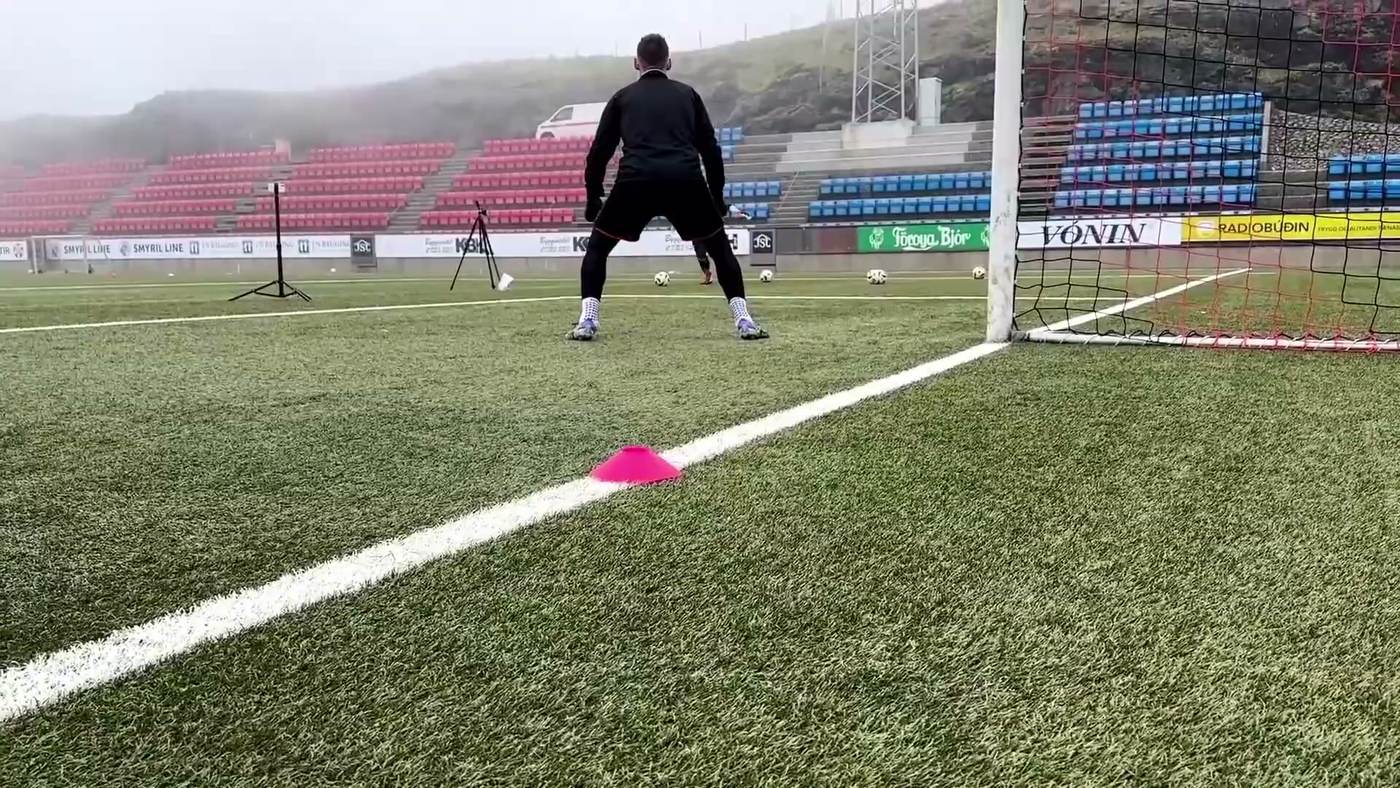
Then there is the question I get asked a lot: how far off my line should I be?
When a striker is close, coming out to narrow the angle helps. But when they are shooting from distance and the angle is already narrow, coming too far out takes away your reaction time, and it invites a chip or a shot bent into the far corner.
When the striker is far out and wide, stay level with your near post, or one very small step in front of it so you do not dive into the post. If they keep dribbling towards you, stay alert. The moment they look down or take a heavy touch, that is your signal to close them down.
After a 4-0 defeat on an Astro pitch, Sam, one of the goalkeepers I coach, wrote down four things to work on. One of them was "Position, not too close to the near post." The whole idea, with ways to practise it on your own, is in my goalkeeper positioning guide.
Why do you keep getting caught moving when the shot comes?
If you are anything like I was, you have rushed across to make a save and found yourself still moving as the ball flew past you.
Being set just means you are ready to push off in either direction:
- On your toes, not your heels
- Knees slightly bent
- Feet about shoulder width apart
- Hands out in front of you
- Weight forward, just a touch
When the ball moves around the pitch, you move too. But the moment the striker has the ball under control and looks ready to shoot, that is your cue. Stop, get set, and get ready to make the save.

Here is the part beginners find strange. Even if you are slightly out of position, being set comes first. In a perfect world you are always set in the perfect spot. After more than 20 years in goal, I can tell you that almost never happens. So when you have to choose, choose set.
To practise it, put a few cones along your goal line. Shuffle to each one and stop in your set position before you move on. With a friend, let them dribble around your box while you follow the ball and get set every time they get ready to shoot.
Are your steps too big?
Being quick in goal is not only about moving fast. It is about how you move. Big, clumsy steps across your goal slow you down, and they make it very hard to get any power into your dive.
Small, quick steps keep you balanced, so you can dive, change direction or react to something you did not expect.
When I was younger, I used a resistance band around the ankles. It keeps your feet at the right distance apart, and the extra resistance makes your legs work harder, which builds strength for quick, explosive movements.

Controlled steps beat fast, sloppy ones, because small steps let you adjust at the last moment. How to shuffle, and which leg leads, is all in goalkeeper footwork: the movement nobody teaches.
Why do you keep diving the wrong way?
A goalkeeper asked me under one of my videos whether I had anything for beginners, because they kept guessing too early. When it worked it looked great. When it did not, they felt silly.
Diving too early is like showing your cards before you have to. If you dive, or even lean, before the striker has decided where to shoot, you make their job easy. Once you are in the air you cannot change direction, and all they have to do is put it where you just were.
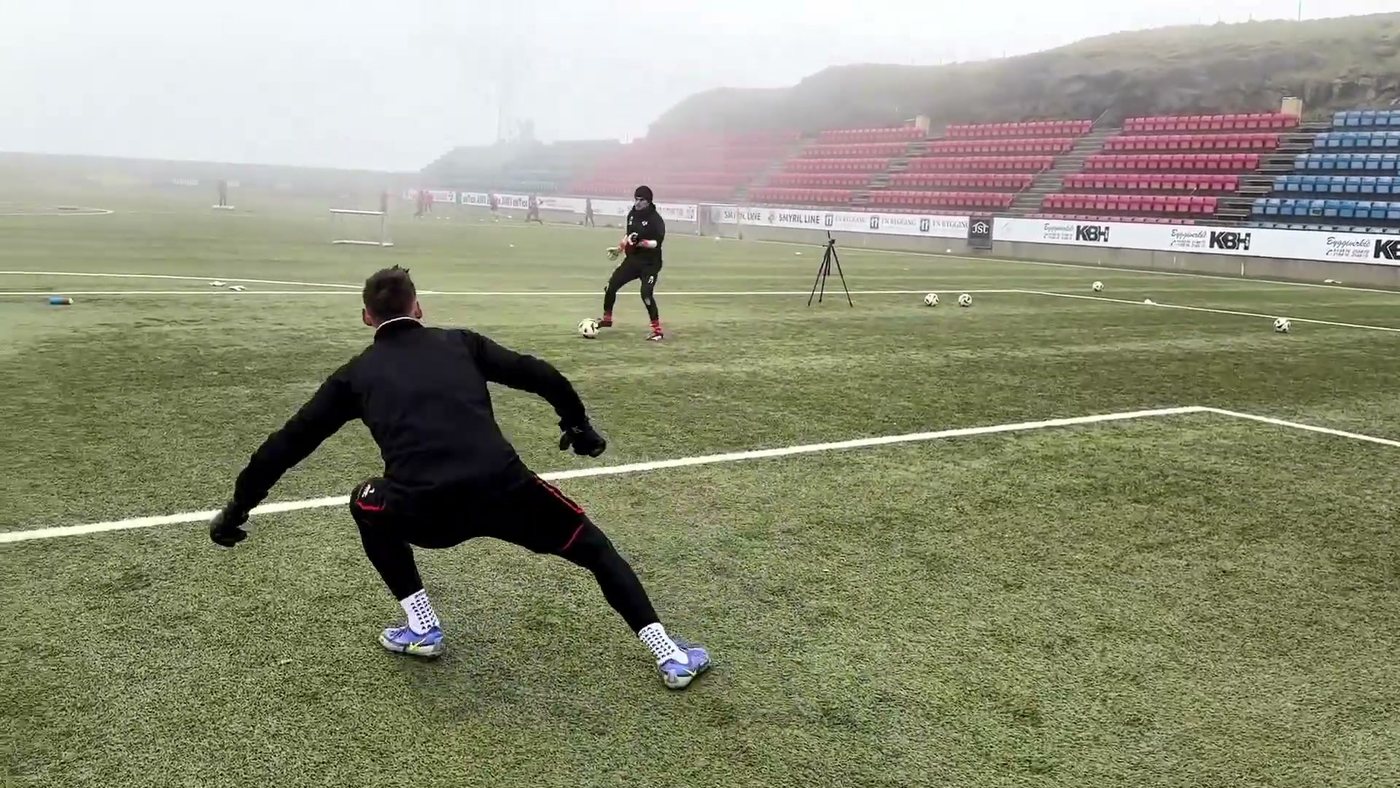
There are times when going early is right. If one side is blocked and the striker only really has one target, you can commit. But if you guess every time and treat every shot like a penalty, you will let in far too many goals.
Use your footwork to get set in the right spot, then wait and react to the ball. Reading the striker matters, but it should never come first. Clear your mind, breathe, relax and trust your position.
Reaction training helps too. The quicker your reactions, the longer you can hold your ground, because you trust yourself to get there once the ball is struck. There are drills for that in how to improve your goalkeeper reflexes.
When should you rush out at a striker?
Have you ever charged out at a striker, only for them to step round you and roll it into an empty net? That is overcommitting.
Growing up, I learned that rushing out can make the goal look smaller and put a striker off. It works if you get close enough, or reach the ball first. But if the striker has the ball under control and you charge anyway, you give them more options: take it round you, or lift it over you.
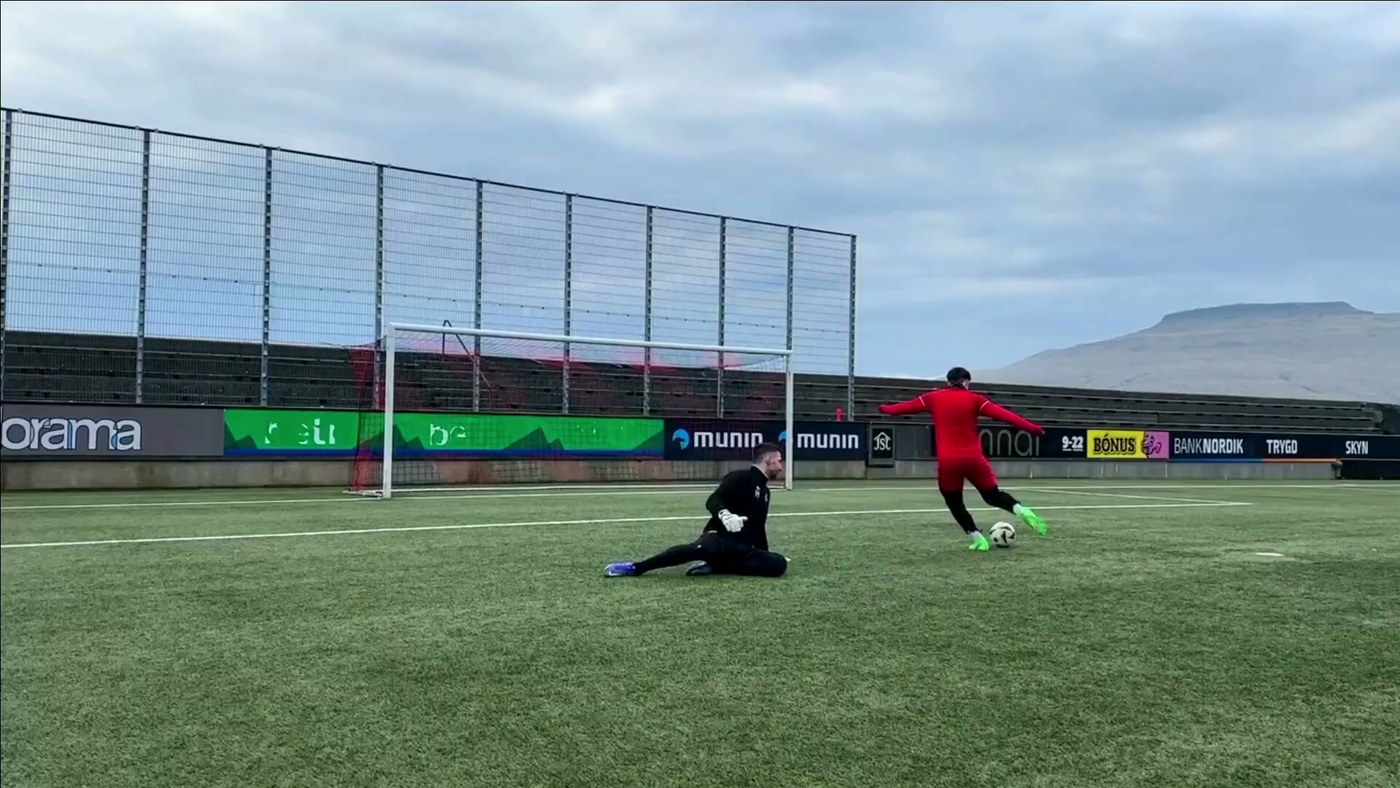
It usually comes from misreading the pace of the game, or from poor communication with your defenders. Both lead to rushed decisions.
So in a breakaway where you cannot get to the ball first, hold your position a little longer. That gives your defenders time to get back and put pressure on the striker. Keep watching, though. If the striker looks down or takes a heavy touch, that is your moment to close in.
Most of the time, especially with defenders chasing back, hold your ground, trust them to get there, and wait for the shot. When to come and what to do once you get there is in goalkeeper 1v1s: when to come out and when to wait.
Which mistake should you fix first?
Being set. If you have to choose between the perfect position and being set, choose set, so that is where I would start.
Once stopping is automatic, the cone in the middle of your goal sorts out where you stand, and the band sorts out your steps. The last two, waiting and not rushing out, are decisions, and every game you play gives you another go at them.
None of this needs a goalkeeper coach or a full-size goal. A few cones and a band are enough, and you can be the one dribbling at them for the stop-and-set drill.
When the second before the shot feels calm, that is a good time to start on the dive itself, safely and from low down: how to dive as a beginner goalkeeper without hurting yourself.
What to do this week
Start with the one that cost you your last goal.
One fix at a time.
- Find the middle. A cone on the goal line in the middle of your goal, and line up from it to the ball.
- Stop and set. Cones along your line, shuffle, and get set at every one.
- Shrink your steps. Ten minutes of small steps with a band round your ankles.
- Wait. Next game, notice every time you move before the shot. Then wait a little longer.
Get the second before the shot right, and a lot of saves start to look easy.
Fixed one of these? What comes next?
Every fix in this post is one drill. The hard part when you are new to goal is the order: what to learn next, how often to train it, and when you are ready to move on.
That is the job of the Ultimate Self-Training Program. It gives you a weekly plan that tells you what to train and in what order, built from over 120 drills you can do on your own. $27 a month.
See how the plan works 30-day money-back guarantee if it is not helping.
I have played more than 500 competitive games over 20+ years, represented my national team, and played in Champions League and Europa League qualifiers. I have coached over 1,000 goalkeepers, and these five are the mistakes I see most in keepers who are just starting out.
Enjoyed this article?
Find more great content here: