
How to Use Visualisation as a Goalkeeper
You can improve at goalkeeping lying in bed. Why visualisation works, what to picture, when to do it, and the three things it will not do.
I found this out far too late in my career, and it is the closest thing to free training I know.
You can improve at goalkeeping lying in bed with your eyes shut.
That sounds like nonsense. Stay with me, because there is a reason it works, and it is not positive thinking.
Visualisation means rehearsing a save or a goal kick in your head in full detail. Your brain struggles to fully separate a vividly imagined repetition from a real one, so the pattern gets reinforced either way. Ten minutes before sleep, picturing the thing you are worst at, going right.
Why does imagining it actually do anything?
Because of how your brain stores movement.
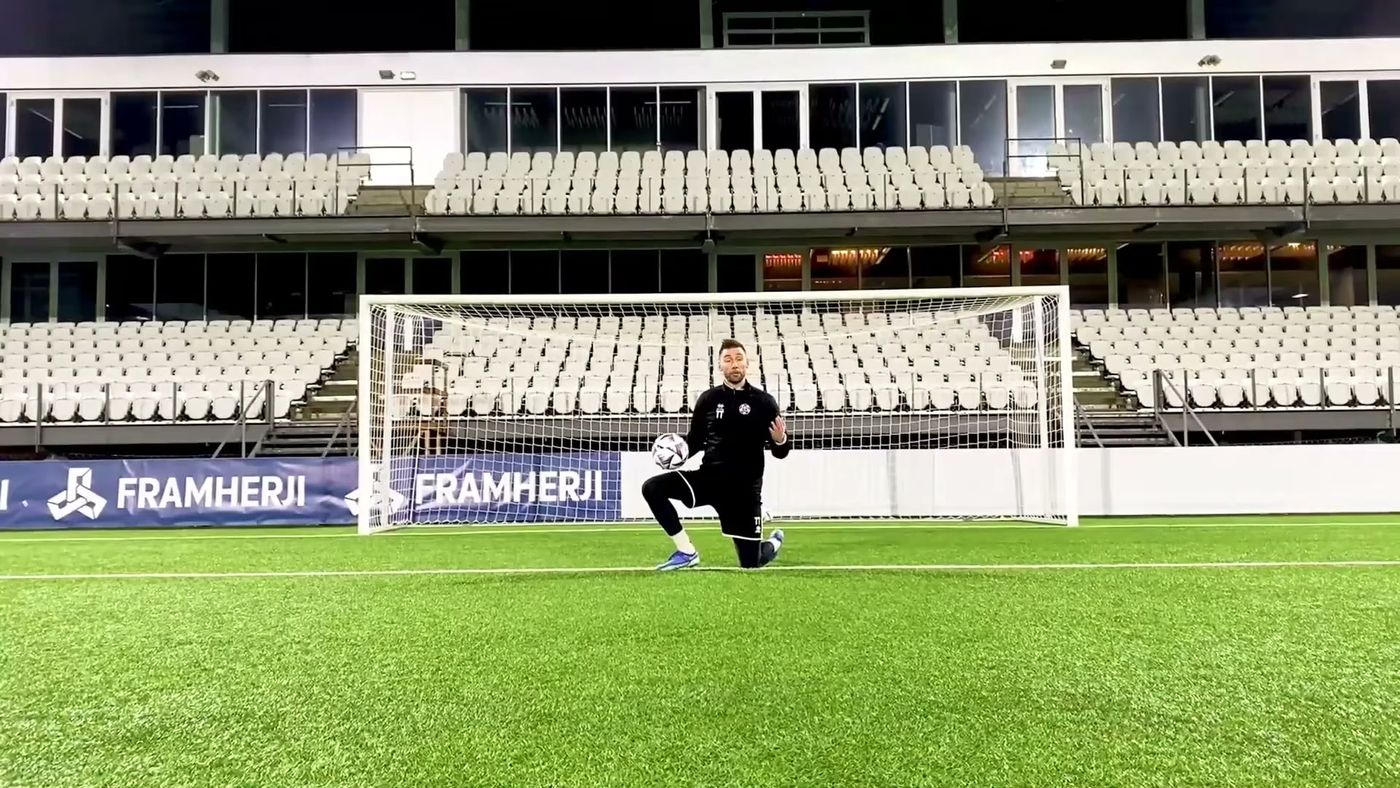
When you picture something in enough detail, your brain runs a lot of the same machinery it uses when you do it for real. The clearer the picture, the harder it is for your brain to fully separate the imagined rep from an actual one.
You are not tricking yourself into thinking you are better. You are giving your brain another repetition of the correct pattern, without the ball, the pitch, or the bruises.
That matters most for the things you have done badly for a long time. If every goal kick you have ever taken has felt like a coin flip, your brain has hundreds of stored reps of it going wrong. Visualisation lets you start stacking reps the other way.
What should I picture?
The thing you are worst at, going right.
Not highlights. Not saving a penalty in a cup final. The boring specific thing that currently makes your stomach drop.

For me it was goal kicks. So I would picture the whole sequence: placing the ball, stepping back, the step to the side, the run at my plant foot, the contact on the inside of my foot, the ball climbing away. The real technique is written out here, so what you rehearse is the right movement.
Detail is what makes it work:
- See it from inside your own eyes, not like watching yourself on TV
- Include the feel. The weight of the ball, the grass, the give in your gloves
- Include the sound. The contact, the crowd, your defenders
- Watch it succeed. Every single time. You are building the pattern you want, so there is no value in rehearsing the failure
If your mind wanders into it going wrong, which it will at first, stop, rewind, and run it again correctly.
When should I do it?
Ten minutes before you fall asleep.
There are two reasons for that. It is the one time of day nobody wants anything from you, so the habit actually survives. And it happens to be an excellent way to fall asleep, which is not nothing when you are lying there replaying a mistake from Saturday. The sleep itself is where the repair happens anyway.
You do not need thirty minutes. Ten is plenty, and five done every night beats twenty done once.
Can I use it on match day?
Yes, and this is where it becomes properly useful.

I used to go off on my own after the tactical meeting, headphones on, for ten or fifteen minutes. I am naturally nervous before games. That time was what made them manageable.
If you want me to talk you through it, the video at the top of this page is a ten-minute guided routine. Headphones in, eyes closed, press play. Where visualisation fits alongside fear and nerves is in my longer video, How to Overcome All Fears as a Goalkeeper.
Two things in that window:
- Breathe: in for 4, hold 4, out for 4, hold 4
- Run through the first five minutes of the game
Breathe. In for four seconds, hold four, out for four, hold four. Repeat. It settles you down physically, which makes the picturing easier. It is the same pattern I use for nerves.
Run through the first five minutes. Your first touch. Your first goal kick. Your first cross. Getting the opening exchanges right in your head takes a surprising amount of the fear out of them, because by the time they happen they feel familiar rather than new.
You can use it during a match too. When you are 1-0 up and the thoughts start, four seconds in and four out, then picture the next ball being dealt with cleanly. Then deal with it.
What visualisation will not do
Worth being straight about this, because it gets oversold.
It will not build a technique you do not have. If you have never been shown how to strike a goal kick properly, picturing it will just rehearse the wrong movement in more detail. Learn it first, then reinforce it.
It will not replace training. It sits alongside the work, it does not substitute for it. Ten minutes of picturing plus fifteen minutes against a wall is a strong week. Ten minutes of picturing on its own is a nice bedtime routine.
It will feel pointless for about two weeks. Everyone quits in that window. The people who keep going are the ones who find out it works.
What to do this week
Pick one thing. The part of your game you dread most.
- Tonight, before you sleep, run through it going right. Five times, in detail, from inside your own eyes.
- Do that every night this week.
It costs you nothing, you can do it in bed, and it is the only training in goalkeeping you can do without moving.
Know what you are rehearsing?
Visualisation reinforces a technique. It cannot give you one you were never taught, which is where most young goalkeepers are actually stuck.
The Ultimate Self-Training Course covers the technique side: 120+ step-by-step drills with a weekly plan, so you know what you are building before you start rehearsing it. $27 a month.
Have a look at the program 30-day money-back guarantee if it is not helping.
I have played more than 500 competitive games, represented my national team, and played in Champions League and Europa League qualifiers. I have coached more than 1,000 goalkeepers. I found visualisation far too late in my own career, and use it before every match now.
Enjoyed this article?
Find more great content here: