
Goalkeeper Communication: How to Command Your Box
Why nobody listens to you in goal, and the five things that changed it for me. Volume is the least important one.
Most goalkeepers think communication means shouting louder.
If that were true, the loudest keepers would be the best leaders. They are not, and you already know that from your own team.
I spent years being loud and being ignored. Here is what actually changed it.
Goalkeepers get listened to by earning respect off the pitch, saving their voice for moments that matter, keeping instructions to three words with the player's name attached, adjusting their tone to the individual, and backing up every call with body language. Volume is the least important part.
Why does nobody listen to me?
Some goalkeepers say one word and the whole back four moves. You shout "keeper" three times in five seconds and get ignored like you are not there.
For the longest time I assumed it was my voice. Not loud enough. Not confident enough. Maybe I needed to sound angrier.
The problem started long before I stepped on the pitch.
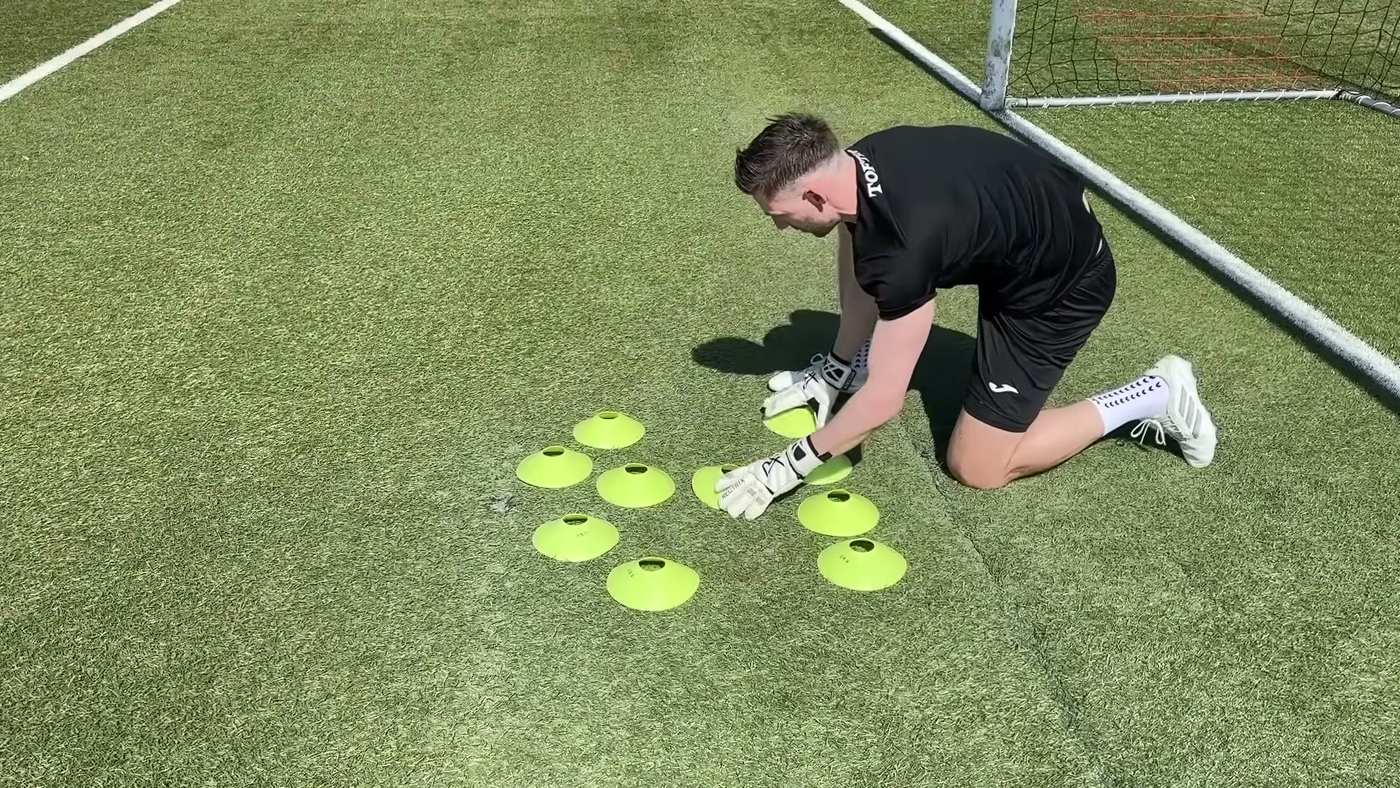
There was a stretch of my career where being liked mattered more to me than being respected. Before training I was messing about, making stupid comments, teasing lads. During tactical work I would crack jokes and pull faces. After sessions I was still being silly while everyone else warmed down properly.
I did not think it mattered.
Then, at a pre-season summer camp, we were in a team meeting about defending set pieces. I spotted something genuine, raised my voice and made what I thought was a good point.
Nobody reacted. Nobody even looked up.
That was the moment it landed. They did not see a leader. They saw the clown. The one who messes about, not the one you listen to.
So I changed. Not everything, because I still have fun and I always will. But I picked my moments. In tactical sessions I was focused. In meetings I sat up, listened, and only spoke when I actually had something worth saying.
People started listening within weeks.
Leadership does not start with shouting. It starts with how you carry yourself when nothing is happening. If your team-mates trust you off the pitch, they will follow you on it.
Am I talking too much?
Probably, and it is doing the opposite of what you want.
I was 16 or 17. New coach, new team-mates, new league, and desperate to prove I belonged. So I decided I would be the loudest voice on the pitch.

I was. "Come on lads." "Man on." "Cover him." "Step up." "Drop off." "Back post." Every two or three seconds I had something to say, whether it helped or not. I thought talking constantly proved I knew what I was doing.
What actually happened is that they stopped hearing me. Completely.
And then when I finally had something that mattered, a real instruction that would have stopped a goal, there was nothing. Silence. Because by then I was background noise.
Being loud does not make you a leader. It makes you loud.
If you talk constantly, especially when it does not help, you are training your team-mates to filter you out. That habit takes months to undo.
Treat your voice as a tool you pick up when you need it, not music playing in the background. Use it when it matters, with a purpose, to help rather than to be heard.
What should I actually say?
A coach once told me: if it takes more than three words, it will not reach their brain.
At the time I thought that was a bit dramatic. The longer I played, the more right he turned out to be.
In the middle of a match, with noise and pressure and everything moving, your team-mates do not have the spare capacity to decode a sentence. They need commands, not conversations.
"Mark the guy on the left"
A sentence. By the time they have worked out who you mean, the ball is in the net.
"Step up"
Better. Short and clear.
"James, step"
Best. The name is what does the work.

The moment someone hears their own name, they know it is for them, and it cuts straight through the noise in a way that "lads" never will.
So learn your defenders' names properly, and put a name in front of every instruction. On a cross, that means a loud, early "keeper" rather than a late one. In open play, it means telling your centre-half which side to cover so you can both see the ball.
Stop trying to explain things during a game. Name, then what they need to do. Nothing else.
Why do some players react badly when I shout?
Because you are speaking a language that does not suit them.
I played with a centre-back who was big and loud and always barking orders at people. I assumed that meant he could take it, so I gave it to him at full volume every game.
The more I shouted, the more irritated he looked. It was as if he thought I was winding him up rather than helping.
One day after training he pulled me aside and said: "Mate, you don't have to scream at me like I'm deaf. Just say it calmly. I promise I'll get it."
That reframed the whole thing for me.
Not every player wants the same thing from their goalkeeper.
Some genuinely need the loud voice. They want firing up, and they want you dragging them through the game.
Others want calm and simple. Shout at those players and they switch off, not because they are soft but because you are speaking to them in a way that does not land.
Learn which of your defenders is which. It takes a few games. Then talk to each of them accordingly.
Good communication is not only what you say. It is how you say it and who you are saying it to.
Why do they hear me but not do it?
Because your body is contradicting your voice.
I remember a training match where the ball rolled back towards my centre-back and I shouted "back, back to me."
While shouting it, I was standing completely flat-footed. Not opening up. Not pointing. Not moving to receive.
He panicked, turned the other way, tried to dribble out of pressure, lost it, and they scored.
I stood there thinking: I told you to pass it.
But my voice said "give it here" and my body said "do not you dare pass me that ball." He believed my body, which is what everyone does.
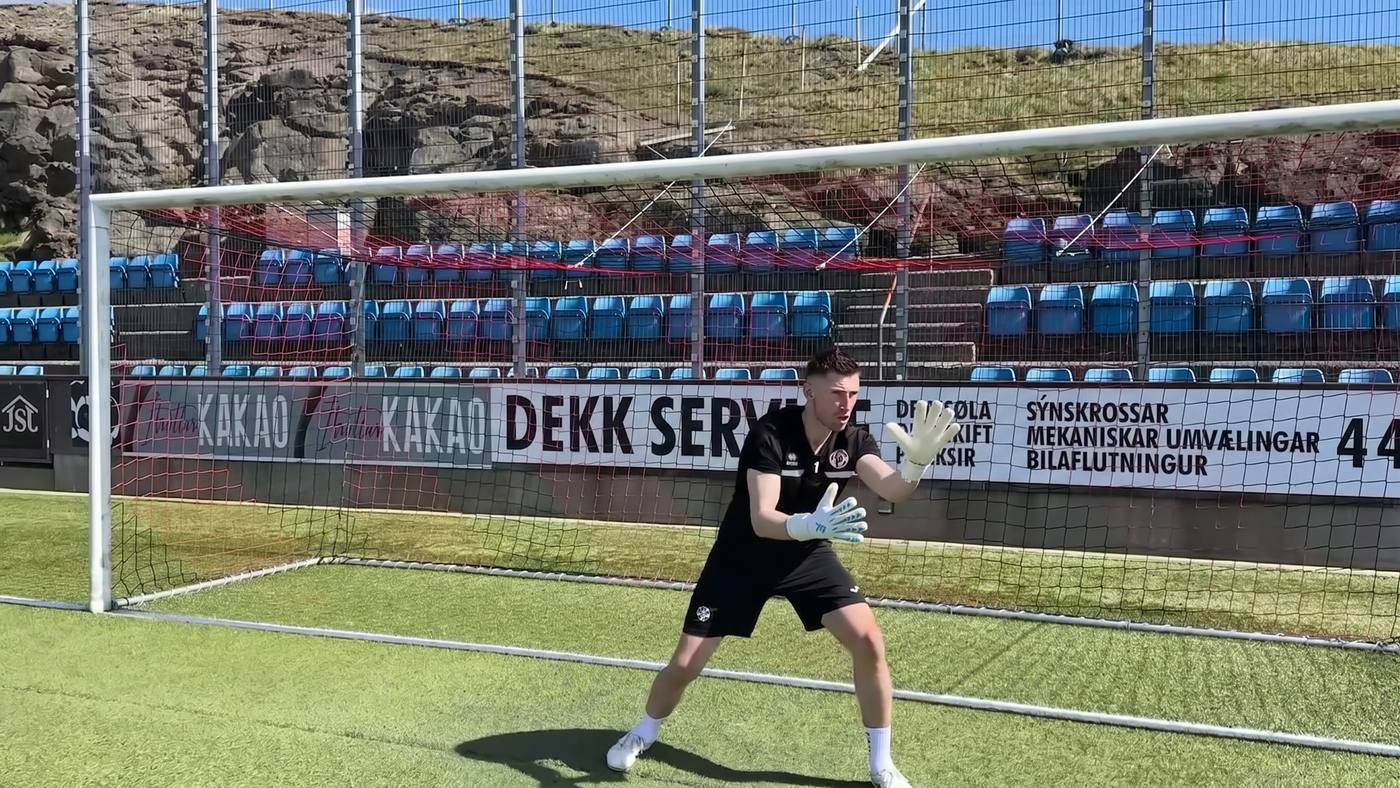
You have to look like you mean it.
- Shouting "step up" while standing still does not work
- Want it to your right foot? Point at your right foot
- Want it cleared? Show it with your hands
Would you trust a team-mate flapping their arms and shouting "calm down"? No. Neither will they.
What to work on this week
Pick the one that sounds most like you.
One change, one match
- If you are the joker: say nothing different in matches. Just be switched on in the next tactical session. That is where respect is built, not in the game.
- If you talk constantly: try saying half as much for one match. You will feel like you are not doing your job. Watch what happens when you do speak.
- If nobody reacts: use names. Only names. "Tom, turn." "Sam, push up." One match of that will show you the difference.
Communication is the part of goalkeeping that improves fastest, because it costs nothing physically and you can change it in a single game.
Talking in your box gets a lot easier once you are not busy worrying about your own game, which is why building your confidence and building your voice tend to happen together.
Voice sorted, but the mistakes keep coming?
That is a different problem, and it is usually a training problem rather than a leadership one. Nobody listens to a goalkeeper for long if the saves are not there behind the words.
The Ultimate Self-Training Course covers the technical side: 120+ drills with a weekly plan so you are not guessing what to work on. $27 a month.
Have a look at the program 30-day money-back guarantee if it is not helping.
I have played more than 500 competitive games, represented my national team, and played in Champions League and Europa League qualifiers. I have coached more than 1,000 goalkeepers. Every story in this guide is one I lived, including the ones I am not proud of.
Enjoyed this article?
Find more great content here: