
3 Ways to Build Goalkeeper Confidence
Confidence is trained, not born. Three habits that built mine: repetition, preparation, and letting the mistake go.
Most goalkeepers think confidence is something you are born with. Some players just have it, some do not, and that is that.
It is not true. Confidence is trained, exactly like handling is trained.
And if you are short of it right now, there is a reason, which means there is something to fix.
Goalkeeper confidence comes from three things: repeating your weakness until it stops needing thought, preparing properly away from the pitch with sleep and routine, and being able to let a mistake go instead of carrying it. None of them is a personality trait. All three are habits.
1. Train the thing you are worst at, until it is boring
When I was younger, goal kicks were a nightmare.
I would step up with everyone watching, and instead of putting it upfield the ball would barely leave the box.
Every time it happened my confidence took another hit. So I started overthinking. Changing my stance. Adjusting my technique at the last second. Standing over the ball genuinely hoping, almost praying, that this one would come off.
It never did, and now I know exactly why.
Confidence is not built in matches. It is built long before them.

The turning point was not a clever trick or a speech from a coach. It was a decision.
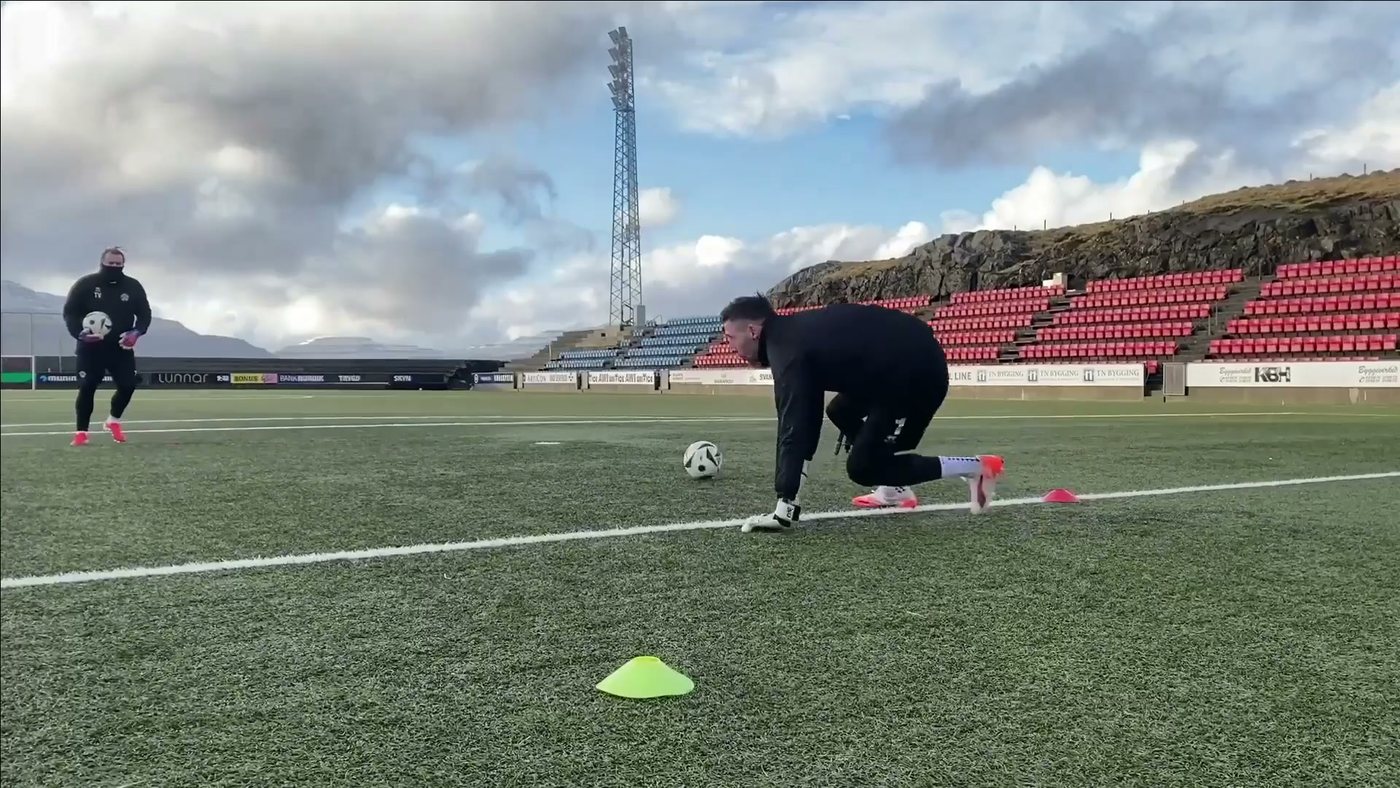
Every day after training, while everyone else packed their bags, I stayed behind. Me, a few balls, and no excuses.
For a while nothing changed. Some days the ball still came off my foot like a wounded bird.
Then something odd started happening. I stopped thinking about my technique. I stopped worrying about mishitting it. My body just knew what to do.
Next match, I stepped up to take a goal kick and felt nothing. No hesitation, no panic. Just something my body had done so many times that it did not need me. What I eventually learned about the strike itself is in the goal kick guide.
That is what confidence actually is. Not belief. Repetition. Pick the part of your game that makes you doubt yourself. Diving to your weak side. Awkward bouncing shots. Staying calm when a striker is through. Then do not hope it improves on match day. Do it until it feels like breathing.
2. Prepare like a pro, even though you are not one yet
You can train every day, do the drills a thousand times, and still feel the nerves creep in the moment the whistle goes.
I had one game where everything in the warm up felt perfect. Catching cleanly, moving well, diving sharp.
Then the referee blew his whistle and my body stopped listening to me. Legs stiff. Head foggy. No confidence anywhere. I made a mistake before I had even made a routine save.
I could not understand it. I was training harder than ever and I was in the best shape of my life.
Then it clicked.
I was training like a pro. I was not preparing like one.
I was not sleeping enough. There were far too many late FIFA nights. I was eating at random times. And I had no consistent warm up, so every match started differently.
Looking back it is obvious. You cannot expect to feel sharp when you have given your body and your mind nothing to work with.
You do not need to be a professional to prepare properly:
- Sleep, especially the two nights before a match, not just the one
- Eat at sensible times rather than whenever
- The same warm up, every single game, so your body knows what is coming. Mine is written out here
- Ten minutes picturing the game the night before, in bed. Here is how visualisation works
- Leave enough time so you are not arriving in a rush
None of that is difficult. It is just boring, which is why most young goalkeepers skip it and then wonder why they feel flat.
Confidence starts hours before kick-off, not at kick-off.
3. Learn to let it go
You can train right, prepare right, and still have it collapse the moment something goes wrong.
Because most goalkeepers do not just make a mistake. They spiral.

It starts small. A misplaced pass, a mistimed dive, a shot you feel you should have had. And instead of moving on you replay it, and blame yourself, and then you make another one, and another.
It is quicksand. The harder you fight, the deeper you go.
I did this constantly. One mistake and my game was finished, in training or in matches. I stopped playing to win and started playing to avoid looking stupid, which is the fastest way to look stupid.
Then one day my coach pulled me aside. I had just had a nightmare session. Could not catch anything, every shot going through me.
He said: "Do you really think one mistake makes you a bad goalkeeper?" That has stayed with me ever since.
We play on the edge of disaster the whole time. That is the position. If you cannot accept that mistakes and occasionally looking daft are part of the job, this will be miserable for you.
So learn to smile, let it go, and get on with the next ball. What you say to yourself in that moment decides whether the next ball is a fresh start or the second mistake.
Give yourself ten seconds after a goal goes in. Let it all out, then reset with your body: fix your gloves, take a sip of water, shout something to your defenders, one deep breath. That happened, it is gone, next ball. I explain why it works in Your Goalkeeper Confidence Is Being Destroyed by This.
Not because it does not matter. Because if it stops being fun, there is no point doing it, and you will not last.
How long does this take?
Longer than you want and less time than you fear.
The preparation part changes things within a fortnight, because sleeping properly and having a fixed warm up are immediate.
The training part takes about six weeks before you feel a weakness stop being a weakness. That is roughly how long it took my goal kicks, staying behind most days.
Letting mistakes go is the slowest, and it never fully finishes. I still work at it. It does get much easier once you have some evidence that a mistake in the tenth minute does not have to define the other eighty. If fear is the bigger problem underneath, that has its own guide, and it starts with what happened to me at 23.
What to do this week
Two things, both small.

Two things, both small
- Pick the one part of your game you dread. Stay behind after one training session and work only on that. Not all of it. One thing, twenty minutes.
- Sort your sleep the night before your next match. Just that one night.
Then see how the next game feels. Confidence responds much faster than most goalkeepers expect, because it was never a personality trait to begin with.
And if the doubt underneath all of it is whether goalkeeping is really for you, I wrote five honest signs about exactly that.
Know what to do with those twenty minutes?
Staying behind after training is the right instinct. Knowing exactly what to do with those twenty minutes is what most goalkeepers are missing.
That is what the Ultimate Self-Training Course is for: 120+ drills with a weekly plan, so the session is decided before you get there. $27 a month.
Have a look at the program 30-day money-back guarantee if it is not helping.
I have played more than 500 competitive games, represented my national team, and played in Champions League and Europa League qualifiers. I have coached more than 1,000 goalkeepers. My own confidence was built after training, not in matches.
Enjoyed this article?
Find more great content here: