
Is Goalkeeping Right for You? 5 Honest Signs
Five honest questions about whether goalkeeping suits you. Four of them are learnable. One has to already be there.
Most kids who start out wanting to be a goalkeeper end up playing somewhere else.
That is not a criticism of them. It is the hardest position on the pitch, and it asks for things no other position asks for.
So here are five honest questions. Answer them properly and you will know.
Goalkeeping suits you if you can handle being blamed as easily as praised, work on your weaknesses for months without visible progress, put your body into contact, talk constantly, and genuinely love the position. The last one matters more than the other four together.
1. Can you be the hero and the villain in the same afternoon?
You make a save nobody expected and your team-mates pile on top of you. Best feeling in football.
Ten minutes later you let one in, and the same people are looking at you differently.
That is the job. Not sometimes. Every week.

I had back-to-back matches this season where I was voted man of the match. Team-mates talking about it, people in the stands, local media. I felt untouchable. Next game, I made the biggest mistake of my career. Hero to villain in seven days.
You need thick skin, and I do not mean pretending it does not hurt. I mean being able to take the blame, learn what is actually useful from it, and go again. Outfield players get to hide inside a team performance. You do not. A run of mistakes can cost you the shirt, and I wrote about why young goalkeepers get dropped and what to do about it.
If being both the good guy and the bad guy sounds unbearable rather than just hard, that is worth being honest about. And if it is the going again that you find hard, the way you talk to yourself after conceding is where to start.
2. Will you work on the thing you are bad at?
Ever grind away at part of your game and see nothing change for weeks?
Early in my career I was solid on my line. My shot-stopping was genuinely good. My goal kicks were a mess.
I ended up in the local media for it. Not for my saves. For my distribution.

I could have decided that was simply not my strength and let it go. Instead I spent hours on my own, kicking a ball against a wall, over and over. It was repetitive and it was not fun. What I eventually worked out about the strike is now its own guide.
After a few weeks it started to move. Then my confidence moved with it, and eventually nobody mentioned my kicking at all.
The thing about goalkeeping is that your weakness is public. Everyone can see it, every week, and the only way past it is unglamorous repetition.
The line I keep coming back to: train until you cannot get it wrong, not until you get it right once.
If you expect progress to come without that, this position will frustrate you badly.
3. Will you put your body in?
Have you ever pulled out slightly on a corner because you knew a collision was coming? Held back on a full-stretch dive because you did not fancy the landing?
Everyone has. It is instinct, and instinct is not a character flaw.

But goalkeeping asks you to do things most players spend their careers avoiding. Diving head-first into a crowd of legs. Going down at the feet of someone running full speed at you. Landing hard, repeatedly, on ground that does not give.
If that hesitation stays, it will show up in your game. A goalkeeper who is half-committed gets hurt more often than one who goes properly, because half a dive is where the awkward landings happen.
To be clear, I am not telling you to be reckless. Learning to land safely is a skill and it is worth more than bravery. But if the idea of contact is something you cannot get past, this is a fair thing to know about yourself.
Wanting your child to be careful is not the same as them lacking courage. Good landing technique on soft ground fixes most of this, and a goalkeeper who has been taught to land properly is safer than one who has been told to be braver. There is more for you in the goalkeeper parent's guide.
4. Will you talk?
If you think this position is about making saves, you are missing half of it.
One game I remember clearly. Strong start, couple of decent saves early, and I felt in control.
Then the game started drifting. My back four lost their shape. Players out of position, gaps opening.
And I said nothing. I decided I would just deal with whatever came.
One through ball later we were 1-0 down.
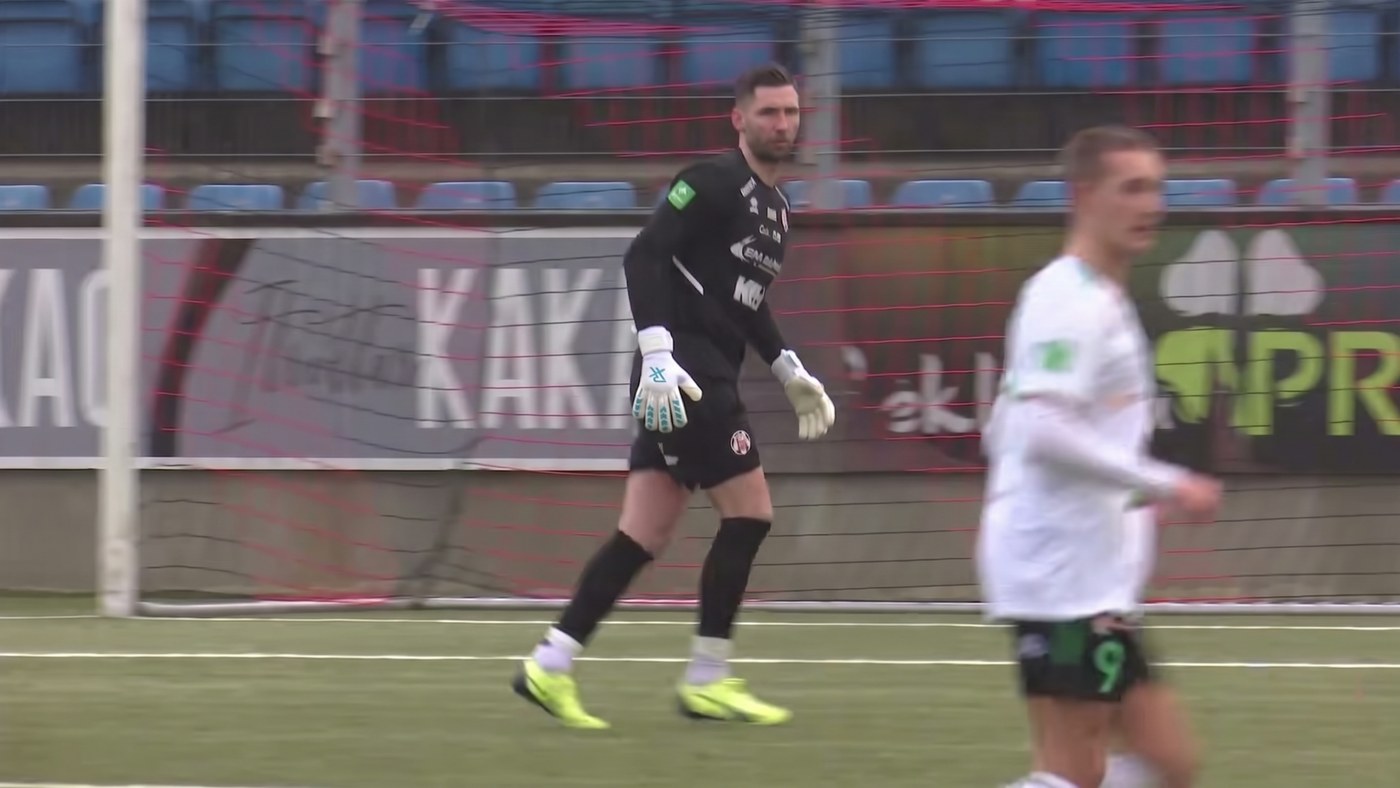
The part that still bothers me is that it was not a save I failed to make. It was a sentence I failed to say.
You have the best view on the pitch. You see it before anyone. If you are not telling people what you can see, you are watching problems arrive instead of preventing them.
It is not about shouting for ninety minutes. It is timing, and being clear when it counts. "Man on." "Turn." "Push up." Three words that change what happens next.
And if you are naturally quiet, that is fine. You do not have to be the loudest player from day one. Start with the simple calls. It gets easier every match.
5. Do you actually love it?
Here is the one that matters most, and it makes the other four survivable.
Goalkeeping is not really another position. It is closer to a different sport played inside a football match. Different training, different skills, different kind of pressure.
Some players stick at it and some walk away, and the difference is not talent, bravery or how loud they are.
It is whether you love it.

Because there will be evenings when you are alone in the rain doing the same drill for the fortieth time and getting it wrong. Nobody watching. Nothing improving.
If you love the position, those evenings are just part of it. If you do not, they are the reason you stop.
So ask yourself honestly. Not "am I good at this", because at 13 nobody knows yet. Just: do you love it?
If the answer is yes, you already have the thing that cannot be coached.
What if you answered no to some of these?
Then you are normal.
Almost nobody has all five at 13. I did not. I was quiet, my distribution was bad, and I spent years being far too hard on myself after mistakes.
Just starting out? My free Goalkeeper Technique Playbook marks eight pages "Start here", so you know which basics to learn first.
Four of the five are learnable
- Thick skin builds.
- Work ethic builds.
- Bravery follows good technique.
- Communication starts with three words and grows.
Only the last one has to already be there.
If the honest answer is yes and confidence is the missing piece, start with three ways to build goalkeeper confidence. And if the thing holding you back is being told you are too short, that is its own subject.
If the answer to the last one is yes
Then the next thing you need is a plan rather than random drills. Loving the position gets you to the pitch. A plan is what makes the evenings there add up to something.
That is what the Ultimate Self-Training Course is: 120+ step-by-step drills with a weekly plan, so you always know what you are working on. $27 a month.
Have a look at the program 30-day money-back guarantee if it is not helping.
I have played more than 500 competitive games, represented my national team, and played in Champions League and Europa League qualifiers. I have coached more than 1,000 goalkeepers. At 13 I would have answered no to three of these five questions.
Enjoyed this article?
Find more great content here: