
Why Young Goalkeepers Get Dropped
Five reasons young goalkeepers lose their place, and none of them is talent. Every one is fixable this month.
Between 12 and 18, some goalkeepers move towards academy level and others stay quietly stuck where they are.
The gap between those two groups is usually not talent.
It is five things, and every one of them is fixable this month.
Young goalkeepers get dropped because they skip strength work, talk in sentences their defenders cannot process, spend money on the wrong things, train randomly instead of to a plan, and wait for perfect conditions before starting. None of these is about ability.
Why do my legs go in the last twenty minutes?
I was 16, playing a tight semi-final. I had been flying around for an hour and felt unstoppable.
Ten minutes to go, a weak shot came in low to my left. The kind of save I could make in my sleep.
My legs were dead. I had nothing left to push off. The ball slipped under my hand and we lost.
That was not a technique failure. It was a fitness failure, and it decided a semi-final.

Goalkeepers your age tend to avoid anything to do with strength, stretching or mobility, because it is boring and it does not feel like goalkeeping.
But this position is physical now. Collisions in 1v1s. Contested crosses. Hard landings, over and over.
Two short strength or mobility sessions a week. That is all. You do not need a gym membership or heavy weights. Bodyweight, resistance bands, a couple of dumbbells if you have them. Legs, core, shoulders.
When your body gets stronger you move better and you feel safer. When you feel safer you look confident, and when you look confident you start playing confident.
Why does my defence ignore what I shout?
Ever shout instructions at your back line and watch them run into each other anyway?
I used to do it constantly. I would see a striker making a run, and by the time I finished my sentence he had the ball, a defender was on the floor, and it was in the net.
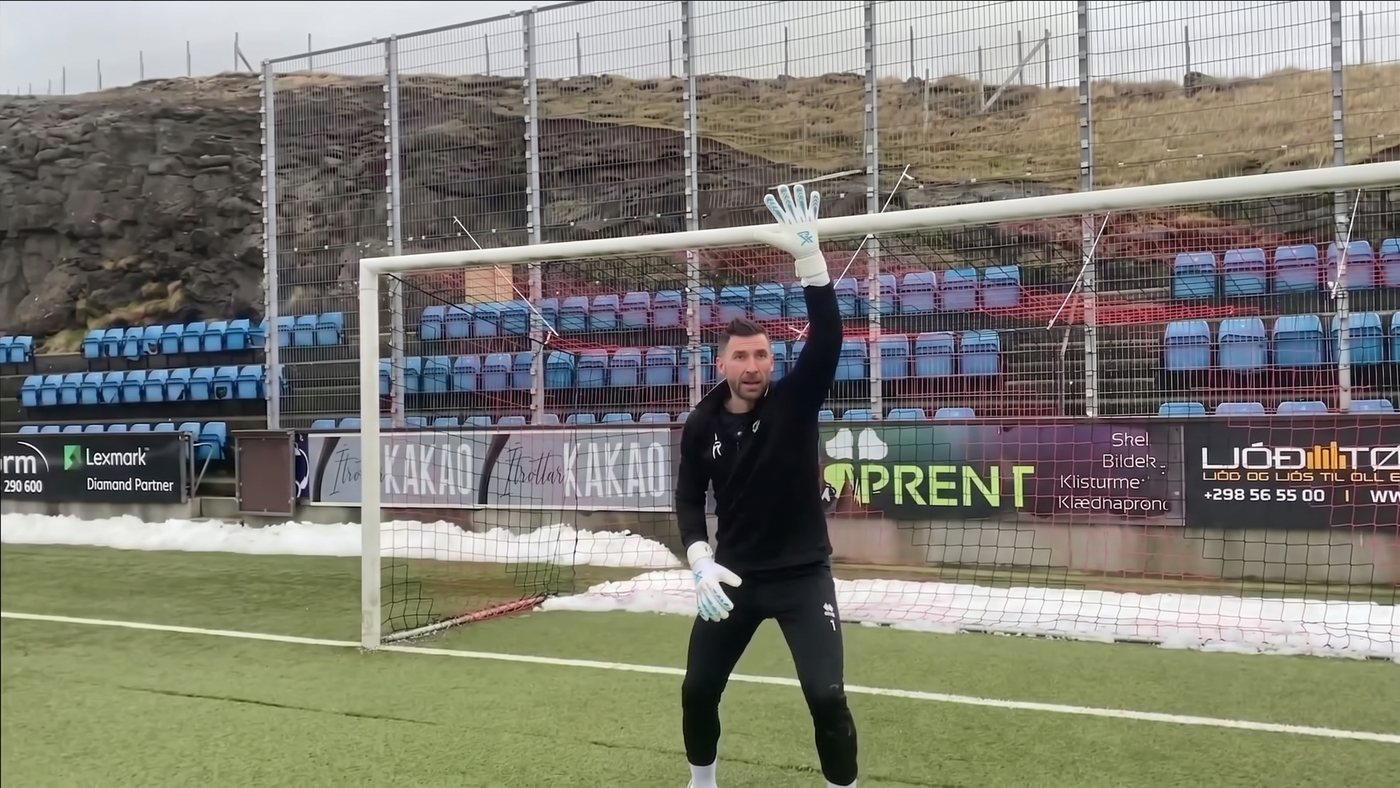
Here is what I did not understand: your defenders are exhausted. Their brains are low on oxygen and they are dealing with their own job. They cannot decode a full sentence mid-game.
Give them a paragraph and they hear nothing at all.
Build a dictionary of three to five words. Then use only those. Put a name in front of each one and it lands even faster.
| Word | Means |
|---|---|
| Keeper | I am coming, get out of the way |
| Away | Do not try to play, put it into row C |
| Man on | Someone is right behind you |
| Time | You are fine, take a touch |
| Step up | Push the line higher |
That is it. Five words, used consistently, and your defence starts reacting instantly.
You are a commander. You are not a commentator.
Am I spending money on the wrong things?
This one is uncomfortable, so I will say up front that I did exactly the same.
A young goalkeeper tells me he wants to play at a higher level. Five minutes later he is showing me a new hoodie and an energy drink, and his gloves look like they have survived a dog attack.
At some point you have to ask honestly: am I spending on things that make me better, or things that just feel good?
Small investments make a genuine difference:
- A decent pair of gloves. Not for show. Because grip you trust changes how you go for the ball
- A proper ball and some cones so you can train properly on your own
- A structured plan so you stop wasting sessions
- A cheap tripod to film your training, which gives you feedback nobody else is giving you
The tripod is the one people underestimate. Watching yourself back for ten minutes tells you more than an hour of guessing.
Something happens when you start investing in yourself, even in small ways. Your brain decides this matters, and your effort follows.
Gloves are not a neutral topic for me. Rectrix is a brand I co-founded with my business partner in the UK, so I am not a neutral reviewer. Buy whatever you trust. Just do not play in gloves that are falling apart.
Why is my training not making me better?
I watched a goalkeeper at my local park sweat for a solid hour. Diving, jumping, kicking. He looked like he was working extremely hard.
He was not improving anything. He was just getting tired.
A shot against the side wall, then a high ball, then a punt, then something else. No thread connecting any of it.
Random training gives you random results. You never build one skill properly, and you end up good at being busy rather than good at goalkeeping.
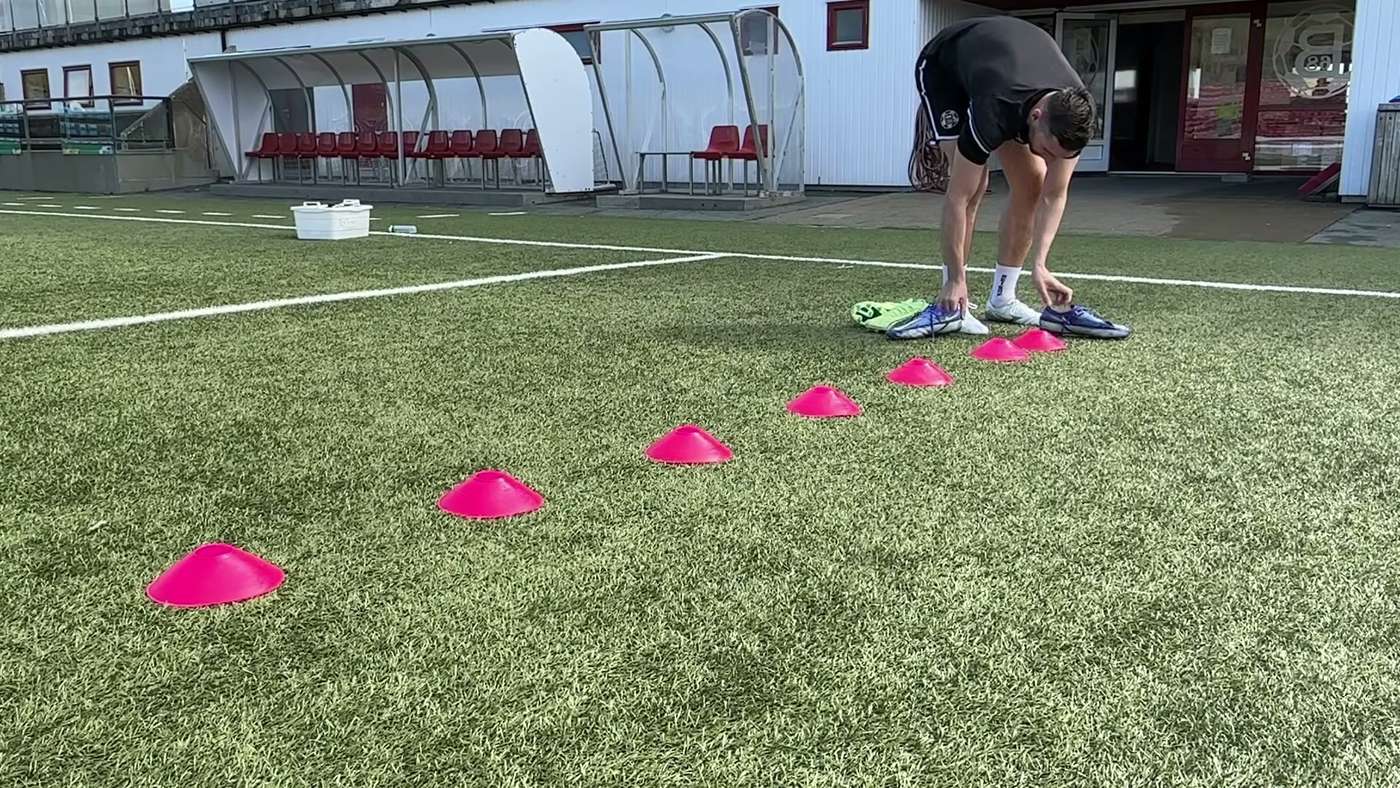
The fix does not need fancy drills or a private coach. It needs a weekly structure:
- Day 1: handling and footwork
- Day 2: diving
- Day 3: distribution
- Day 4: crosses and high balls
Then repeat it. Write it down. Track what you did. Adjust when something is not moving. Repetition of the thing you are worst at is where the confidence comes from too.
Once your training has a shape, improvement becomes predictable. You feel it and you can see it, and you stop wasting sessions on drills that were never going to help.
The full version, with what goes into each of the four days and how to tell whether it is working, is in the goalkeeper training plan guide.
What if I have no coach, no goal and a bad pitch?
Most goalkeepers do not fail because they are bad. They fail because they never properly start.
I have heard all of these:
- "I can't train, I don't have a goalkeeper coach"
- "I can't work on crosses, I don't have a full-size goal"
- "My pitch is too rough"
- "It's raining"
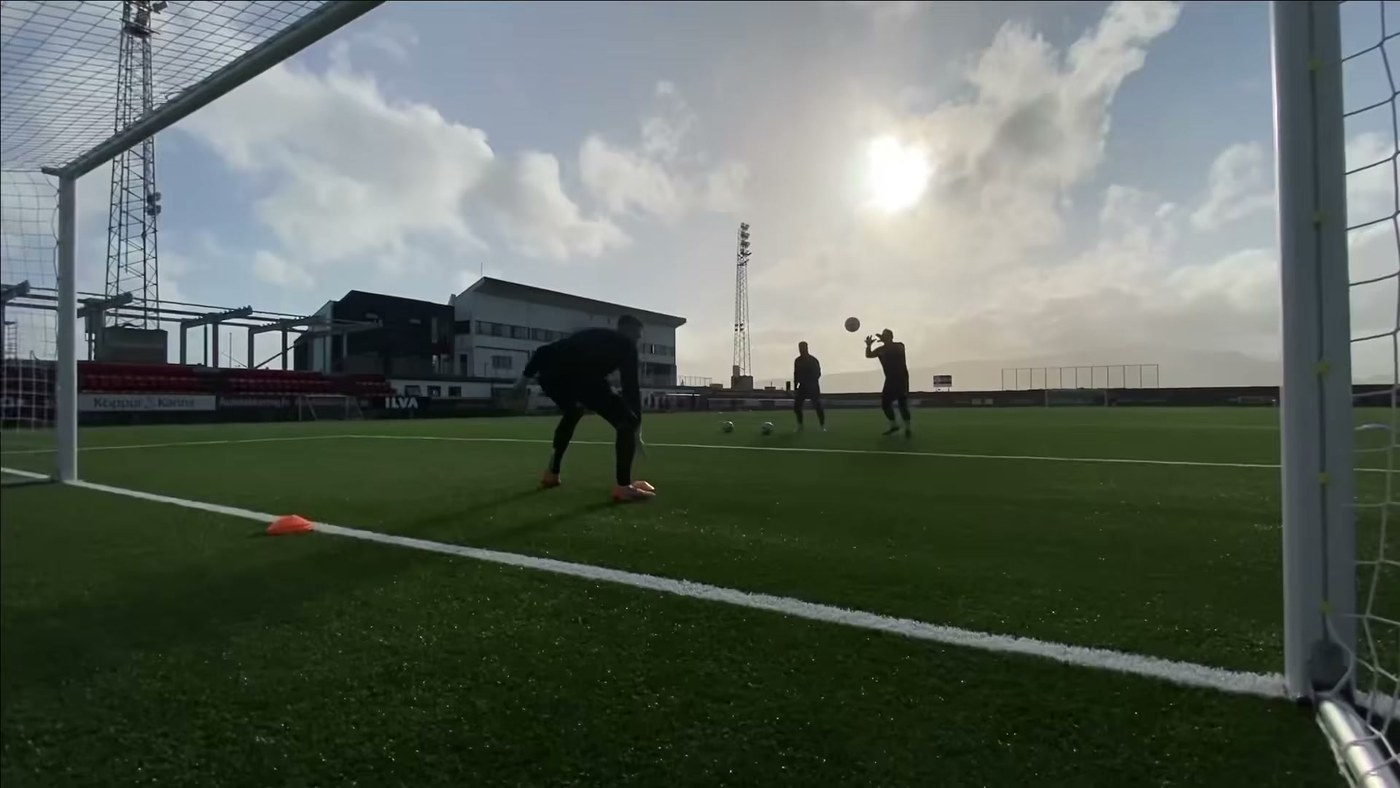
I understand all of them. Good conditions are nicer.
But the goalkeepers playing in the best leagues in the world did not wait for perfect pitches or perfect equipment. They started with whatever was in front of them.
- No cones? Bottles, shoes, rocks, anything you can move
- No coach? There are self-training structures for exactly this
- No pitch? Footwork, handling, mobility and strength all work in a bedroom
You do not need the right conditions. You need to stop waiting for them.
What to do this week
Pick the one that stung reading it.
Pick the one that stung
- Ran out of legs in a game recently? Start two strength sessions a week.
- Defenders ignore you? Cut down to five words at your next match.
- Sessions are random? Write out a four-day structure tonight and follow it for a fortnight.
Being dropped is rarely about talent, which is the good news, because everything on this list is a decision rather than a limit.
Deciding what to train is harder than doing it
The structure problem is the one most goalkeepers cannot solve alone, because deciding what to train is harder than doing the training.
The Ultimate Self-Training Course does that part for you: 120+ drills laid out in a weekly plan across handling, diving, footwork and distribution. $27 a month.
Have a look at the program 30-day money-back guarantee if it is not helping.
I have played more than 500 competitive games, represented my national team, and played in Champions League and Europa League qualifiers. I have coached more than 1,000 goalkeepers. I made every mistake on this list myself, including the semi-final.
Enjoyed this article?
Find more great content here: