
The Goalkeeper Warm Up That Actually Prepares You
The 30-minute warm up I use before matches, in the order that matters, so the first shot you face is not the first thing your body has done all day.
You train well all week. Then Saturday comes and something feels off.
Your reactions are half a beat slow. Your focus keeps drifting. The first shot you face feels faster than it should.
Most goalkeepers blame nerves. Usually it is the warm up.
A proper goalkeeper warm up takes about 30 minutes and runs in a fixed order: light movement, activation, core, feet, passing, handling, then diving, match-realistic shots and crosses, and finally distribution. The order matters more than the time. Diving before you are warm is where goalkeepers get hurt.
1. Get moving, 5 minutes
Before anything else, wake the body up.
Light jogging plus dynamic stretches. High knees, heel flicks, side shuffles. Nothing clever.
It loosens the muscles and gets your heart going. Think of it as flipping the switch that tells your body today is a working day.
2. Pre-activation
This is the least interesting part and the one people skip.
Think about starting a car on a cold morning. Drive off immediately and everything is stiff and unhappy. Give it a minute and it runs properly.
Your body is the same. Skip activation and your first dive is the warm up, which is exactly when goalkeepers get hurt.
3. Wake the core up
A strong core is not about how you look. It is what keeps you stable while diving, jumping and stretching.
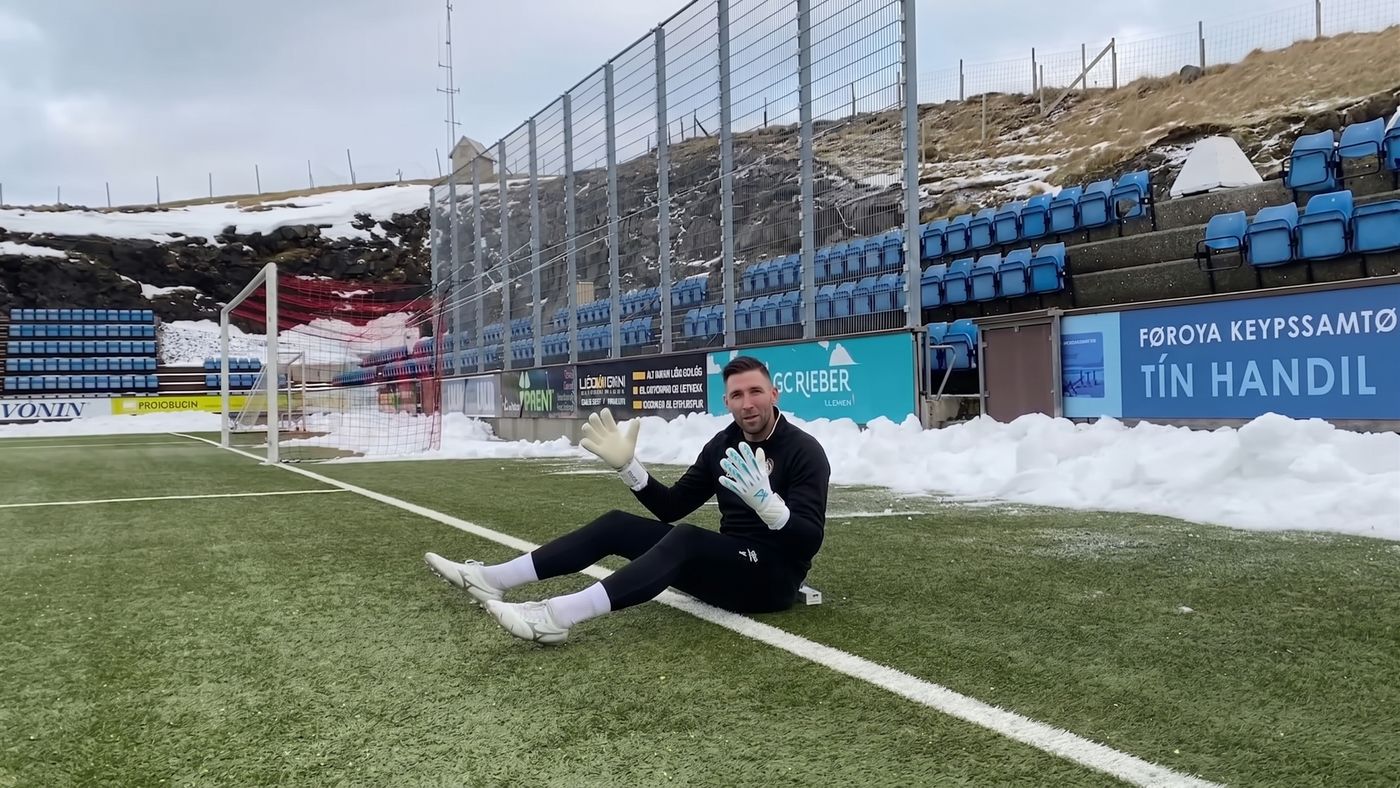
Partner tosses the ball, you catch it at the top of a sit-up, and toss it back.
Variations when you want more:
- Side sit-ups for the muscles down your sides
- One-handed catches for a harder challenge
Two things happen at once here. Your core switches on, and you get early touches on the ball, which builds confidence before anything difficult arrives.
4. Feet
Lateral footwork. Your partner holds two balls and drops one to the side. You shuffle across, pick it up, toss it back. Keep the rhythm going for 12 to 16 reps.
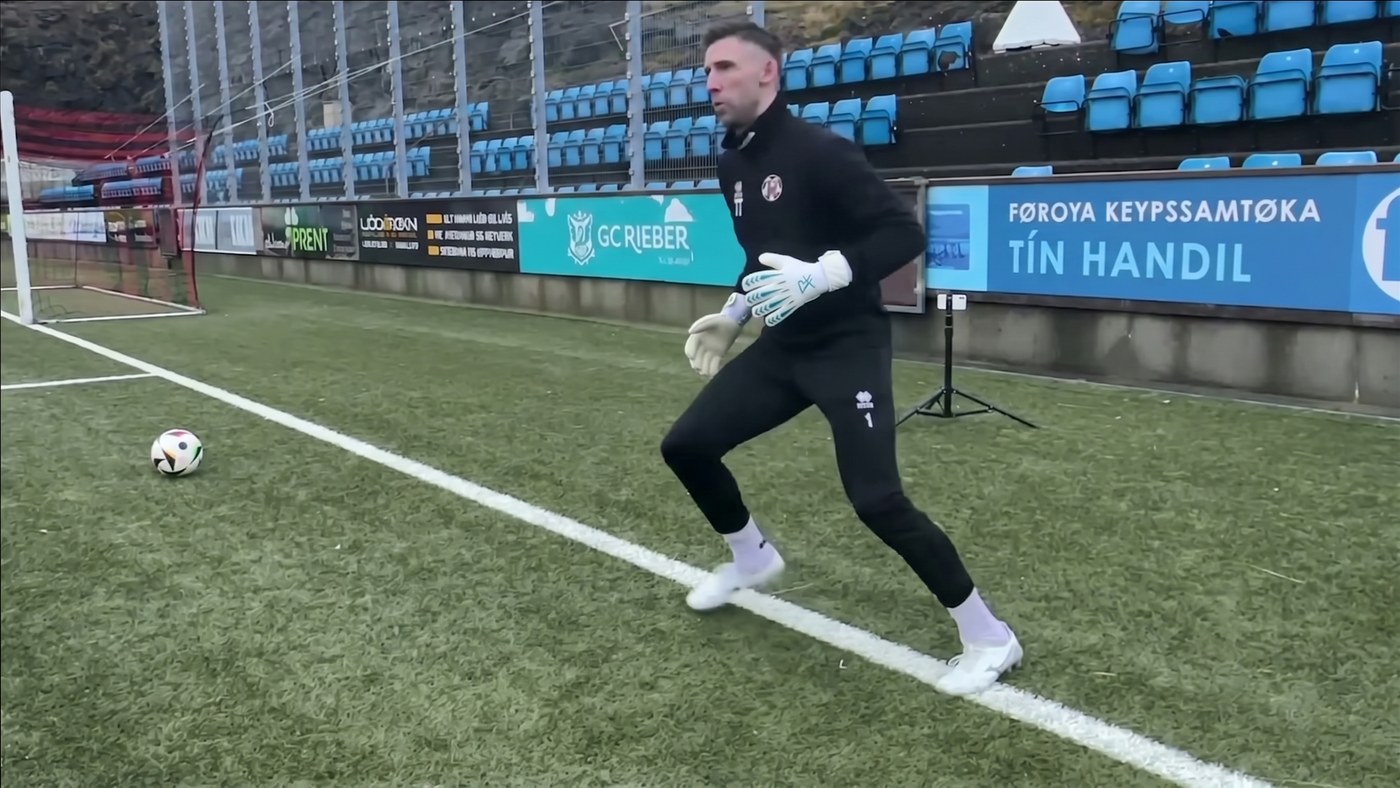
Enough to wake the legs up. Not enough to tire them out. That distinction matters, because a goalkeeper who burns his legs in the warm up has nothing left for the first twenty minutes.
Then one ball, thrown at knee height, and you kick it softly back. The point is staying light on your feet, taking quick precise steps, and still controlling the touch.
5. Passing
Build it up in three stages.

Short, sharp, one-touch. Rhythm and confidence first.
Two-touch over a longer distance. Control it, then pass it.
Longer passes, kept on the ground. Here your partner should make it awkward with bouncing and difficult balls, so you are dealing with something realistic rather than a perfect pass.
Do this properly and the first back pass of the match does not surprise you.
6. Hands
Now the ball starts arriving properly.

10 volleys straight into your hands. Catch cleanly every single time, toss it back. Simple and genuinely effective.
Low balls, working on your scoops, making sure the basic technique is sharp.
Partner steps back. Now:
- 3 drop kicks, hit hard but still within your range
- 3 shots from the ground, which are harder because they can go anywhere
- Some bouncers, so your scooping has to work under pressure
7. My favourite drill
This one is worth doing even if you skip everything else.

Sit on one hip. Partner rolls the ball low to one side. Catch it with one hand only, keeping that hand close to the ground so the ball cannot slip under.
About eight reps to each side.
Then make it harder: faster passes, and now use both hands. The focus stays exactly the same, which is keeping your lower hand as close to the ground as you can.
It is difficult at first. It sharpens your focus and it teaches your bottom hand where it needs to live when you dive, which is the single most common reason low shots go in.
8. Diving
Only now, with everything warm, do you start diving.
Low dives close to the body, three each side. Getting down quickly with sharp technique on the awkward ones.
Low dives just out of reach. Now you have to extend properly.
Collapse dives to finish. Not dramatic saves. Controlled mid-height shots where you still catch cleanly.
Notice the order. Close before far, controlled before big. Going straight to full-stretch flying saves is how goalkeepers pull things. If any of the four dives is new to you, learn it in training first, not in the warm up.
9. Make it like a match
Angled shots. Three from each side. Your positioning has to be right, you have to set quickly, and then you make the save. Your partner has one job here, which is to try and beat you.
Crosses. Four from each side. Read the flight, make a clear call, and commit, whether you are catching it or punching it clear.
This one is as much about confidence as technique. You want to walk into the match feeling like that area belongs to you.
Shots from outside the box. Your partner mixes it up. Low, high, bouncing, dipping. It does not matter which. You are practising staying calm and making the right decision: hold it or push it somewhere safe.
10. Distribution
The part nearly everyone leaves out, and then wonders why their first goal kick goes straight out for a throw.

A couple of goal kicks, taken exactly the way you would in the match. Same run-up, same routine.
First-time clearances. Strike it cleanly, get it long and high.
Side volleys to finish. That is my favourite when the ball is in my hands, and I try to hit a target every time so I walk off knowing it is there.
How long should it take?
About 30 to 35 minutes for the full thing.
If you have less, keep the order and shorten each stage. The order is what matters, not the total time. Never skip straight to diving because you are late, because that is where you get hurt.
What you do after the final whistle matters too. Goalkeeper recovery is the other half of this routine.
Every drill in here, and the ones for the days between matches, is sorted by skill in the drills library.
What to do this week
Write it down and take it with you.
The order, on one line each
- Get moving, 5 minutes
- Pre-activation
- Core
- Feet
- Passing
- Hands
- One-hip low-hand drill
- Diving, close before far
- Angled shots, crosses, shots from outside the box
- Distribution
Most goalkeepers do not have a warm up. They have a habit of doing whatever the outfield players are doing, plus a few shots at the end if someone can be bothered. Having a plan you follow every week is a bigger advantage than any single drill in it. The same goes for the rest of your week, which is what my goalkeeper training plan guide lays out.
What about the days between matches?
A warm up gets you ready for Saturday. It does not tell you what to train on Tuesday and Thursday, and that is where most young goalkeepers are guessing.
If you want the whole thing laid out for you, along with what to train on the days between matches, that is what the Ultimate Self-Training Course does. 120+ drills with a weekly plan already written. $27 a month.
Have a look at the program 30-day money-back guarantee if it is not helping.
I have played more than 500 competitive games, represented my national team, and played in Champions League and Europa League qualifiers. I have coached more than 1,000 goalkeepers, and this is the warm up I have refined across all of it.
Enjoyed this article?
Find more great content here: