
Manuel Neuer Goalkeeping Tips: 5 Things Any Young Keeper Can Copy
He won the World Cup, changed how goalkeepers play, and is still going at 40. Here is what a young goalkeeper can actually copy from Manuel Neuer, whatever your height.
Manuel Neuer and I were born in the same year, less than three months apart.
That is where the similarities stop. He has won the World Cup, two Champions Leagues and 13 Bundesliga titles, and he changed how the whole world thinks a goalkeeper should play.
But you do not need his height or his trophy cabinet to learn from him. Most of what makes Neuer special is stuff a young goalkeeper can start copying this week.
The best Manuel Neuer goalkeeping tips to copy are: start higher up the pitch so you can sweep behind your defence, get comfortable with the ball at your feet, train your body off the pitch, nail your catching and diving basics, and stay calm when you make a mistake. You do not need his height for any of them.
Why is Manuel Neuer the goalkeeper to learn from?
Neuer grew up at Schalke in Gelsenkirchen and moved to Bayern Munich in 2011. As I write this, he is still there as captain, at 40.
In between, he won the 2014 World Cup with Germany and the Golden Glove as the best goalkeeper at that tournament. He won the Champions League with Bayern in 2013 and 2020. He broke his leg skiing in December 2022, missed almost a year, and came back into the Bayern goal.
He retired from international football in 2024, came back for the 2026 World Cup, and retired from Germany again after they went out on penalties to Paraguay in the round of 32. In the summer of 2026 he said this season will very likely be his last.
For me, he is the best goalkeeper of all time. Plenty of people argue for Lev Yashin or Gianluigi Buffon instead, and that is fine. What nobody argues about is that he changed the position.
How do you sweep like Neuer without getting caught out?
Go back to the 2014 World Cup. Round of 16, Germany against Algeria. Algeria kept breaking on the counter and trying to get in behind Germany's defence.
So Neuer kept racing off his line, well outside his box, to get to the ball before their strikers did. Germany won 2-1 after extra time, and goalkeepers all over the world watched that game and thought: wait, you can do that?
He was not the first. Lev Yashin was coming off his line to meet attackers back in the 1950s and 60s. But Neuer made it normal. Now almost every young goalkeeper gets told to be a sweeper keeper.
The problem is that most of them copy the running and skip the thinking. The running is actually the last part.
Your starting position
If the ball is high up the pitch, you should not be standing on your goal line. Step up, even out of your box, and close the space between you and your defenders. Neuer once explained it simply in an interview: if he waits in his box, his team loses time, and if he stands higher, they have more of it.
Where you stand for every other situation is in my guide to goalkeeper positioning.

Reading the game
Being fast is not enough. You need to see the pass coming before it is played.
The best way I know to get better at this is to watch your own matches back and look for the moments you were caught out. Where was the ball? Where were you? What did you miss?
Being brave
Coming out to intercept a ball is a risk. Get it wrong and your goal is open, and everyone sees it.
Neuer once compared his style to driving a car fast while wearing a seat belt. The speed is the bravery. The seat belt is the reading and the positioning that make the risk worth taking.
You will get it wrong sometimes. Even Neuer has made mistakes. You build this over time, by getting it wrong and learning from it, and that is how you become a real sweeper keeper.
Do goalkeepers really need to be good with their feet?
Watch Neuer under pressure. He takes a touch, looks up and picks a pass. That lets his team keep the ball and build from the back instead of kicking it long and hoping.
If you think dribbling and ball control are only for wingers and midfielders, think again. I am not asking you to be the next Ronaldinho. I am asking you to be comfortable enough that a back pass does not make your heart race.

Here is how I would start:
- Dribble through a few cones, using both feet
- Short, quick passes against a wall if you are alone
- Longer passes to switch play or start a counter
- Ask for the ball in training and in matches
The last one is the hardest. You will make mistakes at first, and you might look nervous doing it. That is part of learning.
For the long ones, start with my breakdown of how to take a goal kick. Most of it carries over to long passes in open play.
Someone once asked me in the comments whether they could use throwing instead, because their hands were far more accurate than their feet. Of course you can. Use your strengths. Just do not let a strength become the reason you never work on the weak part.
What if you are not as tall as Neuer?
Neuer is 1.93 metres. His reach helps him with crosses and makes him huge in 1v1s.
But here is the part most people do not know. As a young teenager at Schalke he was small for a goalkeeper, and the club came close to letting him go. He has said he just tried to train as well as he could and trusted that he would grow.
You cannot control your height. You can control how you train, and for a goalkeeper a lot of that happens away from the goal.
- Strength. Squats and other leg exercises build the power behind every jump and dive. Learn the technique with light weight first.
- Footwork. Cone drills or an agility ladder, so your feet are quick and your first step is sharp.
- Jumping. Plyometric exercises, like jumps, bounds and hops, add explosive power so you reach balls you could not reach before. I have laid out 10 jumping drills in 4 levels if you want somewhere to start.
- Effort. Push yourself in every session, in goal or away from it. Turn up wanting to get better, not just to get it done.
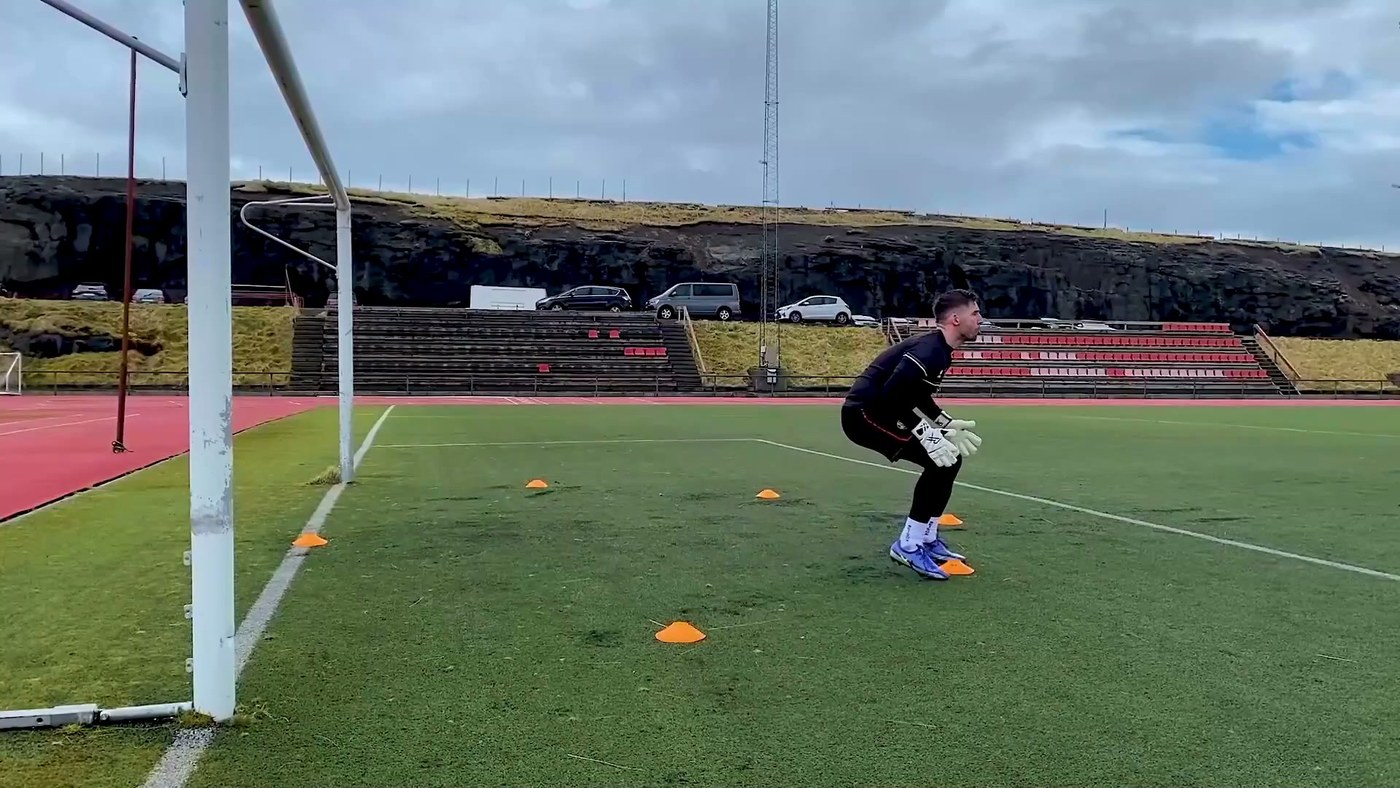
A young goalkeeper does not need a gym to start. Bodyweight work done well is plenty at first, and anything with weights should be learned with a coach who can check the technique.
In the video I said hard work always beats talent. A viewer replied that this is only half true, because hard work with a bad method does not get you far, and talented players work hard too. They were right, and I told them so. So let me say it better: work hard on the right things.
Do you have to be good at high dives to be a good goalkeeper?
A goalkeeper asked me this under my Neuer video. They were good at rushing out and at low and medium dives, but struggled with high balls and mostly just jumped straight up at them.
Short answer: yes, eventually. But you are building from the right place.
People remember Neuer's sweeping and his passing. What really makes him great is that his basics are rock solid: catching, diving, positioning. Everything else sits on top of that.
It sounds boring. It is where it starts.
Catching. Get so used to the ball that your hands almost become a magnet for it, whether it is a hard shot or a tricky dipping one.
Diving. Work on all of them: your low dives, your collapse dives and your high dives. Jumping straight up at a ball heading for the top corner is a very common habit. The fix is to step towards the ball and push off sideways into the dive.

I break the whole movement down step by step in my guide to the goalkeeper high dive. Even Neuer had to learn his dives once.
How do you build a mindset like Neuer's?
Do you lose focus during games? Do you get nervous before the big ones?
Football is a game of the mind, and for a goalkeeper those battles matter even more. What I admire most in Neuer is that he looks comfortable being uncomfortable.
He is human, like you and me, and feeling fear is normal. What he does not do is let the fear of a mistake decide for him. A goalkeeper scared of looking stupid does not sprint out of his box again and again in a World Cup knockout game.
I cannot tell you what goes on inside his head. I can give you two tools that help with exactly this.
Visualisation. See the situation in your head before it happens. Picture yourself in goal, calm and brave, making the right decision and the save. The more real you make it, the more natural it feels when it happens for real. It is not magic, and it takes practice, so here is how to use visualisation as a goalkeeper.
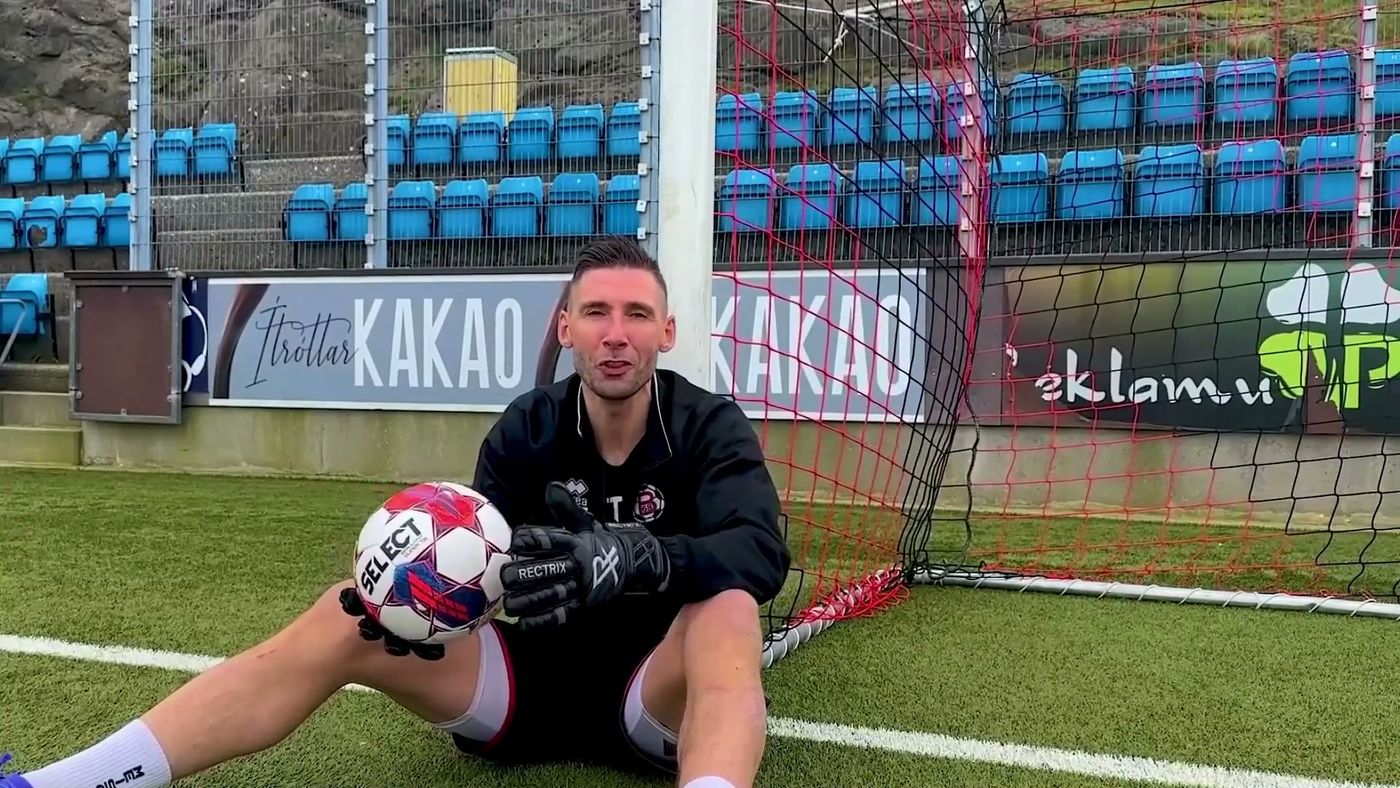
Self-talk. That quiet voice in your head either lifts you up or pulls you down. As a goalkeeper you need to be your own biggest supporter, especially straight after a mistake.
Work on this and you do not just become a better goalkeeper. You become someone your team mates trust. If fear of mistakes is what stops you, start here: how to deal with goalkeeper nerves.
What to do this week
You will not become Neuer by next Saturday. You can copy one thing he does.
Pick one. Not five.
- Stand higher. Next match, when the ball is in their half, check where you are standing and take a few steps up.
- Watch one clip. Find one moment you were caught out and work out what you missed.
- Ask for the ball. At least once in every training session.
- Face your worst dive. Give the dive you avoid most ten minutes of your next session.
- Pick your reset. Choose two words you say to yourself after a mistake.
Be bold, be brave. The height is optional.
Who tells you what to work on next?
Neuer grew up with goalkeeper coaches around him, telling him what to fix and what came after that. Most young goalkeepers have nobody, so they copy the highlight clips and skip the basics that make them possible.
That is the gap I built the program for. Over 120 drills you can do on your own, from footwork and handling to jumping and distribution, in a weekly plan that puts them in the right order. $27 a month.
See what is inside the program 30-day money-back guarantee if it is not helping.
Like Neuer, I am 40 and still playing. I have played more than 500 competitive games, represented my national team and played in Champions League and Europa League qualifiers. I have coached more than 1,000 goalkeepers, and a lot of them want to play like Neuer. I help them start with the parts they can actually copy.
Enjoyed this article?
Find more great content here: