
How to Jump Higher as a Goalkeeper: 10 Drills in 4 Levels
Ten plyometric drills in four levels, from learning to land to full goalkeeper movement, with no gym and no equipment.
The cross is in the air. You go up for it, and it clears your fingertips by a hand's width.
You did not need a hundred random jumping drills to fix that. You needed to build power in the right order.
Here is how I train jumping as a goalkeeper, without a gym, in four levels that go from landing to full goalkeeper movement.
To jump higher as a goalkeeper, build power in order: learn to land first, then vertical and forward jumps, then sideways bounds, then combine them into goalkeeper movement. Two sets of four or five clean reps beats twenty messy ones. Land quietly, rest a full minute between sets, and only move up a level when the movement looks clean.
That session above is the follow-along version: ten minutes, 40 seconds on and 20 off. The rest of this guide is the progression behind it, so you know why each drill is there and when you are ready for the next one.
Why does landing come before jumping?
Most goalkeepers who want to jump higher go straight to the biggest, hardest drill they can find. That is backwards.
The better you can land, the better you can jump, react and dive. A landing you cannot control is a landing your body will protect itself from, and a body that is protecting itself never pushes off with everything it has.
So level one is not glamorous. It is teaching your body what "ready to move again" feels like.
Snap down to stick
Start tall, up on your toes, arms up. Then snap down into the landing position and freeze: knees bent, hips back, chest slightly forward. Hold it for one or two seconds. Two sets of five. To make it harder, do the same on one foot, but only if you can land without your knee collapsing inwards. If the landing is messy, stay on two feet.
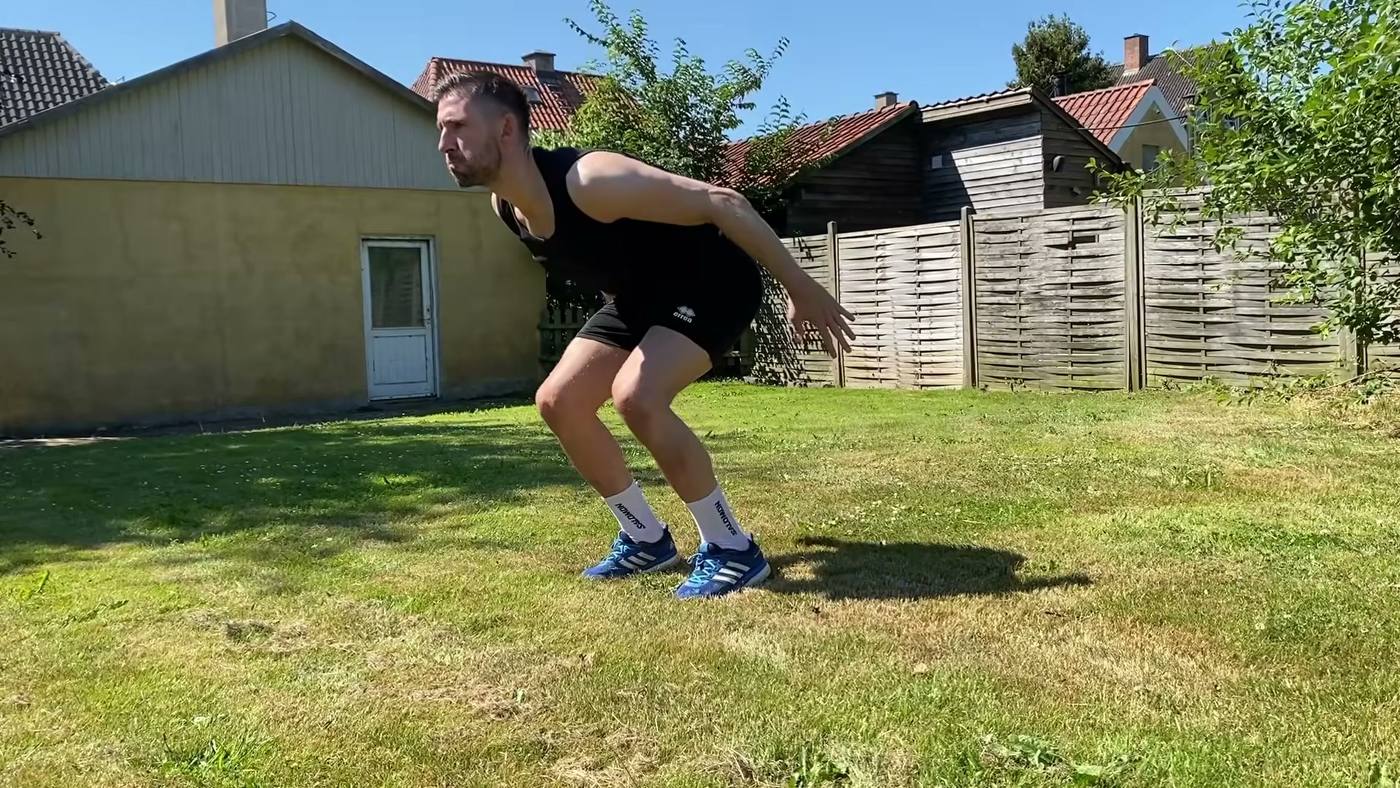
Pogo jumps
Stand tall, knees slightly bent, and bounce through your ankles only. Small, light, quick jumps. You are not trying to jump high. Your only goal is to spend as little time on the ground as possible. Two or three sets of 15 to 20 seconds. Once that feels easy, move side to side, then forwards and back. If your landings are loud and heavy, you are jumping too high.
Level one might feel easy. Do not skip it. These two drills belong in your warm-up forever, because they are the thing that makes every later drill safe.
How do you build real jumping power?
Now the first real power jumps.
Countermovement jump
Feet shoulder-width apart, hands on hips. Dip down quickly into a short squat and jump as high as you can. Land softly on both feet, knees bent, control the impact. The biggest mistake is dropping into a big, slow squat. You only want to dip, then explode. Two or three sets of five. One powerful jump at a time, then reset.

Pogos to vertical jump
Two small pogo jumps, then snap down and explode straight up on the third. The first two are quick and light, the third is everything you have, arms driving up. Two or three sets of four to six. When you can control it, move slightly forward with each set, but keep the focus on getting up, not across.
Broad jumps
Strong athletic position, arms swung back, then drive forward and jump as far as you can. Control the landing and reset. Two or three sets of four or five. This is not a race. Jump far, land clean, reset. Once a single jump is controlled, do two in a row. Then three. But only if the first landing is clean. If your chest drops, your knees collapse, or you stumble, go back to single reps.
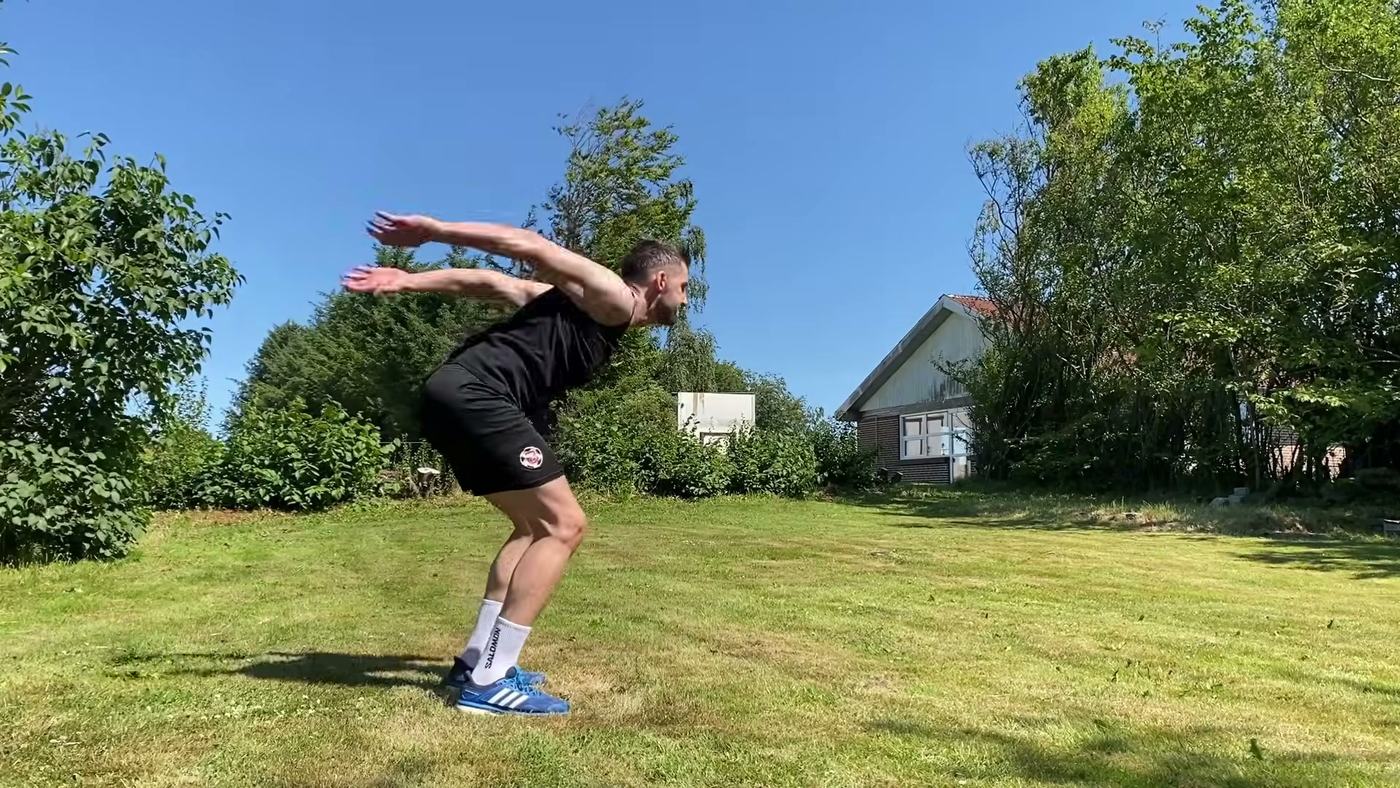
Split stance jumps
One foot slightly in front of the other. Dip and jump as high as you can, landing in the same split stance. This matters because in goal you almost never push off from a perfect position. Two sets of four or five on each side. Once that is controlled, switch legs in the air.
That is level two: vertical power, forward power, and power from uneven positions.
How do you get power for diving?
Level three is sideways, which is where goalkeepers actually live. This is the power behind the high dive, and the reason some keepers reach the top corner and others watch it go in.
Lateral bound to stick
One of the best drills there is for diving power. Start on one leg, push sideways, land on the opposite leg, and hold for one or two seconds. Do not chase distance at first. I want a strong push up and out, a soft landing, and total control on the ground. Two sets of four or five each side. When you own the landing, jump further. Then turn it into skater jumps, moving side to side without stopping. Once those are controlled, drift slightly forward with each one.
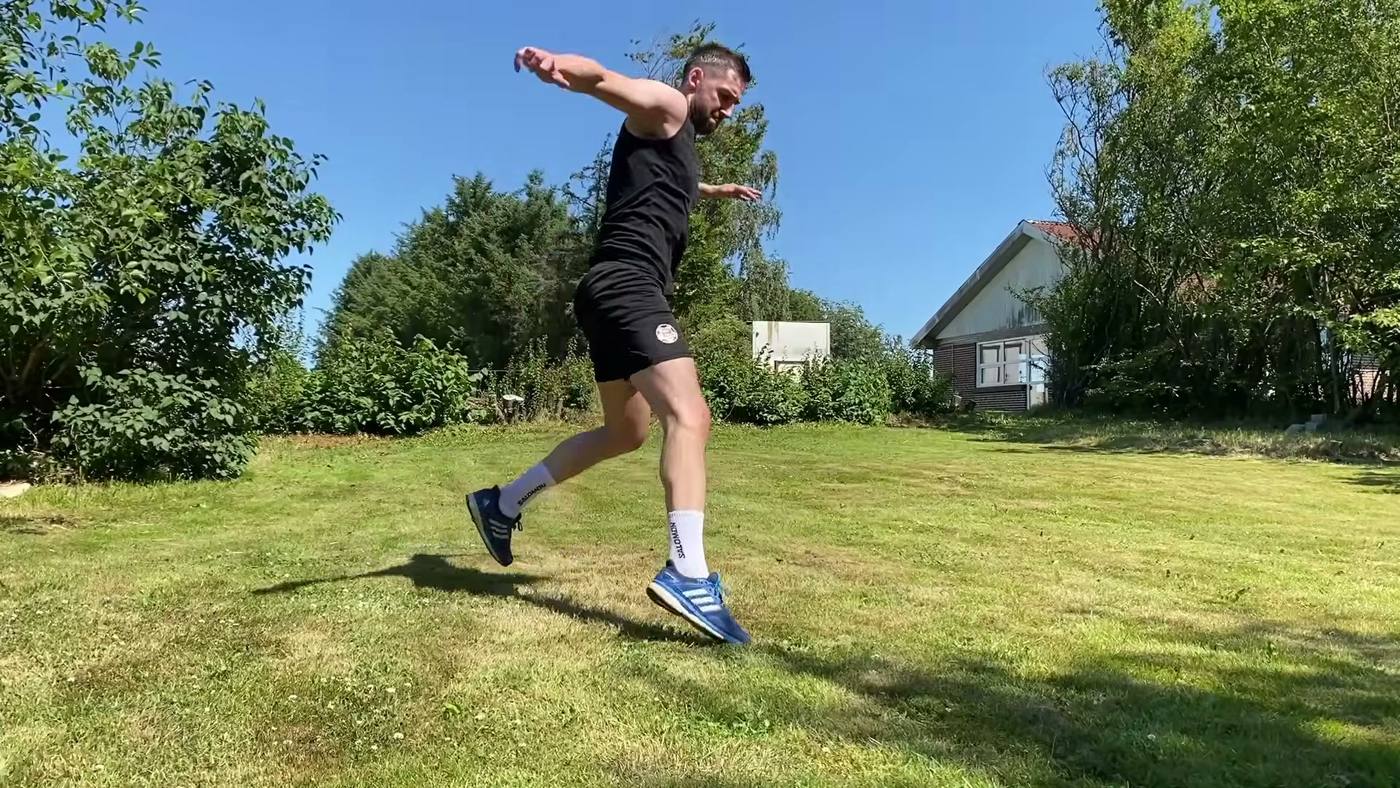
Crossover bound
Start on your inside leg, push across your body, land on the opposite leg and control it. Instead of going straight sideways, you are swinging the leg across. Keep the jumps small at first, land quietly, keep your chest over the landing leg. Two sets of four or five each side. This one is harder than it looks. Do not rush it.
How do you turn it into goalkeeper movement?
Level four combines everything into the shapes you actually make in a game.
Pogos to broad jump
Four small pogo jumps, then explode forward into a broad jump. Quick and light, then one big drive with the arms. Two sets of four or five. When that feels sharp, jump at a slight angle instead of straight ahead: slightly left, then slightly right. Goalkeepers rarely move in straight lines.
Lateral bound to vertical jump
The hardest drill in the set. Bound sideways onto one leg, bring the other foot down quickly, then immediately explode straight up. If the sideways jump is too big, you will not have anything left for the vertical. Control the side push first, then make the jump up more powerful. Two sets of three or four each side.

Here is the full session, drill by drill, if you would rather follow it than read it:
How often should a young goalkeeper do this?
This is the question I get asked under every jumping video, so here is the honest answer.
Pick one or two drills from each level, start at the level that fits you, and rest for at least 60 seconds between sets. Quality is the whole point. Five clean reps teach your body something. Twenty sloppy ones teach it the wrong thing and leave your knees sore.
Not on consecutive days, and never the day before a match. If anything hurts, not "tired" but hurts, stop. A growing goalkeeper gets more from two clean sessions a week than from five, and jumping work fits into a four-day week as one part of one session, not a session on its own.
And the day after, do the recovery properly. Plyometrics are the training that shows up in your legs tomorrow, not today.
Want more jumps to pick from? Here are 10 plyometric drills for goalkeepers that need no equipment, with the reps and rest for each.
What to do this week
Start at level one, even if you think you are past it.
- Two sessions this week: snap downs and pogos, then countermovement jumps and broad jumps.
- Film one set from the side and watch your landings, not your jumps.
- If the knees hold and the landing is quiet, next week you earn level three.
Power is built in order. Skip a level and you borrow it from your knees.
When the jumping comes together, the place it pays off first is claiming crosses. The full set of jumping, leg power and core work sits in the drills library, and on the days you are not jumping, the ten-minute goalkeeper leg workout builds the strength these jumps push off.
Jumping is one piece. Who is planning the rest?
Diving, handling, footwork and the rest all have to be built in the right order too, and that is the hard part when nobody is planning it for you.
The Ultimate Self-Training Course does the planning. 120+ drills in a weekly structure, including the full plyometric progression. $27 a month.
Have a look at the program 30-day money-back guarantee if it is not helping.
I have played more than 500 competitive games, represented my national team, and played in Champions League and Europa League qualifiers. I have coached more than 1,000 goalkeepers, and this is the jumping progression I give every one of them.
Enjoyed this article?
Find more great content here: