
The 10-Minute Goalkeeper Leg Workout You Can Do Anywhere
Ten squat variations, 45 seconds on and 15 off, no equipment, built for the power a goalkeeper needs out of a low position.
No gym. No weights. No space to speak of.
Ten minutes, ten exercises, and by the end of it your legs will feel like you have been in the gym for five hours straight.
This is the leg workout I use at home when there is no pitch and no time, and it is built for exactly the thing goalkeepers need most from their legs: power out of a low position.
A goalkeeper leg workout at home needs nothing but a floor: ten squat-based exercises, 45 seconds on and 15 off, alternating slow control with explosive jumps. Squat pulses, slow squats, squat to jumping jack, squat holds, low lateral steps and squat jumps build the leg power a goalkeeper uses in every dive and every push off the line.
That is the follow-along. Everything below is the written version, plus the two things the video does not have time for: how often, and how to land.
Why squats, and why so many kinds?
Every save starts from a bent knee. The set position, the power step, the push-off for a dive, the drive to close a striker down: all of it is a squat that turns into a jump.
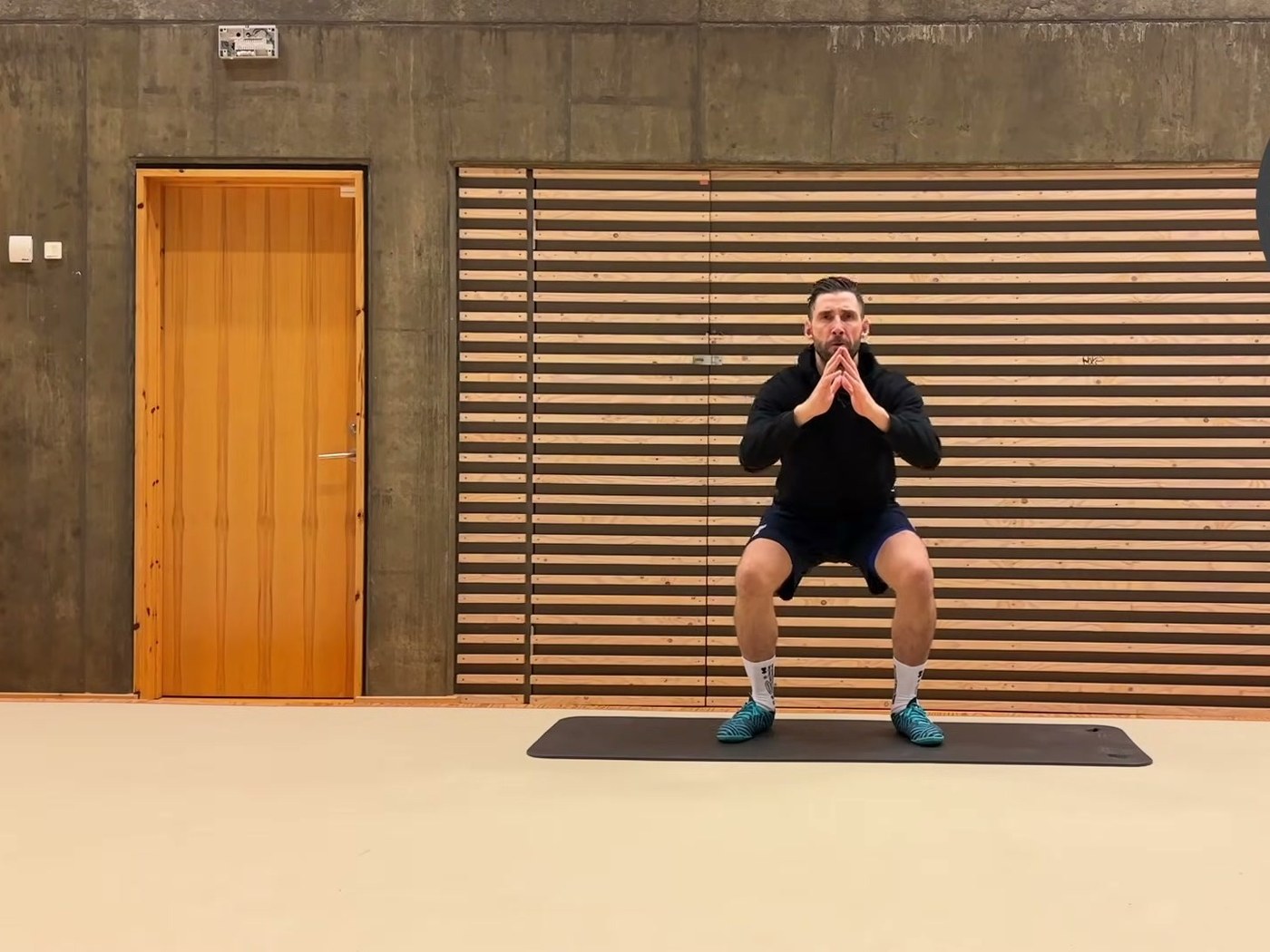
So this workout is ten variations on the same movement. Some are slow, to build control and strength on the way down. Some are explosive, to build power on the way up. Alternating the two is what makes ten minutes feel like an hour.
Work for 45 seconds, rest for 15. If that is too hard, 30 and 30 is fine.
What are the ten exercises?
- Squat pulses: drop, pulse five times, stand. Core tight, breathe
- Slow squat, fast up: five counts down, explode up
- Squat to jumping jack: deep squat, jump out into a jack, back
- Squat hold: four seconds at the bottom, explode up
- Fast down, slow up: drop quickly, stand slowly
- Low jacks: legs in and out, staying low the whole time
- Hold and jump: four seconds down, then a full jump
- Jumping jacks: keep the energy up when the legs are jelly
- Low lateral steps: stay in the squat, step right, step left
- Squat jumps: touch the floor, explode up, empty the tank
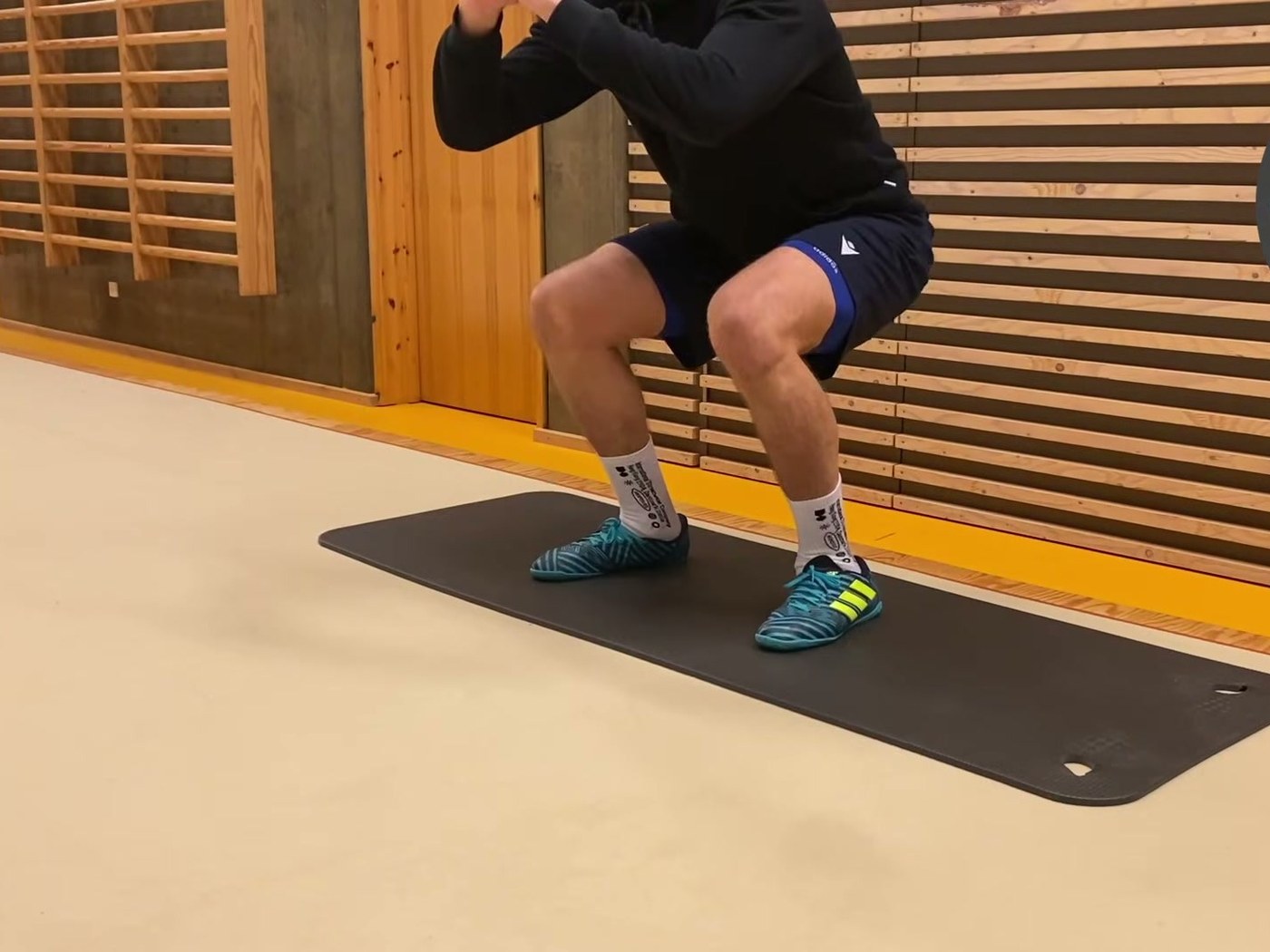
Number two is the whole workout in one movement: control down, power up. Number six is the burner, core engaged, hips low. Number eight is where mental toughness kicks in, because your legs will be asking you to stop. Do not.

Number nine is your goal-line shuffle with the legs already tired, which is exactly what the 85th minute feels like. Bum low, legs bent, smooth and controlled. And number ten is the finisher: touch the floor, explode, last push.
How often should you do it?
This is a hard ten minutes, and the goal is quality, not frequency.
Two or three times a week is plenty for a young goalkeeper, never on consecutive days, and never the day before a match. The legs need the rest days to actually get stronger. If the knees hurt, not tired, hurt, stop. And if it is done alongside jumping work, both count as leg sessions, not one.
The day after, do the recovery properly. This is the kind of session you feel tomorrow, not today.
What about landing?
Every explosive rep in this workout ends in a landing, and the landing is where you get hurt if you rush it.

Land soft, on the balls of your feet, knees bent, and let the knees track over the toes rather than collapsing inwards. If you cannot land quietly, you are jumping higher than your legs are ready for. Take the jump down a level and earn it back.
That is the same rule as diving: the landing comes first, then the height.
What to do this week
Do the workout once, on a day with no match and no pitch session.
- Film the last exercise from the front. Watch your knees on the landing.
- If they hold, do it again in three days.
- Then twice the following week, and keep it there.
Ten minutes of legs, twice a week, is what a bigger dive is made of.
This session sits with the jumping work and the core workout (ball included) in the drills library, and it slots into the four-day week as one part of one session.
Legs done. What is the rest of the week?
Ten minutes of legs is one piece. The rest is diving, handling, footwork and the recovery that lets you do it all again.
The Ultimate Self-Training Course puts the whole week together: 120+ drills including the leg, jump and core work, laid out so you never have to guess. $27 a month.
Have a look at the program 30-day money-back guarantee if it is not helping.
I have played more than 500 competitive games, represented my national team, and played in Champions League and Europa League qualifiers. I have coached more than 1,000 goalkeepers. This is the leg session I do at home when there is no pitch.
Enjoyed this article?
Find more great content here: