
The Goalkeeper Core Workout That Actually Works (Ball Included)
A core workout where the ball never leaves your hands: the ten-minute version, a six-minute beginner version, and why it is the reason the second save exists.
Most core workouts for goalkeepers are just sit-ups with a football logo on the thumbnail.
The difference with this one is the ball never leaves your hands. Every exercise trains your core and your handling at the same time, which is the only way a core workout has anything to do with goalkeeping.
Two versions here: the ten-minute one, and a gentler six-minute version for beginners.
A goalkeeper core workout should hold a ball throughout, so the stomach, sides and back are trained with the hands doing goalkeeper work. Sit-up catches, Russian twists, toe touches, plank ball rolls, side planks and glute bridges, 45 seconds on and 15 off, on a soft surface. It is why you get up faster after a save and hold your shape in the air.
Why does a goalkeeper need core strength?
Three moments in a game come straight from your core.
Getting up after a save
The spin, the kick push, the roll: all of them are core movements before they are leg movements. A weak core is why some keepers are still on the floor when the rebound arrives. The get-up guide says the same thing from the other direction.
Holding your shape in the air
A high dive with a weak core folds in the middle. You lose reach and you land badly.
Handling under pressure
Absorbing a hard shot into the chest without being knocked backwards is core strength, not arm strength.
So the workout uses the ball throughout. If the ball is in your hands while your core is working, the two learn to work together.
What is the ten-minute workout?
Ball, a bit of space, a soft surface. 45 seconds on, 15 off, or 30 and 30 if that is too hard.
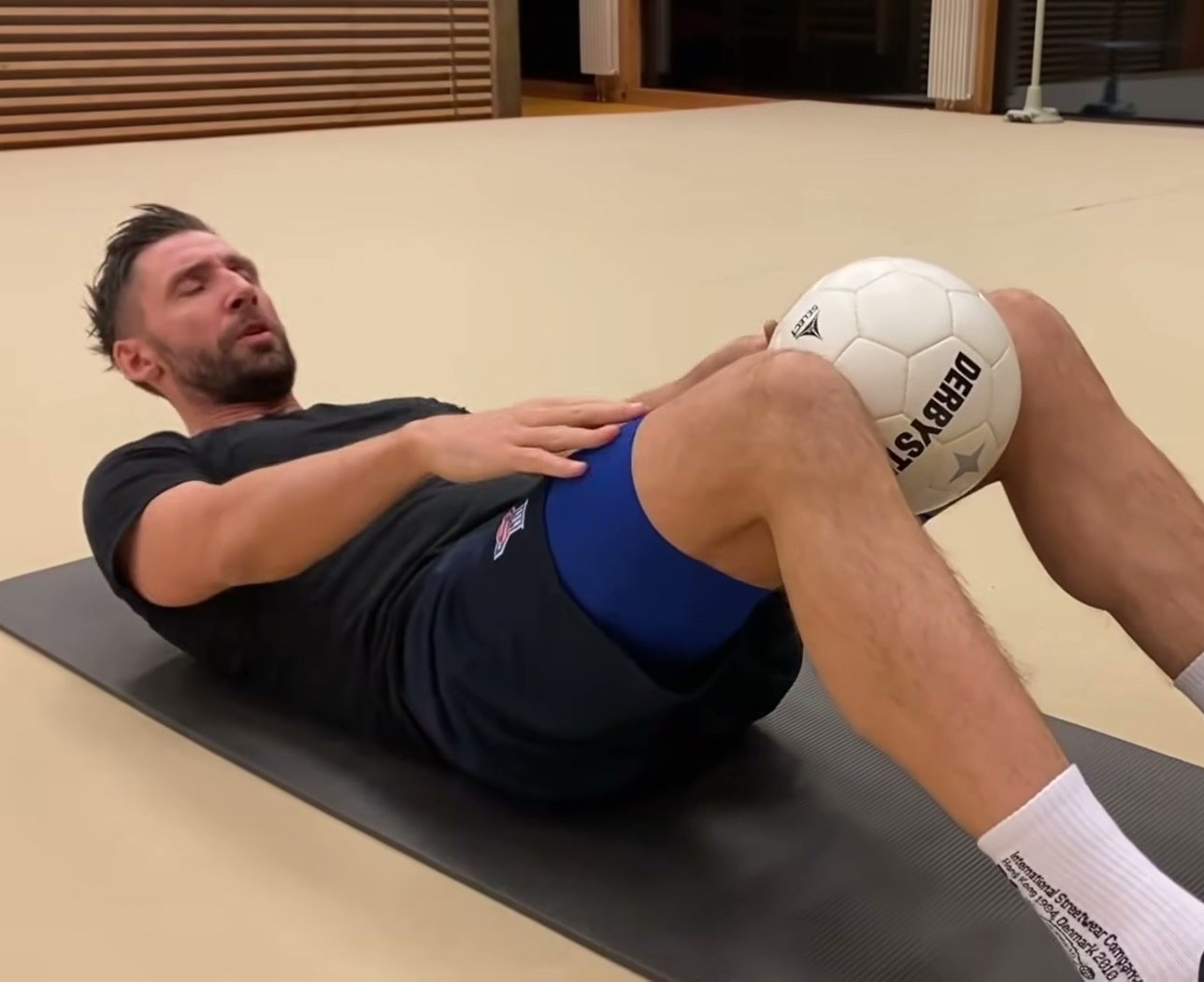
- Knee squeeze crunch: ball between the knees, hands glide up the thighs
- Heel taps: ball between the feet, tap heels side to side
- Russian twists: ball in hands, twist side to side, heels down or up
- Toe touches: legs straight up, touch the toes with the ball
- Explosive sit-ups: full sit-up, touch the ground between the feet
- Flutter kicks with the ball: ball held up, kick the ball with each leg
- Plank ball rolls: high plank, roll the ball side to side underneath
- Side plank reach, right: reach the ball behind you
- Side plank reach, left
- Slow sit-up: ball in front of your face the whole way

Number five is a throw-in without letting go. Number seven is about keeping the hips still, not rocking. And number ten is a real killer, which is why it is last.

What is the beginner version?
Six minutes, 30 seconds on and 15 off, made for beginners. Go slow, keep the ball close, and keep your body under control.
- Sit-up catches: throw the ball up, catch with both hands, back down
- Bicycle passes: sitting, raise one leg at a time, pass the ball under it
- Russian twists with a bounce: twist the whole body, bounce the ball each side
- Toe touches: shoulders towards the toes, not just the neck
- Dead bug: ball held up, both legs raised, lower the ball and one heel together
- High plank ball roll: hips still, knees down if needed
- Back roll: on your stomach, roll the ball under your chest hand to hand
- Glute bridge roll: hips up, roll the ball underneath
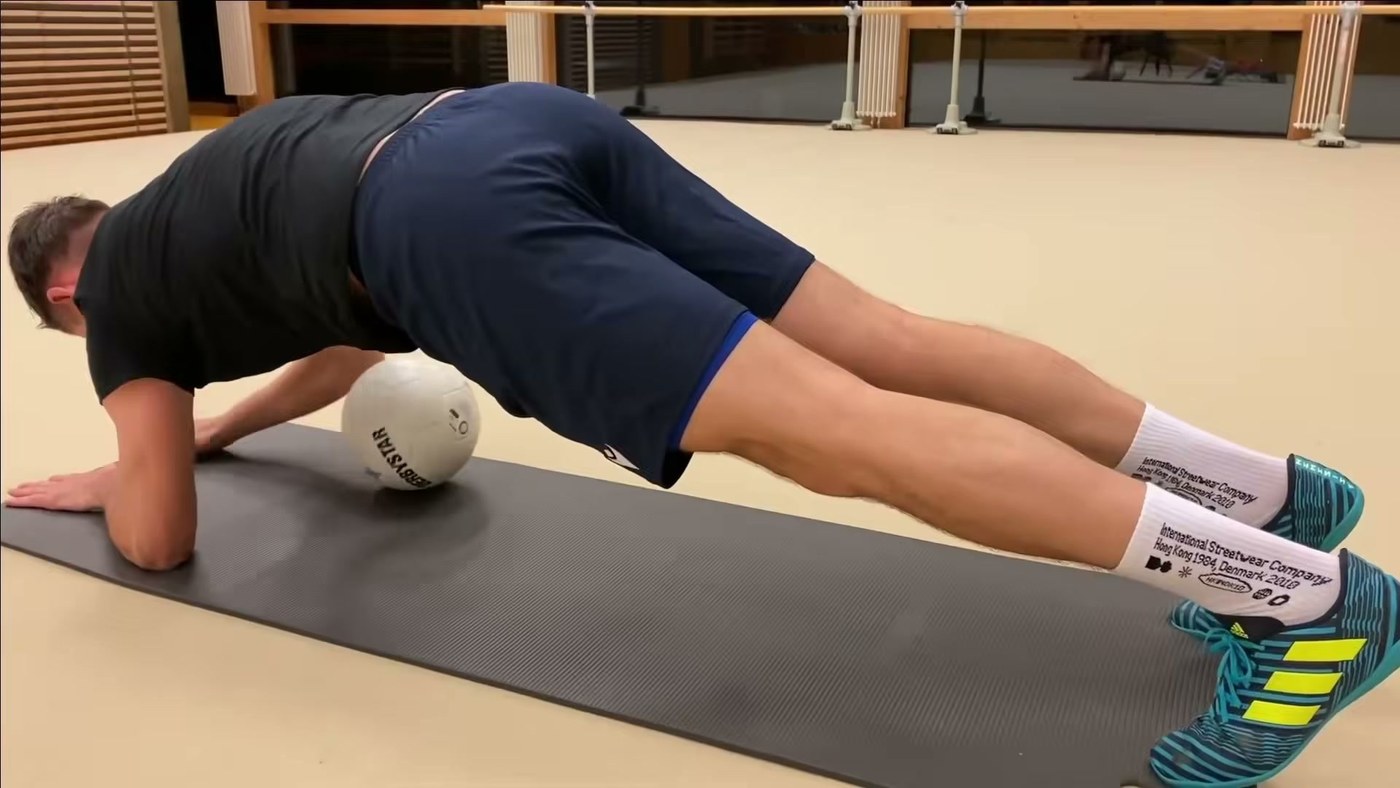
Both legs raised on the bicycle passes is the hard version. On the toe touches it is fine if you cannot reach yet, as long as the shoulders come up. And on the glute bridge, lift all the way so the ball does not get stuck. Here it is as a follow-along:
How often, and how hard?
Core recovers faster than legs, so two or three times a week is fine, and the beginner version can be done most days.
The rule is control. If your lower back starts doing the work, or your neck is pulling you up in the crunches, slow down or drop to the beginner version. A slow rep with the ball under control is worth five fast ones.

What to do this week
Beginner version, three times this week, on a soft surface.
- One focus: the ball never leaves your hands and your eyes never leave the ball. That is the goalkeeper part of the workout.
- Next week, try the ten-minute version once.
- Pair it with the leg workout on different days, not the same one.
A strong core is the reason the second save exists.
Both versions sit with the jumping and leg work in the drills library. The handling that the ball is quietly training is broken down in the catching guide.
Core sorted. What order does the rest go in?
Core is one session in a week that also needs diving, handling, footwork and legs, in an order that makes sense.
The Ultimate Self-Training Course is that order: 120+ drills, the core and strength work included, laid out week by week. $27 a month.
Have a look at the program 30-day money-back guarantee if it is not helping.
I have played more than 500 competitive games, represented my national team, and played in Champions League and Europa League qualifiers. I have coached more than 1,000 goalkeepers. Every core session I give a young keeper has a ball in it.
Enjoyed this article?
Find more great content here: