
Afraid to Dive? The 3 Drills That Fixed It for Me
Fear of diving is fear of the landing. Three drills, no partner and no equipment, that make the landing safe and boring until the fear has nothing left to hold on to.
You are stood in goal, ready to dive, and you feel it. That half-second of hesitation, because part of you is already worried about how the landing is going to feel.
We have all been there. The fear of diving is real, and it is one of the most common things young goalkeepers write to me about.
The good news is that beating it is easier than you think. These are the three drills I used to get rid of it, and you need no partner and no equipment.
Fear of diving is almost always fear of the landing. The fix is to make the landing safe and boring before you add any height: start on one knee, learn the power step and the low-to-high dive, use the ball to cushion the landing, then build in a hurdle hop and cone footwork. Do it daily for a few weeks and the fear fades with the technique.
Why does the fear go away when the technique improves?
Let me tell you about a goalkeeper I worked with. Arnar is a young keeper from Iceland who struggled badly with the fear of diving, especially to his weaker side. Every time he was in goal he hesitated, worried about landing awkwardly or hurting himself. It held him back from the big saves he knew he could make. Then he started doing the same drills I am about to show you. Day by day he practised, and as the technique improved, so did his confidence. Now he dives without fear and makes hard saves look easy.
That is the whole point. Confidence follows competence. Your body stops bracing once it trusts what it is about to do, and trust is built from small, safe repetitions.
If Arnar could do it, so can you. No coach and no team needed. And if the fear runs deeper than diving, the fear guide deals with the whole of it.
Drill 1: How do you learn the power step from your knees?
This one is all about the power step, and it starts on one knee so you cannot fall far.
When you dive, you push off the foot closest to the ball. Dive off the wrong foot and it throws the whole thing off, and diving off both feet is worse.
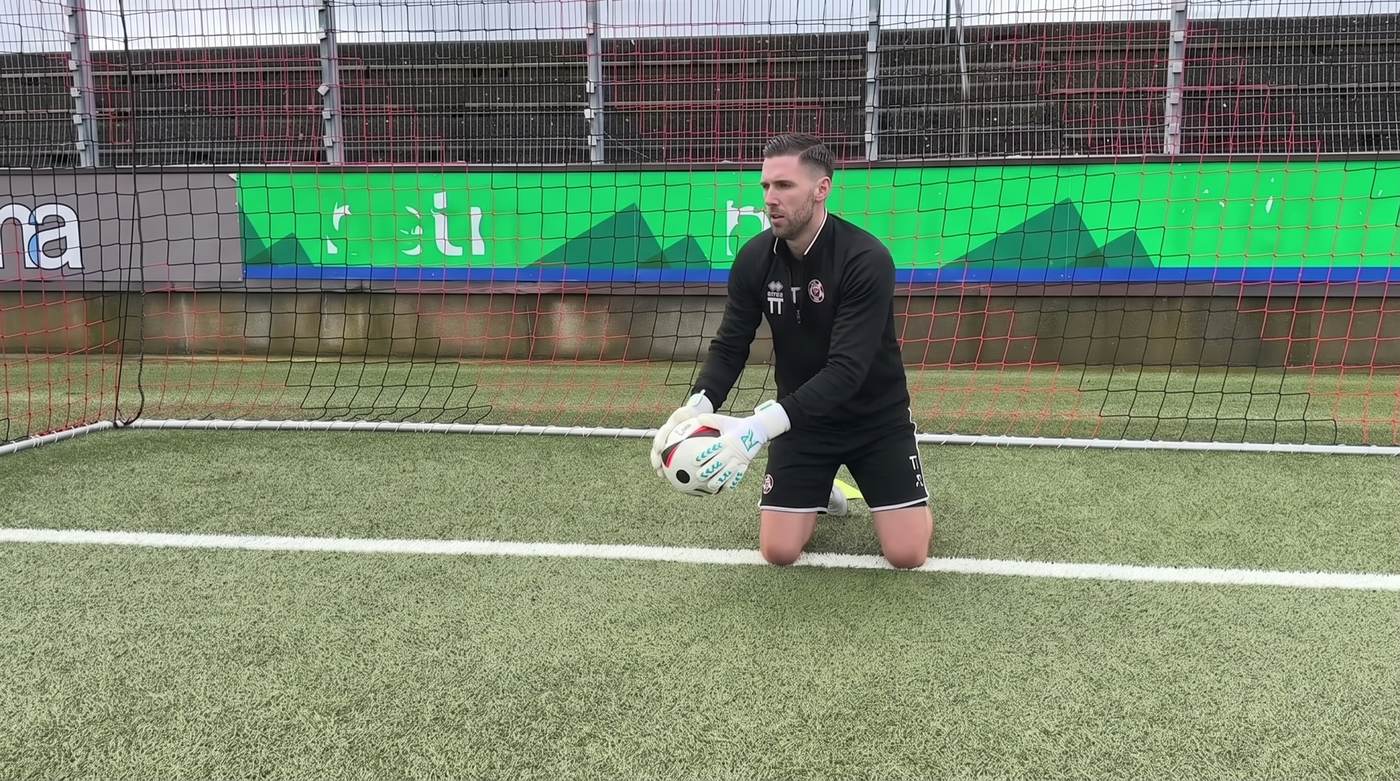
- Toss the ball up and lean back slightly onto your heel
- As it drops, shift your weight forward onto your toes
- Drop your shoulders over your knee so you dive low to high
- Catch, and use the ball to cushion your fall, then glide through the side of the knee and shoulder
That small weight shift is what launches you towards the ball. Dropping the shoulders is what lets you reach it at its highest point.

Start small. Throw the ball close to your body and just collapse onto it. As the landing gets comfortable, throw it higher and further away. Practise both sides, so your weaker side catches up with your stronger one. This is the same low-to-high idea that the low dive guide builds the full dive on.
Drill 2: What does the hurdle do?
For this one you need a small hurdle, and if you do not have one, a cone, a bottle or a shoe does the same job. Place it next to your non-diving foot.
Throw the ball at a distance that feels right. While it is in the air, hop over the hurdle and land on your non-diving foot. Pause for a moment to read where the ball is going.
When you are ready, get low, step over the hurdle, and shift your weight from your off foot onto your leading foot. Drive your arms forward as you go. Using your arms like that gives you more power and stops you leaving weight behind.

Same rule: start close, get comfortable, then throw further.
Drill 3: Why does footwork help with fear?
Two cones this time, placed on the opposite side to where you will dive. This drill is about footwork and coordination in a tight space, and both matter for feeling comfortable with diving.
Toss the ball up at a height you are happy with. While it is in the air, move through the cones with small, precise steps. Stay stable and in control. At the last cone, pause briefly for balance and timing, then shuffle back and aim for the ball at its highest point using the low-to-high technique from drill one.
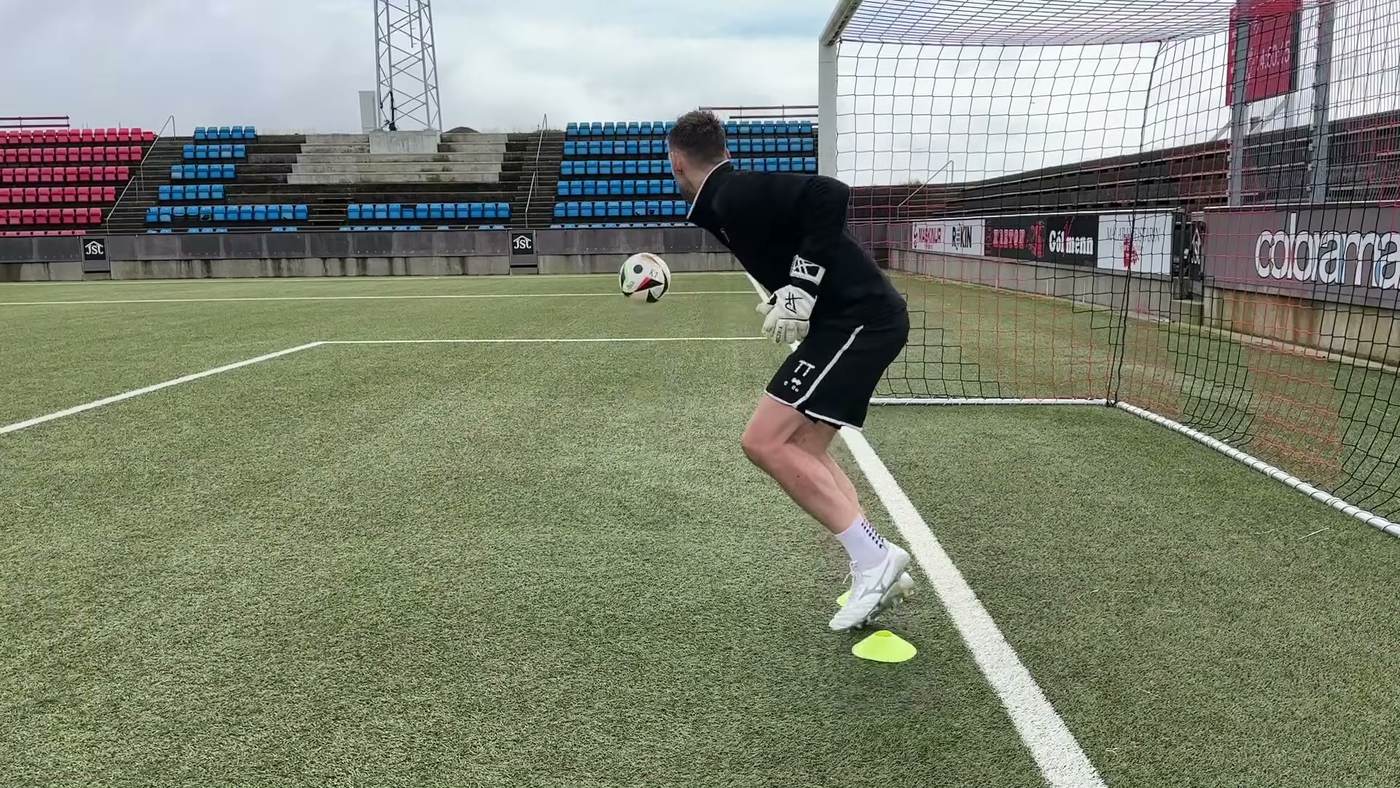
Take your time through the cones at first. As it gets comfortable, add speed and sharpness.
When your feet are organised, the dive feels like something you chose rather than something that happened to you. That is a big part of what fear actually is: the feeling of not being in control. Confidence is trained the same way, by doing the thing you are worst at until it is boring.
How long does it take?
The honest answer is that it depends on how often you do it, not on you.
Every one of these drills works because it is small enough to repeat. Ten minutes a day, both sides, for a few weeks, and the landing stops being something you think about. Once it is automatic, the fear has nothing to attach to.
Push yourself a little further each session. Slightly higher throw, slightly more distance, slightly more speed through the cones. Never a big jump, always a small one. If you are a complete beginner, the beginner diving guide covers the landing for each dive in full.
What to do this week
Most of the fear is about the landing. There is a page just on landing safely in my free Goalkeeper Technique Playbook, next to the low dive and the collapse dive.
Drill one only. Five minutes before every session, on one knee, both sides.
- Throw it close. Use the ball to cushion your fall, then glide through the side of the knee and shoulder.
- When it feels boring, throw it a little further.
- Do not add the hurdle until the kneeling dive feels like nothing.
Boring is the finish line here.
All three drills, with the rest of the diving progressions, are in the drills library.
Once the fear is gone, what do you train next?
These three drills are the start. Once the fear is gone, the next question is what to train next, and that is where most goalkeepers training alone get stuck.
The Ultimate Self-Training Course answers it: 120+ drills, diving progressions included, laid out week by week. $27 a month.
Have a look at the program 30-day money-back guarantee if it is not helping.
I have played more than 500 competitive games, represented my national team, and played in Champions League and Europa League qualifiers. I have coached more than 1,000 goalkeepers, and the fear of diving is the thing they write to me about most.
Enjoyed this article?
Find more great content here: