
Does Diving Hurt as a Goalkeeper? How to Dive Without Pain
Diving should not hurt once the landing is right. Here is why it does, how to glide through the ground instead of crashing into it, and the four stages I use to build a dive without the bruises.
You make the save, you get up, and something aches. Your hip. Your elbow. That spot on your knee that has been purple for a week.
One keeper put it perfectly under one of my videos. They were not scared of diving at all. They just wanted to learn how to do it without getting hurt.
So here is the honest answer, from someone who got it wrong for years.
Diving should not hurt once your landing is right. It hurts when your elbow, knee, stomach or hip bone hits the ground first, when you dive too high too soon, or when the ground is hard or frozen. Learn to glide through the side of your hip and thigh, build up from your knees, and wear padding on hard ground.
Should diving hurt at all?
A little bit, at the start. A graze from artificial grass, a sore hip after your first long session of diving, a bruise that fades in a few days. Most goalkeepers know all of that.
But if it hurts every time you dive, that is not toughness. It is your technique telling you something.
I know because I ignored it. The way I used to land gave me more pain than any shot I ever faced: sore wrists, sore hips, and for a while a real fear of diving. All of it came from the landing, not the dive.
There is some research on this too. A 2010 study in the Journal of Sports Sciences measured the force going through goalkeepers' hips when they dived to the side. In the lab, the peak forces were roughly four to eight times body weight. The keepers who rolled through the landing took less load on the hip.
That is the whole idea of this post. You cannot make the ground softer. You can change how you meet it.

Why does diving hurt?
Almost every painful dive I see comes down to one of these five.
Your elbow hits the ground first
You drop your elbow to stop the fall, or you stab at the ball and your arm goes straight down. Now one small, bony joint takes the whole impact, and it hurts a lot. The ball can still go under you, too.
Your knee takes it
This happens when you fall forward onto the ball instead of going sideways to it. Hard landings on the knee, again and again, are exactly what you want to avoid.
You end up flat on your stomach
You take a good power step, then twist your opposite hip too far and go down face first. It knocks the wind out of you, and it is slow to get up from.
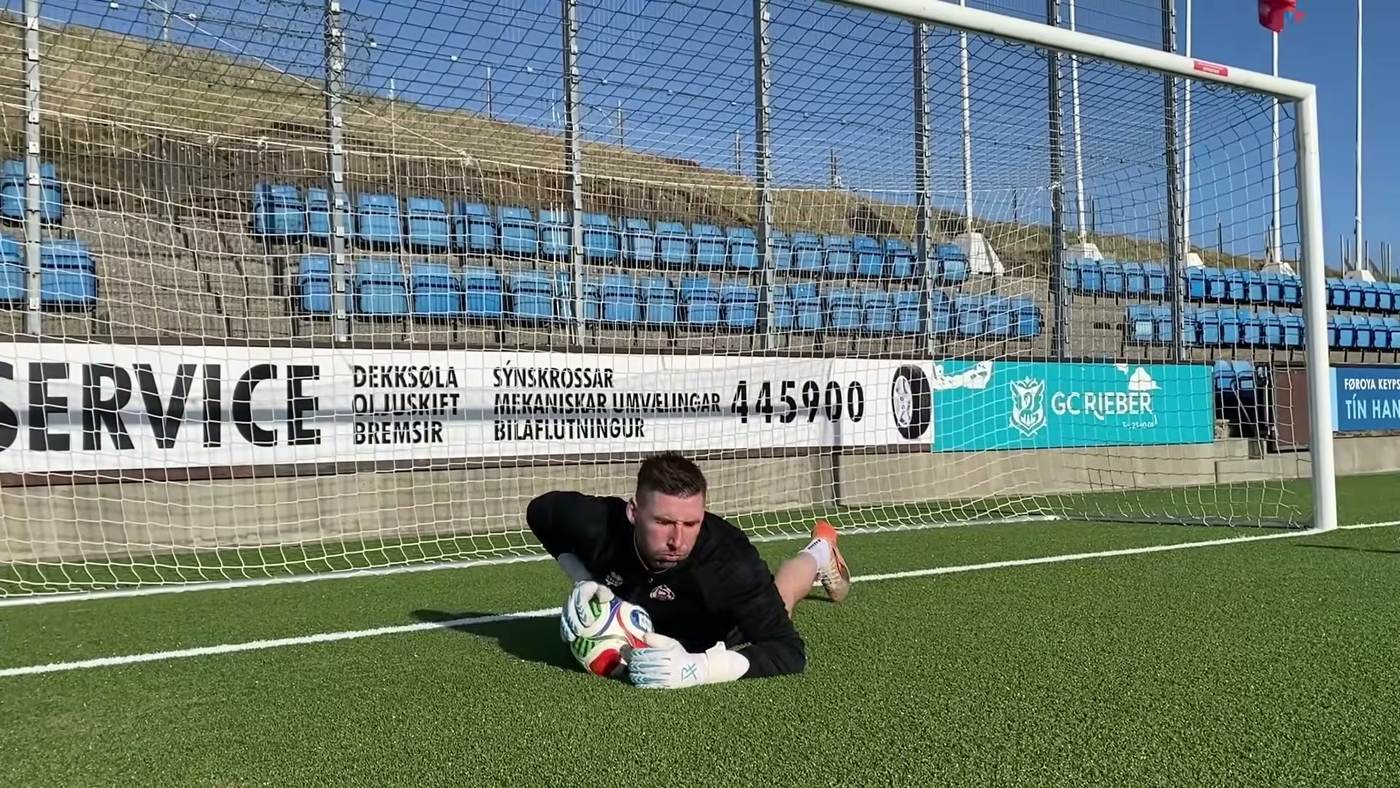
You collapse straight down onto your hip bone
You drop like a sack instead of moving across. The hip bone hits the ground hard, at one point, with all your weight on it. That is the dull thud that leaves a big bruise.
You dive too high, too soon
You skip the boring early stages and go straight to full dives from standing. The higher you start, the bigger the gap under you and the harder you come down. This is where the small knocks build up until one day it actually hurts to dive.
How do you land without hurting yourself?
You do not land. You glide.
Think of a plane touching down on a runway, not a stone dropped from a window. Your body meets the ground at a shallow angle and keeps moving along it.
- Start low, so there is not far to fall
- Power step towards the ball, foot pointing where you go
- Hands first, bottom hand close to the grass
- Glide the bottom hand out, let your body follow
- Side of the hip and thigh slide along, then the shoulder
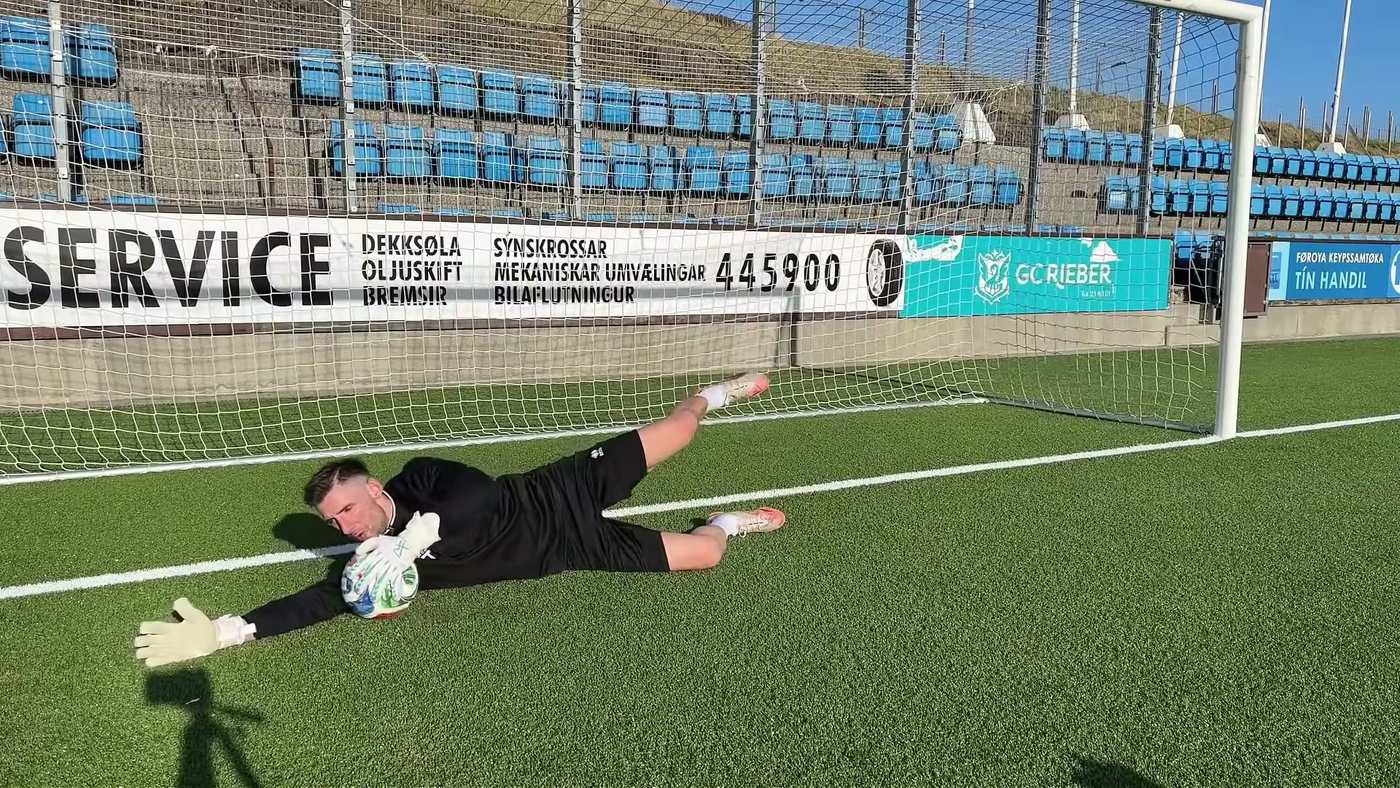
If you catch the ball, use it as a cushion. Let the ball touch down first, then follow it down onto your side.
If you have to push the ball away, turn your bottom arm slightly so the side of your arm and shoulder take it, never the point of your elbow.
The glide is the same idea as the push-out, which I break down in how to practise the low dive push-out on your own. The landing for every type of dive is in the four dives every keeper needs.
How do you learn to dive without it hurting?
You build it up in stages. I teach it in four: hips, knees, power step, then the real dive.
- Hips: sit on your hip, glide your bottom hand out to the ball
- Knees: kneel, bottom hand to the ground, glide out to the ball
- Power step: one knee down, one foot forward, push and glide
- Real dive: from your set position, get low, power step, glide

The hip stage has been in my warm-up before games for as long as I can remember. I sit on my hip, keep my bottom hand glued to the ground, and gather the ball with my top hand.
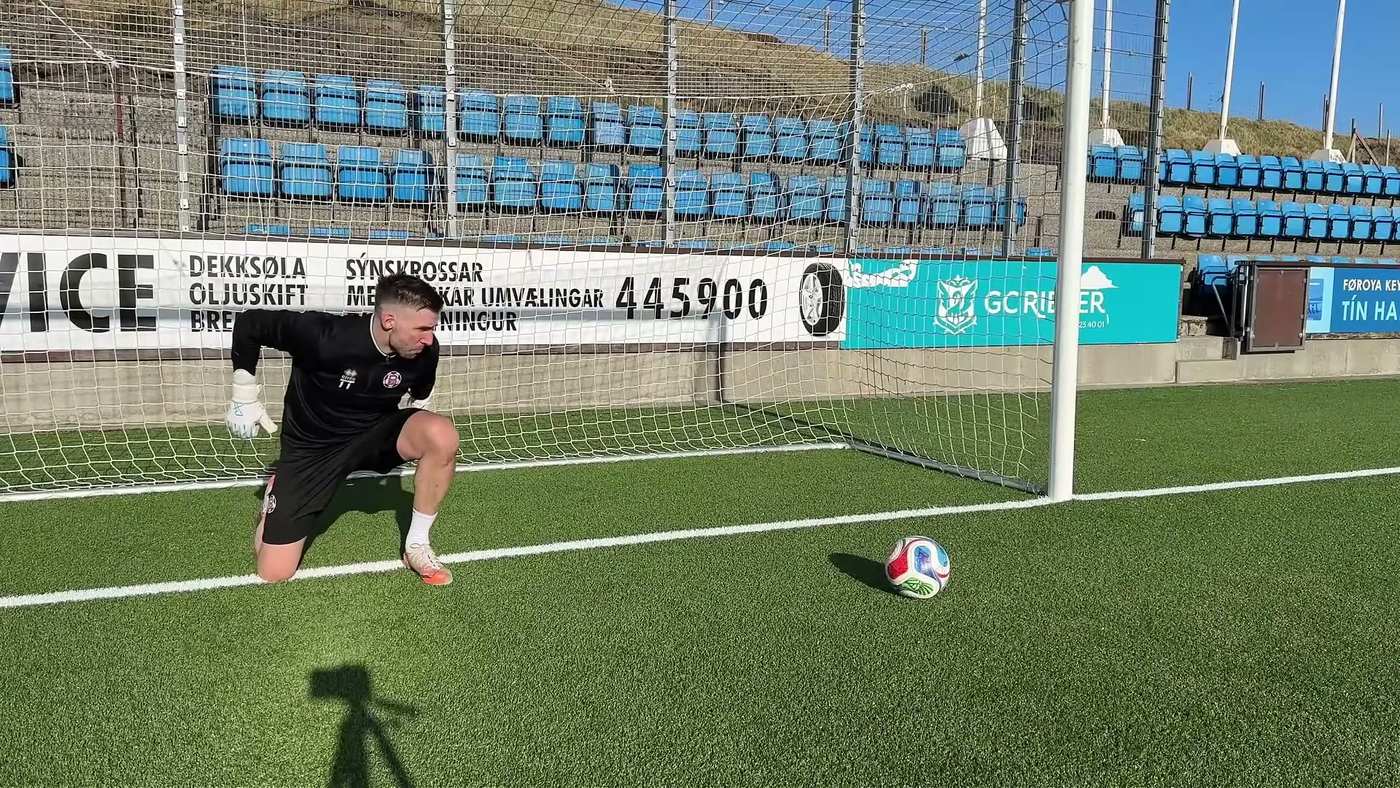
Move to the next stage only when the one you are on feels boring. Boring means your body trusts the ground.
Do both sides. Most keepers have a side that hurts more, and it is usually the side they practise less.
I show all of this, and the beginner landing mistakes, in my video on why most beginner goalkeepers dive wrong. If you are completely new to diving, how to dive as a beginner goalkeeper walks you through each dive from the set position up. And if the worry about the landing has turned into a real fear, the three drills for keepers who are afraid to dive are where I would start.
What about hard, frozen or artificial ground?
When I was a kid I dived on concrete, in the wind and the rain. I did not care. I also did not know better.
The surface matters more than most keepers think.
- Hard or dry ground. Do the hip and knee stages, and keep the full dives for a softer day or a softer patch.
- Frozen ground. Treat it like concrete. Warm up properly, keep diving low and short, and save the long full-stretch dives for when the ground has softened.
- Artificial grass. It is flat and predictable, but it burns. Long sleeves and long pants save your skin.
- Wet grass. The kindest surface to glide on. If you are learning, this is the day to put the reps in.
On cold days your body needs more time to get going, and so does your glide. I cover what I wear when it is freezing in goalkeeping in cold weather.
What kit stops diving from hurting?
Kit does not fix a bad landing. But on hard ground it takes a lot of the sting out.
- Padded shorts or sliding shorts. Padding over the hips and the outside of the thighs, right where you glide.
- Padded or long goalkeeper pants. For artificial grass, hard pitches and winter.
- Long sleeves. Your forearms and elbows stop paying for every save on artificial grass.
- Base layers. An extra layer between you and a cold, hard pitch.
This one helped me a lot when I was younger. It is hard to feel brave when your arms are covered in bruises. Wear what makes you brave, not what looks cool. Padding will not turn you into Superman, but it takes the edge off the fear. I talk about that in my video on the fear every goalkeeper has.
When is pain from diving not normal?
Some soreness the day after a big diving session is normal. Muscles that ache for a day or two are not an injury.
But some pain is a sign to stop and get help.
Stop diving and tell an adult if the pain is sharp and in one spot, if it is still there after a few days, if a joint is swollen, if you cannot move it properly, or if you start limping or changing how you dive to avoid it. A physio or a doctor is the right person to check it, not a blog post. Never play through it to prove a point.
Looking after your body between sessions matters too. My goalkeeper recovery guide covers what I do in the first ten minutes after a match.
What to do this week
Pick one stage and make it boring.
Glide, do not crash.
- Watch your landings. Film five dives. Which part of you touches the ground first?
- Go back a stage. If anything hurts, drop to the knees, or to the hip.
- Glide, every rep. Bottom hand out along the grass, body follows.
- Check your ground. Hard or frozen? Shorter dives, more padding.
Diving should feel like sliding into the ball, not crashing into the ground.
Landing sorted. Now what do you train?
Once diving stops hurting, you want to dive more. The hard part is knowing what comes after the glide: how many dives, which side, and when to add height.
The Ultimate Self-Training Program gives you a weekly plan with the diving stages in order, alongside over 120 drills you can do on your own. $27 a month.
See the weekly plan 30-day money-back guarantee if it is not helping.
I have been diving in goal for more than 20 years, through 500+ competitive games, national team caps and Champions League and Europa League qualifiers, and I got the landing wrong for a long time before I got it right. I have coached over 1,000 goalkeepers, and the glide is one of the first things I fix.
Enjoyed this article?
Find more great content here: