
Goalkeeping in Cold Weather: What I Wear When It Is Freezing
Numb fingers do not catch. Here is everything I wear to train through a Faroese winter, from my hat down to the plastic bags in my boots, and why each piece is there.
You ever tried catching a ball when your fingers feel like ice cubes?
That is not a technique problem. That is your hands refusing to work.
I live in the Faroe Islands, one of the windiest countries in the world, and I train outside through the whole winter. This is exactly what I wear, from my head down to my feet, and why each piece is there.
To goalkeep well in cold weather, keep your hands, your core and your feet warm, because numb fingers do not catch and cold legs push off weaker. I wear a hat, a neck warmer, a wind and rain jacket, base layers, training pants, thin disposable gloves under my goalkeeper gloves and plastic bags under my socks.
Why does the cold make goalkeepers worse?
Because goalkeeping needs your whole body working at once, and the cold goes after all of it.
When your fingers go numb, they stop catching balls. They just sort of guide them politely back into play. You can have perfect catching technique and it will not matter if your hands cannot feel the ball.
When cold wind hits you, your whole body tightens up. And when you are tense, you are slower. Stiff shoulders mean slow hands. Freezing hamstrings mean a weaker push-off, and a weaker push-off means you watch the ball go into the corner.
And the worst part? Once you are cold or wet, it is really hard to warm back up again. So the whole plan is to never get there.
What should you wear on your head and neck?
A hat first. When my head is freezing, I am not thinking straight, and goalkeeping is a thinking job. Every decision, like when to come off your line or where to stand, gets worse when you are just trying to survive the session.

Then the neck warmer. This one is non-negotiable for me. The second cold wind hits your neck, your whole body tightens up.
Do I look like I am about to rob a bank with it pulled up? Maybe. But at least I can feel my face.
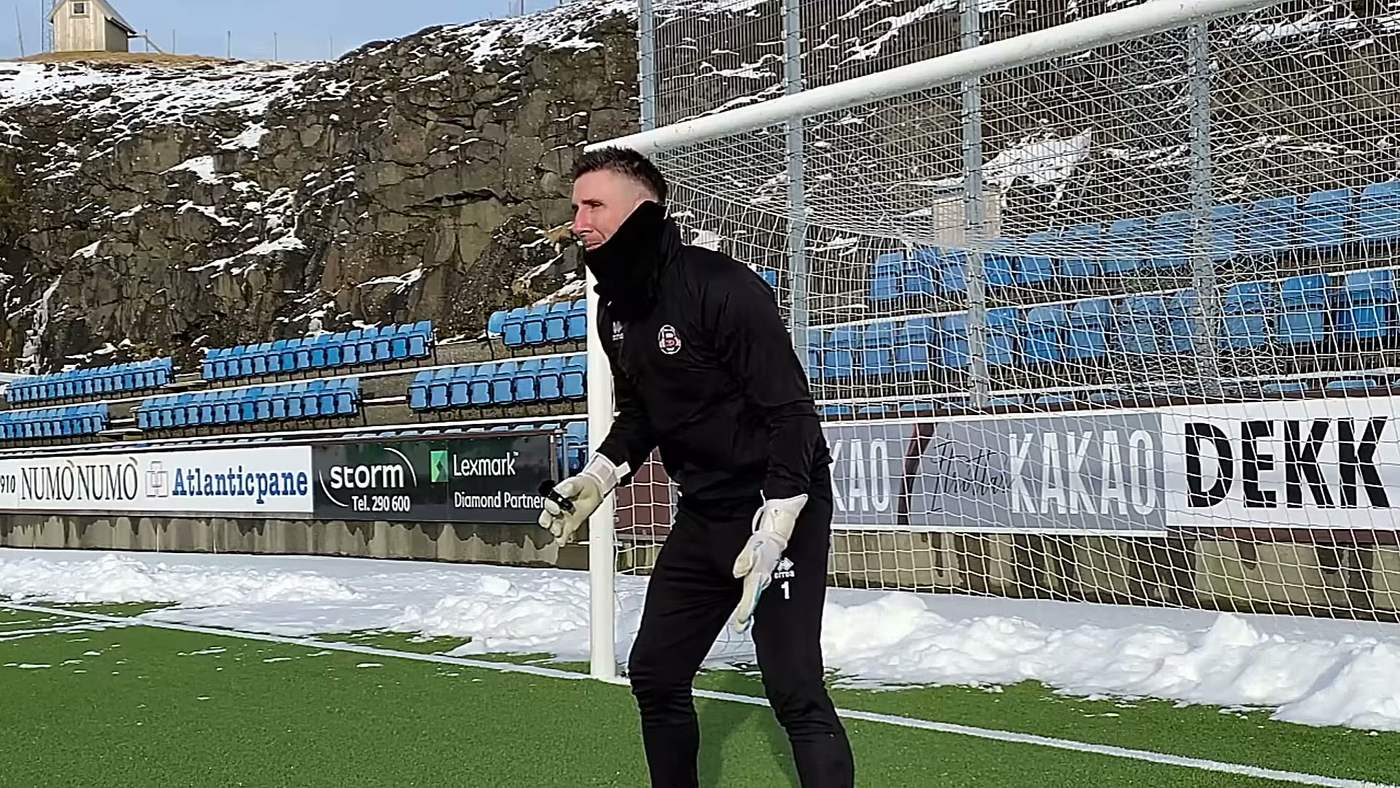
Do you need a rain jacket when it is not raining?
Most of the time my rain jacket is not about rain at all. It is about wind.
Wind is sneaky. You look outside and think "it's not that cold today". Then you stand in your goal for twenty minutes with the wind going straight through your top, and you cannot get warm again for the rest of the session.
A thin jacket that blocks the wind does more for you on those days than an extra jumper underneath.
Should you wear gloves under your goalkeeper gloves?
This is the one that divides keepers. Yes, I wear thin disposable gloves under my goalkeeper gloves when it is freezing.
Is the grip perfect with them on? No. Is the feel amazing? Also no.

But frozen hands are far worse, especially in training. When you cannot feel your fingers, you are not enjoying the session. And when you are not enjoying it, you are not improving. I would rather have slightly less feel than no feeling at all.
Some keepers use thin reusable liner gloves made for wearing under goalkeeper gloves instead. Same idea. Try both and see which one your hands like.
My own gloves are Rectrix, a brand I co-founded with my business partner in the UK, so I am not neutral here. The Rectrix Glory has 4mm German latex and a neoprene backhand, and I wear it in my own matches. It is not a magic winter glove, and no glove grips perfectly in every condition, which is exactly why the disposable pair goes underneath. For now it is only sold on Amazon UK. This is not an affiliate link.
In the rain, how you look after the latex matters as much as which glove you wear. I have covered that in how to keep your grip in rain, cold and snow.
What goes on your body and legs?
This is where warmth actually starts, so let me go from the skin outwards.
On my top half: two base layer tops, one cotton and one more synthetic, then a t-shirt, then a training overshirt. On my legs: base layer pants and training pants over them.
The base layer is the one that sits on your skin. If it is rubbish, everything on top of it is pointless.
The pants are not only about warm hamstrings. They are also great in training for those stinging saves with your legs, because nobody enjoys a frozen ball hitting a frozen thigh.
And then my second favourite trick: a woollen shirt I got from my mum. Everyone talks about jackets and base layers, and those matter. But real warmth starts at your core. When my core stays warm, my whole body stays ready.

Do I look like I borrowed it from someone's grandad? Yes. Do I care? Not even slightly.
How do you keep your feet warm in wet boots?
This is my favourite winter trick, and it is the one people laugh at.
Inside my boots, under my socks, I wear plastic bags.

When you train in freezing weather, especially when it is wet or snowing, your boots get soaked, so your socks get wet. Wet turns into cold. Cold turns into numb. And numb feet mean slow footwork, plus a lot of pain when they warm up again afterwards.
Will your foot slide a tiny bit sometimes? Maybe. Will your touch feel slightly different? Possibly. But here is the choice: a perfect touch, or feet that work.
Is a cold match different from cold training?
Yes, and a goalkeeper under my video said it perfectly: they need all of this even more for games, because in a game they stand around far more than in training.
In training you are moving most of the time. In a match you might not touch the ball for twenty minutes, and then you have to make a save with cold hands and cold legs.
So when the ball is up the other end, keep moving. Stay on your toes, shuffle across your goal, swing your arms. Keep your layers on for your warm-up, take them off at the last moment, and pack a spare base layer and a dry pair of gloves for half time.
Goalkeepers are allowed to wear tracksuit bottoms in a match under the Laws of the Game. Undershirts and tights have to match the colour of your shirt sleeves and shorts, and head covers have their own rules, so check with your league or the referee before you wear a hat or a neck warmer in a game.
If your fingers or toes stay numb, tell your coach or a parent and go inside to warm up.
If your goalkeeper's fingers or toes stay numb or start to hurt, let them warm up gently indoors. Being tough about it helps nobody. A hat, a dry layer and something warm to put on straight after the final whistle are worth more than any piece of kit.
What to do before your next cold session
Winter training is not about looking cool. It is about staying warm enough to actually perform.
Pack your bag tonight
- Hat and neck warmer. Even if it looks fine through the window.
- Thin disposable gloves. For under your goalkeeper gloves when your fingers start to go.
- Start from the skin. A proper base layer first, then everything else.
- Plastic bags. Try them once on a wet day and decide for yourself.
Now go stay warm and make some saves.
Warm enough to train. Now what?
Staying warm gets you out of the door in January. What you do once you are out there is the part most young keepers are left to guess.
The program gives you a weekly plan to follow all year round, with over 120 drills you can do on your own. $27 a month.
Have a look at the program 30-day money-back guarantee if it is not helping.
I have played more than 500 competitive games, represented my national team, and played in Champions League and Europa League qualifiers. I have coached over 1,000 goalkeepers, and I still train outside through every winter in the Faroe Islands, wind, snow and all.
Enjoyed this article?
Find more great content here: