
Goalkeeper Handling Drills You Can Do on Your Own
Five solo handling drills that need a ball and a wall, and the floor-up progression I use to fix bad hands from scratch.
You ever try to catch a simple shot to the chest and it just slips? You think you have it clean, then it bounces off your hands back into the box. Or worse, into your own net.
I have had a few of those. The slow walk to pick the ball out of the goal is brutal.
Here is the thing most goalkeepers do not realise: it is not your hands, and it is not your gloves. It is your technique, and technique is built with drills you can do alone. Here are mine.
The best goalkeeper handling drills need a ball, a wall and no partner. Bounce the ball into the ground and catch it in a W, throw it up and take it after one bounce, sit-ups with a throw and catch, then wall work from close range. Each one drills one of the three catches: the W, the basket and the scoop.
Which catch is it, and how do you know?
Before the drills, the three techniques they train, because every drill below is practising one of these.
Chest height and above: the W. Hands out in front of your body, not stiff, with a soft bend in the elbows so you have room to absorb the shot and time to adjust if it moves late. Thumbs almost touching, fingers spread wide, and always catch the top half of the ball so a fumble drops in front of you instead of over your head. If your hands are still growing, a triangle shape does the same job and is easier for smaller hands.

Waist, belly and upper thigh: the basket. Hands down in front of your hips, palms up, elbows tucked in, little fingers close together. Let the ball drop into that basket, pull it into your chest, chin down, lock it in.

On the ground: the scoop. Wider stance, hips dropped, chest over the ball, elbows together so nothing can slip between them. If you do not trust it yet, or the pitch is wet, drop a knee behind the ball as a barrier.

The full breakdown of all three, with the mistakes that cause each spill, is in the catching technique guide. This post is about the drills that make them stick.
What handling drills can you do with just a ball?
These are the ones I have used for years. No partner, no wall, no space needed.
The bounce
Hold the ball in both hands and bounce it into the ground in front of you. The lower you go and the faster you bounce, the harder it gets. Then switch to one hand at a time, alternating the ball between the two. Want it harder? Two balls, one in each hand, bounced at the same time. Simple, and it does more for your W catch than most sessions.
Throw, bounce, catch
Throw the ball up, let it bounce once, and catch it with both hands in the W. The higher you throw it and the lower you catch it, the harder it gets.
The awkward one
Throw the ball up, but as it bounces, lean over it and take it with your upper body, timing a basket or a scoop. It feels strange the first few times. It is exactly what you need for the weird bounces that turn up in games.
Sit-ups
Lie on your back, knees up, ball in your hands. Sit up, throw the ball, catch it with both hands. A few of those, then throw and catch with one hand at a time. For the real challenge, one ball in each hand, throwing and catching one at a time. It gets messy. That is the point, because that mess is your coordination improving.

What handling drills need a wall?
A wall is the best training partner most goalkeepers will ever have. It never gets tired and it never serves the ball where you expect.
Wall work
Stand up, or start on your knees if you want to build into it. Throw or kick the ball against the wall and catch the rebound. The closer you stand and the harder you throw, the less time you have to react. Go through all three catches. Chest height for the W, hips for the basket, then along the ground for the scoop. When it is easy, close the distance.
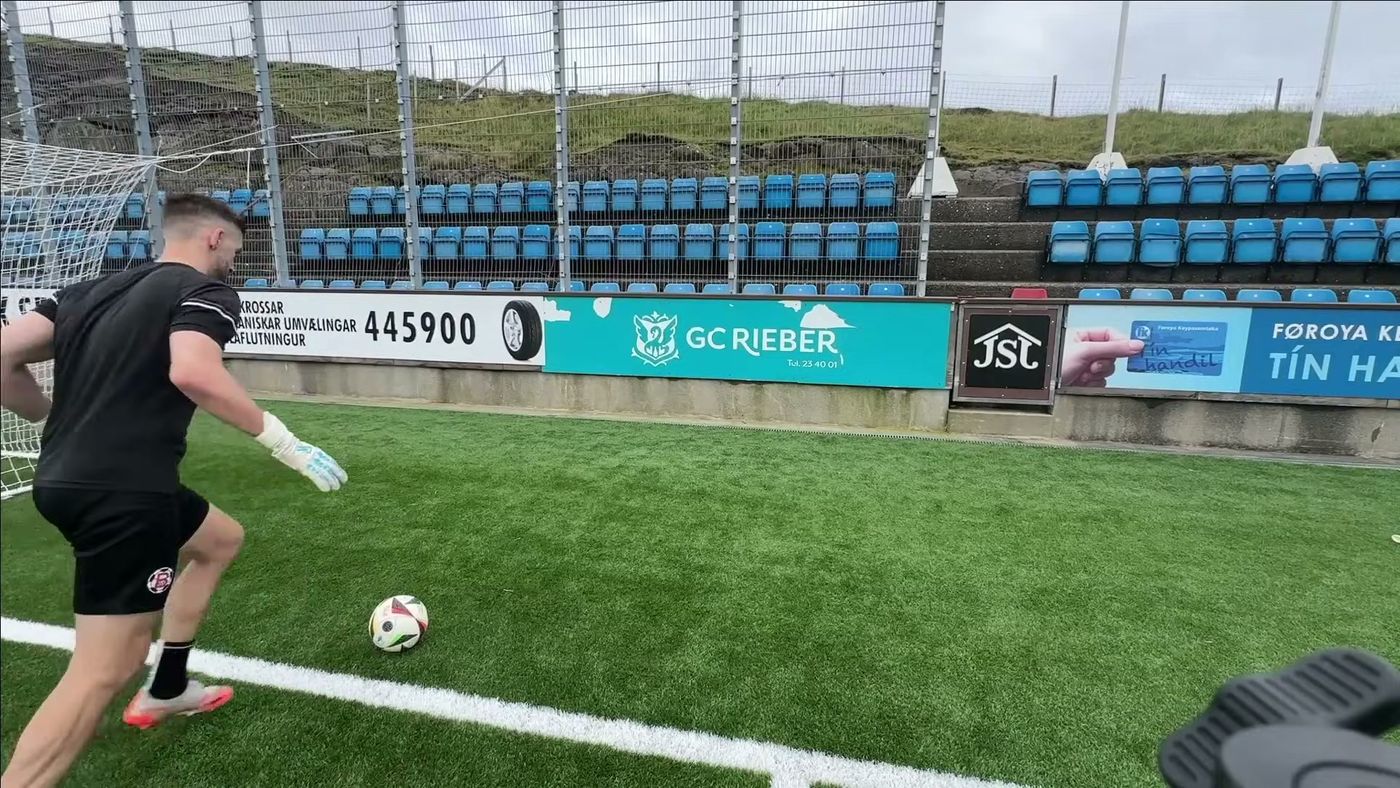
Catch everything in these drills. If you get into the habit of knocking the ball away when it is awkward, you will do the same in games, in dangerous areas. It is one of the five habits I see costing young goalkeepers most.
How do you build it up from the floor?
If you are a beginner, or you have a partner for a session, this is the progression I use to teach handling from scratch. Each stage takes a bit of your body away so your hands have to do the work.
- On your stomach: hands in front of your face, catch in the W, arms like a rubber band
- Sitting down: the body cannot help, so it is all hands
- On your knees, low balls: eyes locked on, slow the ball down, head down to it
- On your knees, mid-height: the basket, elbows together, go down with it
- On your knees, anything: low, mid or high, and now you have to choose the catch
Have your partner throw rather than shoot for the basket stage so you can focus on the technique. The last stage is where reflexes and technique meet, because the decision is part of the skill.
Here is that progression on the pitch:
On your own, drills one to four above cover the same ground. With a partner, this ladder is the fastest way I know to fix bad hands. The handling section of the drills library has the rest.
What to do this week
The W catch, the basket and the scoop each get their own page in my free Goalkeeper Technique Playbook, so you can check the shape before you start the reps.
Pick drill one and drill five. That is it.
- Five minutes of bouncing before every session, as part of your hands warm-up.
- Five minutes on a wall after it. Chest, hips, ground, closer each time.
- Catch everything, even the ugly ones.
You will not notice the difference in a week. You will notice it in a month, when a shot that used to bounce off you just sticks.
Hands sorted. What about the rest?
Handling is the part of goalkeeping you can improve fastest on your own, because it needs no space and no coach. The rest of the position needs a plan.
That is what the Ultimate Self-Training Course is: 120+ drills, handling included, in a weekly structure so you always know what comes next. $27 a month.
Have a look at the program 30-day money-back guarantee if it is not helping.
I have played more than 500 competitive games, represented my national team, and played in Champions League and Europa League qualifiers. I have coached more than 1,000 goalkeepers. The bounce drill in this guide is the first thing I do with every one of them.
Enjoyed this article?
Find more great content here: