
How to Deal With Mistakes as a Goalkeeper, Minute by Minute
Every goalkeeper lets in a soft one. Here is what to do in the seconds after it, for the rest of the game, after the final whistle, and how to stop replaying it all week.
It is a soft one. It rolls under you, or slips through your gloves, and it is in.
You look up and you see it everywhere. A team-mate with his hands on his head. Your coach shouting something from the side. And you already know you will be replaying this one in bed tonight.
I know that feeling very well. When I was younger, one mistake could stay with me for the rest of the game, and sometimes for weeks.
Deal with a goalkeeping mistake in four stages. In the first few seconds, feel it, then use a short reset to get back to the next ball. For the rest of the game, play the next action, not the last one. After the game, give it a set time and pick one thing to train. Then let it go.
What should you do in the first few seconds after a mistake?
First, you are allowed to feel it. You care, so it hurts. That is normal.
Winter, one of the goalkeepers I coach, put it better than I can on one of our group calls. Give yourself "a couple seconds to just feel like, dang it, like that sucks." Then get back up and go again.

The problem is not the few seconds. It is when those seconds turn into the next ten minutes.
So I teach my goalkeepers to be a goldfish. Goldfish are supposed to forget everything after a few seconds. Daisy-Mai, 12 at the time, summed it up: "When you've done a mistake, just forget about it after six seconds."
That is easy to say and hard to do, so give yourself something to do in those seconds. Two things work best:
- A reset phrase. A short line you say to yourself. Daisy-Mai wrote hers down: "Gone, focused, ready for the next save."
- A reset action. Something small you do with your body. Daisy-Mai taps the post three times. Winter resets his gloves. Me? I take a sip of water, every time.
Pick your phrase and your action today. Keep them short and make them yours. Then use them in training every time something goes wrong, so they happen on their own on match day.
Why does it feel like everyone is judging you?
Because in goal there is nowhere to hide. Every mistake is obvious, and it often ends up in the net.
But most of the reactions you are worried about are just noise. Think of it like driving a car. Does one honk from another driver make you a bad driver? Of course not.
A team-mate throwing his hands up is his emotion talking. It is not a verdict on you. And a coach yelling from the side? That is feedback, not a personal attack.

You also think people notice your mistake far more than they do. Daisy-Mai read about this in a book and explained it to me on one of our calls: "you think that your coaches or other people are noticing it more than they actually are."
They are not lying awake tonight thinking about your goal. You are the only one doing that.
How do you stop one mistake turning into two?
This is the part that really costs you games.
I remember games where, after one mistake, my head was just gone. I was overthinking everything. And that is usually when the second mistake came. Not because I was a bad goalkeeper, but because I was still stuck in the last moment. I talk about it in my video on 5 things I wish I knew at 13 as a goalkeeper.
Winter says it simply: "If I'm always thinking about a mistake, I won't have time to think about my next save."
Here is what it looks like when it works. I once showed my goalkeepers a filmed match where I made a big mistake in the first half. On the video you can see me breathing, taking a sip of water, talking to myself and shouting something random to my team-mates. Then I made a few good saves.
We lost that game 2-1, and it was my fault. But not for one moment in the rest of that game did I think about the mistake. I promised my goalkeepers that was true, and it is.

So after your reset, your only job is the next action. The next catch, or the next shout to your defenders.
And it is fine to laugh about it. I once played a European qualifier in Scotland with around 10,000 people watching. Two minutes in, a ball came rolling towards me at mouse speed and went straight through my legs. I still had the whole game to play. At half-time, my goalkeeping coach and I looked at each other and just burst out laughing.
John, 13, told our group almost the same thing about one of his games: "Me and my coach at halftime, we just looked at each other and just started giggling."
If it is the fear of the next mistake that keeps you stuck, I wrote about how to stop being afraid of making mistakes in my guide to goalkeeper fear.
What should you do after the game?
Feel it. Properly. Being frustrated after a bad game is completely fine.
But set a limit. I call it a timer to be sad. Maybe it is 20 minutes, maybe an hour, maybe the rest of the evening. Inside that time you can think about what went wrong. When the time is up, you stop.
Mine is the rest of the evening. Daisy-Mai chose hers on our call: "My timer will be 20 minutes."
Use that time well. Ask two questions:
- What is one thing I did well? Neelu, 14, asks herself this after a mistake because "it helps me like recenter myself."
- What is one thing I can train? One, not five.
Then do not wait for the perfect plan to fix it. When I first got serious about goalkeeping, I spent hours trying to build the ultimate training plan, and barely left any time to actually train.
Some of the biggest improvements in my game came from the simplest drills: catching a ball against a wall, or footwork with cones I borrowed from the park.
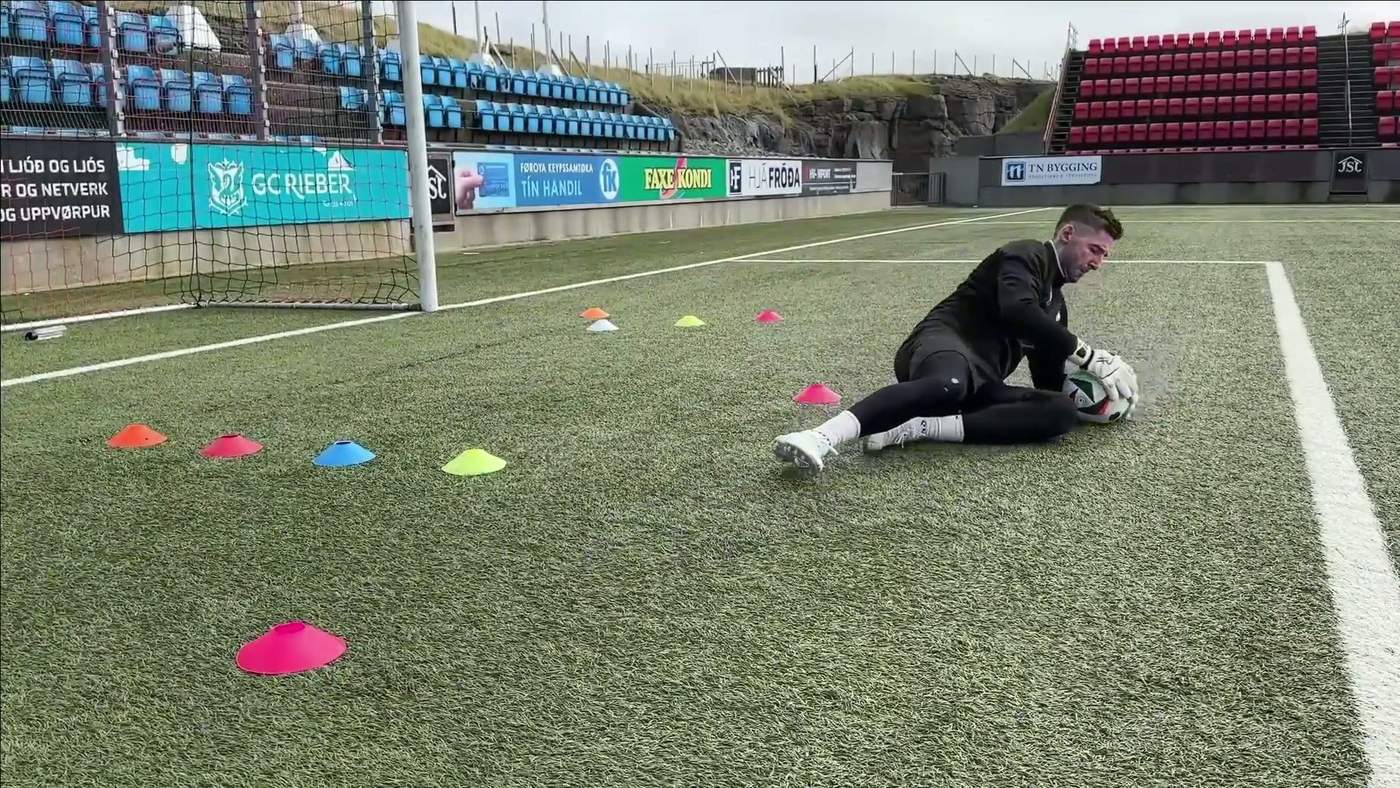
So if the ball went through your legs, train low balls this week. If you dropped a cross, catch high balls. Pick the drill from the goalkeeper drills library and get started, even if it is messy.
The drive home is not the time to go through the goal. Let them have their timer. If you want to say something, ask what they did well first.
How do you stop replaying a mistake all week?
At 13, it really felt like one mistake made me a bad goalkeeper. It does not. Every top goalkeeper makes mistakes, and they still do. The difference is they do not let one mistake decide what happens next.
I say it to my goalkeepers on our calls: "at some point I might make a mistake. That doesn't mean I'm a bad goalkeeper. It just means I'm a goalkeeper, right?"
A lot of the replaying comes from comparing. You put your worst moment next to another keeper's best one, on your team or on social media, and wonder why they are so much better than you.
But you do not need to be the best right now. Ask yourself a different question: am I improving? And honestly, nobody remembers who the best 12-year-old or 15-year-old goalkeeper was. The only keeper you need to beat is the one in the mirror.
Two worries often hide underneath a mistake, and both have their own posts. If you think you would have reached it if you were taller, read about being a short goalkeeper. If you think better gloves would have held it, that is one of the goalkeeper myths (I co-founded the glove brand Rectrix, so I am not neutral on gloves, and I still say it is your hands that hold the ball).
What finally stops the replay is doing something with it. Once you have trained that ball, the mistake stops being a memory and becomes a session. And that is the moment you can let it go. The longer version of that is the let-it-go part of three ways to build goalkeeper confidence.
What to do after your next mistake
Don't try to do all of this at once. If the nerves start before the game even kicks off, my guide to goalkeeper nerves covers that part.
Start with your reset.
- Write your reset. One short phrase and one action. Use them in training this week.
- Next action. After any mistake in your next game, think only about the next ball.
- Set your timer. Decide tonight how long you get to be sad after a bad game.
- Train one ball. Whatever beat you last time, give it one session this week.
Mistakes are part of being a goalkeeper. What you do in the minutes after them is the part you get to choose.
Made a mistake on Saturday? What do you train on Monday?
The reset gets you through the game. What stops the same mistake happening again is training it, and knowing what to train, in what order, is the hard part when you are on your own.
The Ultimate Self-Training Program gives you a weekly plan with over 120 drills you can do on your own, so the ball that beat you at the weekend gets trained before the next game. $27 a month.
See the weekly plan 30-day money-back guarantee if it is not helping.
I have played more than 500 competitive games over 20+ years, represented my national team, and played in Champions League and Europa League qualifiers, where I have let in a few soft ones myself. I have coached over 1,000 goalkeepers, and handling mistakes is one of the first things we work on.
Enjoyed this article?
Find more great content here: