
5 Legal Goalkeeper Tricks That Win You Games
Penalty mind games, the rolling ball, corners, free kicks, and the one cheat code that separates the keepers who make it from the ones who do not.
Ever notice how some goalkeepers get away with everything? They slow the game down, kill the other team's momentum, and get inside a striker's head before the ball is even kicked.
None of it shows up on a stats sheet. All of it wins points.
Here are the five goalkeeper tricks I use, why each one works, and the one "cheat code" that is the only thing on this list that actually matters.
The best legal goalkeeper tricks all use one advantage: the game does not restart until you are ready. Make penalty takers wait, let a rolling ball roll, take your time getting up after a big save, hold your ground at corners, and steal a few metres on every free kick. Then outwork everyone.
Why does the game only start when you say so?
Most young goalkeepers think their job starts when the shot comes. It does not.
Every goal kick, every free kick in your half, every ball you pick up: the restart is yours. Nobody can play until you release it.
That is a huge amount of control, and most keepers throw it away because they are in a hurry to look busy. Slow down. Once you understand that you set the tempo, the five tricks below stop being tricks and become habits.
How do you get inside a penalty taker's head?
You have seen a striker miss a penalty before they even kicked the ball. It happens all the time. Not because they are bad, and not because they got unlucky, but because the goalkeeper won the battle before the whistle.
Nobody does it better than Emi Martinez, and you can borrow the same routine.
Make them wait
The moment the penalty is given, do not stand on your line like an obedient target. Walk up to the ball. Pick it up. Hand it to the referee. Have a word. Take a sip of water like you have all day. Every second you take is another second for the striker to overthink it.
Let them know
You do not need to say a word. Shake your head slowly like you have already seen the future. A small smirk. The "you're not scoring this" look.

Do this properly and there is a real chance they rush it, mishit it, or take enough pace off for you to get there. Then it comes down to the actual save, and that part is in the penalty guide, including whether the mind games really work.
How do you waste time without the referee noticing?
Your team is winning. The clock is running down. The other team is throwing everything at you.
Then a weak shot, a failed through ball, or a bad pass rolls your way.
Most goalkeepers pick it up straight away. Do not. Let it roll.
While the ball is rolling, it is nobody's. The referee cannot rush you on a ball you have not touched. So take your time, act like you are scanning the pitch, and if a striker starts sprinting at you, perfect. Let them come. Let them believe they have a chance. Then, just before they arrive, casually pick it up.

Want to go further? Drift towards the edge of your box with the ball still rolling, and let them chase you. They are burning energy on a ball they were never going to win.
Know the law. Once you have the ball in your hands you have eight seconds to release it. The referee counts down the last five with a raised hand, and if you go over, the other team gets a corner. So the trick is everything you do before you pick it up. After that, get it moving.
Should you stay down after a big save?
This one divides people, so I will be honest with you about it.
Momentum is everything in football. One team gets on top, the crowd gets louder, and suddenly your defenders are barely holding on. Sometimes your team needs thirty seconds to breathe.
You have just made a big save. Most keepers bounce straight back up and get the ball moving. In a game where your team is being hammered, that is a mistake.
Take your time. Stay down, breathe, and get the referee's attention. Wave the physio on if your wrist genuinely does not feel right. By the time play restarts, the other team has lost its flow and your back four has had its reset.
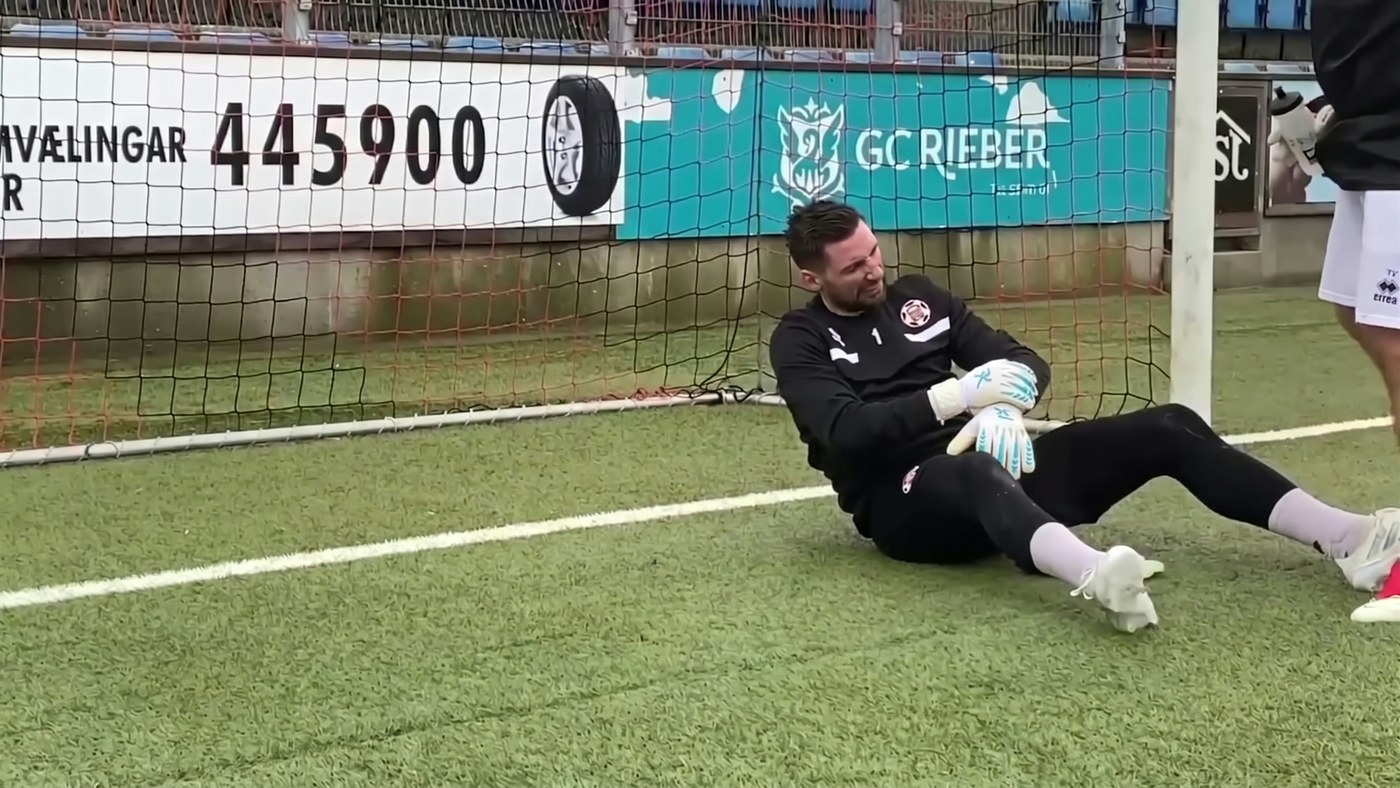
Use the time you are entitled to. Goalkeeping is a contact position, and a big save often involves a landing, a collision, or a post. Take the recovery you actually need. Do not perform an injury you do not have, because referees, and your own team-mates, remember the keepers who do.
How do you deal with a striker standing on you at corners?
Corners are the moment the other team fills your box and does everything it can to make your life miserable.
There is always one player whose whole job is to plant himself in front of you, block your view, and make sure you cannot move. You are then expected to rise above all of it and claim the ball like it is a training drill.
Here is the thing: you do not have to just stand there and take it.
As the corner is being set up, use your body. Establish your space with a shoulder, and hold it. If the striker leans on you, lean back. If they push, you have every right to stand your ground.

And here is the secret: referees almost always protect the goalkeeper in these situations. If the striker gets annoyed and shoves back, the referee's eyes are on them, not you. And when the cross finally comes in, you have given yourself a far better chance of winning it. What you do once the ball is in the air is in the crosses guide.
Stay on the right side of the line. Hold your space, do not throw an elbow. A shove that is obvious is a free kick against you, and a goalkeeper giving away needless free kicks in his own box is a goalkeeper losing his defenders' trust.
How do you steal a few metres on a free kick?
You have a free kick deep in your own half. You step up, and the ball is just a little too far back. The angle is not great. You want to hit it further, but the referee has already marked the spot.
Most goalkeepers place the ball exactly where the whistle went, like a good little soldier.
Instead: pick the ball up. Adjust it. Act like you are looking for the perfect patch of grass, even if you are on artificial turf like I am. And as you do it, take a tiny step forward. Then another.

Three, four, maybe five extra metres. More space, a better angle, a better chance of hitting your target. Referees do not care. They want the game restarted, and by the time you have placed the ball they have moved on.
It is not flashy. In a tight game, it is the difference between a clearance and a chance. The kick itself is covered in the goal kick guide, and the same technique applies here.
What is the only cheat code that actually matters?
There is one more, and it is the only one on this list that is genuinely against the rules.
Not the referee's rules. The unwritten ones most goalkeepers live by.
It is called outworking everyone else. No shortcuts, no gimmicks, no sneaky tricks. Just getting better every week while everyone around you stays the same.
I have watched this happen for twenty years. The goalkeeper who does ten extra minutes after every session, who trains alone on the days nobody is watching, who has a plan instead of a pile of random drills. Two years later, they are not in the same league as the ones who did not.
The five tricks above are worth a few seconds and a few metres. This one is worth your whole career.
What to do this week
Pick one trick and use it in your next game. Just one.
- Easiest place to start: the rolling ball. Next time a weak ball comes your way with your team under pressure, let it roll and count in your head. You will feel how much time you actually have.
- Before your next penalty: decide your routine now, so you are not inventing it with your heart going.
- Then start on the cheat code. That is a plan, not a trick.
The tricks buy you seconds. The work buys you years.
Ready to cheat the system the only way that works?
The best goalkeepers do not cheat the game. They train smarter than everyone else, and they do it every week whether anyone is watching or not.
That is what the Ultimate Self-Training Course is: 120+ drills laid out in a weekly plan, so you always know what to do next. $27 a month.
Have a look at the program 30-day money-back guarantee if it is not helping.
I have played more than 500 competitive games, represented my national team, and played in Champions League and Europa League qualifiers. I have coached more than 1,000 goalkeepers. Every trick in this guide is one I still use on a Saturday.
Enjoyed this article?
Find more great content here: