
5 Mistakes I Made as a Young Goalkeeper (And What to Do Instead)
I trained hard at 16 and still spent years working on the wrong things. Here are the five mistakes that cost me the most, and what I would do instead.
Quick question before you read on. What exactly are you trying to improve as a goalkeeper this month?
If you can answer that in one sentence, you are already ahead of where I was at 16.
I trained hard. Whenever I had the chance to do extra work, I did it. And I still spent years working on the wrong things, because some of these mistakes did not even feel like mistakes at the time.
Here are the five that cost me the most, and what I would do instead.
The five mistakes I made as a young goalkeeper: training the parts I already enjoyed instead of the parts my matches kept exposing, trying to fix everything on my own, never getting honest feedback, comparing myself to other goalkeepers, and treating football and the rest of my life as two separate things.
Are you training what you enjoy, or what your matches keep asking for?
At 16 I worked hard and I wanted to get better. But looking back, I did not have a good way of deciding what I actually needed to work on.
I loved working on my footwork, so I kept doing it. Meanwhile my goal kicks were giving me real trouble in matches, and they stayed that way for a long time.

That is a very easy trap to fall into. You keep training the things you enjoy and already feel good at, and the parts of your game that need your attention keep getting pushed aside.
So if I could go back, I would pay far more attention to what was actually happening in my matches. If goal kicks were the problem, then goal kicks get the extra session, and there is a full breakdown of how to take a goal kick properly to work from.
More training is not the goal. Fixing something is. Pick the one thing your last three matches keep pointing at, and make that the target of every extra session this month. Here is how to build that into a goalkeeper training plan.
What can solo training fix, and what can it not?
I want to be clear about this one, because I did a lot of extra training by myself when I was younger and I still think it is one of the best things a goalkeeper can do.
You can get hundreds of extra reps on your handling, your footwork, your passing and your diving technique. And because it is your session, you can spend almost all of it on the thing you most need to improve. There are plenty of them sorted by skill in the drills library.
What I did not understand at 16 is that you cannot recreate everything you face in a match.
You can practise your 1v1 technique alone. At some point you still need a striker making a decision you cannot predict.
You can work on your movement for crosses alone. Eventually you need a real ball coming into the box with players moving around you.
I would never tell a goalkeeper to stop training on their own. I would not have become the goalkeeper I became without those hours. Just know what solo work is brilliant for, and know what eventually needs another player, a coach, or a more realistic situation.
How do you get honest feedback when you have no goalkeeper coach?
For many of my younger years I did not have a goalkeeper coach. So I would train, play matches, and then try to work out for myself what I was doing wrong.
Sometimes it worked. The problem is that you are seeing everything from inside the action.
You concede, and you think you just needed to react quicker. Or you keep hammering away at your diving when the real mistake happened two or three steps before you ever left the ground.
That is what good feedback gives you. Someone with experience can sometimes see in ten seconds what you have been trying to work out for three months.

Today you do not need a coach standing next to you every day to get a better look at your own game.
- Film one session or one half from behind the goal
- Watch it the same evening, while you still remember it
- Find the two or three seconds before the mistake, not the mistake
- Ask a coach one specific question about that clip
The last one matters more than it sounds. "How was I today?" gets you nothing. "Watch this save, was I too deep before the shot?" gets you an answer you can train.
Why does watching other goalkeepers make you feel behind?
I remember a weekend when I was younger. I had a game later that day, so I stayed home, took it easy and made sure I was ready to play. Exactly what I should have been doing.
Then I opened social media, and it looked like everyone else was out enjoying their weekend. Suddenly I felt like the only one missing out.

It does not have to be your friends, either. Another goalkeeper your age gets invited into an academy. Someone posts an amazing training session. Five minutes ago you were happy with your own progress, and now you are wondering whether you are falling behind.
But somebody else doing well does not suddenly mean you are doing badly. The right decision for you does not become the wrong one because another goalkeeper is doing something slightly different.
Learn from them. Let their progress push you on if it helps. Just do not let it make you question your own plan every five minutes. If that feeling has been sitting on you for a while, I have written about three ways to build goalkeeper confidence and about the fears almost every goalkeeper carries, and comparison sits underneath both of them.
Does anything off the pitch really change how you play?
At 16 I treated football and the rest of my life like they were two separate things. As long as I trained hard, I thought I was doing my job.
It does not work like that.
Imagine you leave your homework until the last minute. Now you are doing it late at night, so you go to bed late, you sleep badly, and you turn up to training tired and stressed. Something with nothing to do with goalkeeping has just affected your goalkeeping.
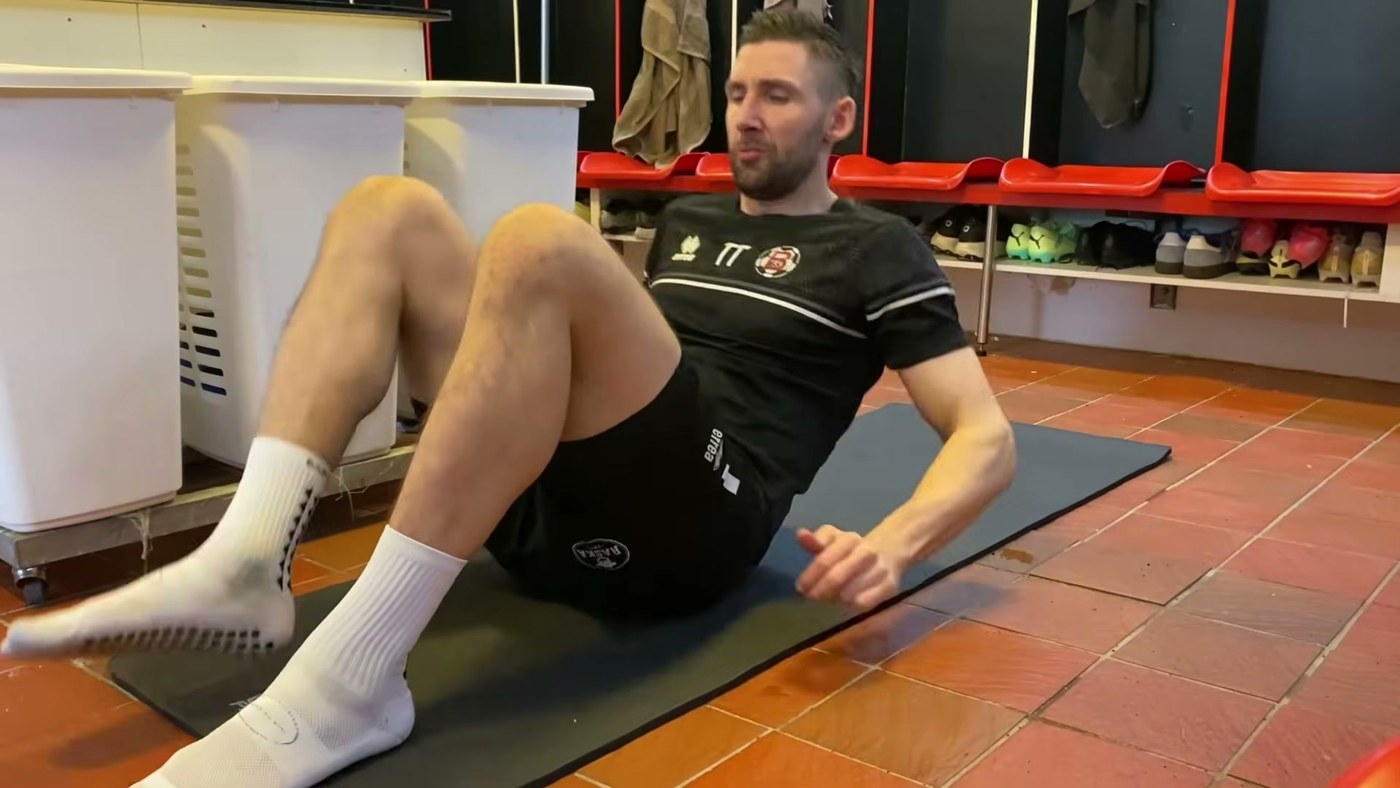
The same happens with your food, your recovery, and simply how organised you are during the week. If you are always rushing and catching up, you do not turn into a different person the moment you walk onto the pitch. You bring all of it with you.
So get your schoolwork done before it becomes a late night problem. Give yourself enough time to eat, sleep and recover properly.
If your goalkeeper is tired and flat at training, the answer is not always more training. Look at the week around it first: bedtime, homework, and what they ate before they left the house.
What to do this week
Improving as a goalkeeper does not only happen when you have your gloves on.
Pick one. Not five.
- Name the target. What went wrong most often in your last three matches? That is this month's extra training.
- Film one thing. One session or one half, watched back the same evening.
- Split the list. What can you genuinely fix alone, and what needs another player?
- Fix one thing off the pitch. Your bedtime, your homework, or what you eat before training.
I did not work these out until much later than I needed to. You do not have to wait that long.
Know what you are training on Tuesday?
The hard part of this is not the effort. It is knowing what to work on, in what order, and when you are ready to move on. That is the bit I got wrong for years, and it is the bit nobody hands a young goalkeeper.
So I built the plan I wish I had at 16: a session for every week, over 120 drills you can do on your own, and a clear reason behind each one. $27 a month.
Have a look at the program 30-day money-back guarantee if it is not helping.
I have played more than 500 competitive games, represented my national team, and played in Champions League and Europa League qualifiers. I have coached over 1,000 goalkeepers, and almost every young one I meet is working hard on something that was never the problem.
Enjoyed this article?
Find more great content here: