
Goalkeeper Stretches: The 12-Minute Routine That Keeps Me Playing at 40
Sixteen stretches, twelve minutes, hips to shoulders, and the four windows in the day to fit them in.
I am not a young goalkeeper any more. My mobility is not what it was at 20.
But I am 40 and still playing, still diving, still getting up for the next one. So I must be doing something right, and the least exciting part of it is this: twelve minutes of stretching, most days.
Here is the routine, stretch by stretch, so you can do it after training, after games, before bed or in the morning.
A goalkeeper stretching routine should cover the hips, glutes, groin, hamstrings, quads, calves, lower back and shoulders, because diving loads all of them. Hold each stretch for 20 to 25 seconds, both sides, breathing normally. Twelve minutes after training or before bed keeps you loose enough to dive, jump and move around the goal the next day.
Why do goalkeepers need to stretch more than outfield players?
Goalkeeping is brutal on the body in a way running is not.
Diving loads your hips and shoulders from odd angles. Landing compresses your side. Low dives open the groin. Getting up fast uses the hamstrings and lower back over and over. And the set position keeps you in a half squat for ninety minutes.
If your hips are stiff and your hamstrings feel like concrete, moving freely around the goal gets much harder, and the dive you used to make becomes the one you pull up short on. It is the reason the footwork drills end with the same advice.
Stretching does not make you a better goalkeeper on its own. It keeps you able to do the training that does.
What is the routine?
Hold each one for 20 to 25 seconds. Where there are two sides, do both. Breathe normally and never bounce.

- Glute stretch, seated: one leg across the other, hold, swap
- Wide-leg fold: legs spread, fold forward
- Wide-leg side fold: same position, fold to each side
- Hip 90-90s: rotate the knees from one side to the other, slow
- Figure four: one leg bent over the other, lean in, swap
- Quad stretch: leg back, lie into it if you can, swap
- Glute pull: leg across, hands under the knee, pull and roll down, swap
- Half-kneeling hamstring: knee down, other leg straight forward, swap
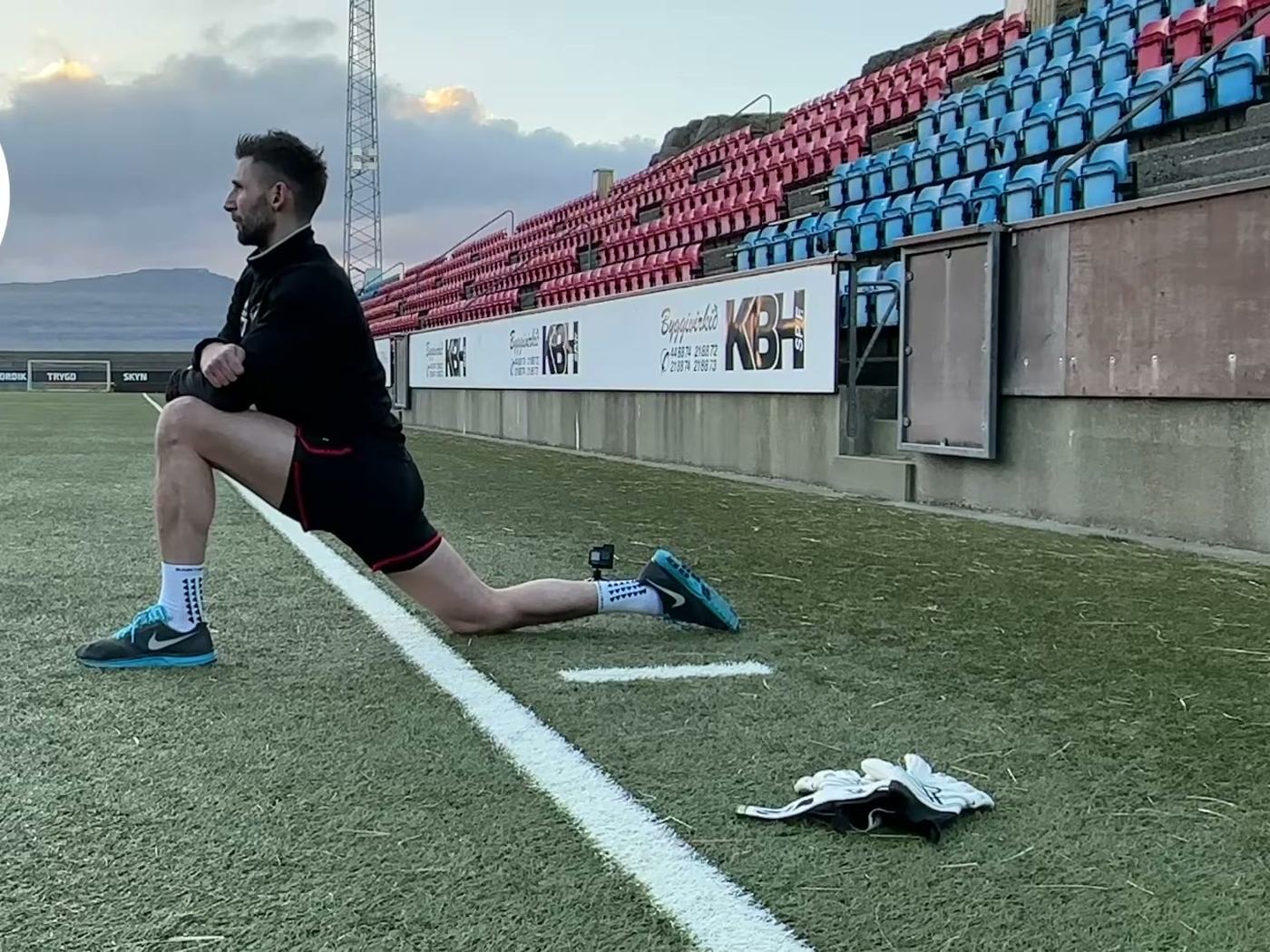
- Half-kneeling groin: knee down, other leg out to the side, get low, swap
- Wide-knee fold: knees spread wide, fold forward
- Pigeon: one leg folded forward, fold over it, swap
- Butterfly: feet together, knees out, elbows push the knees down
- Toe touch, one leg: one knee bent, other leg straight, reach, swap
- Seated twist: hand on the outside of the opposite knee, rotate, swap
- Calf stretch: half stand, each calf
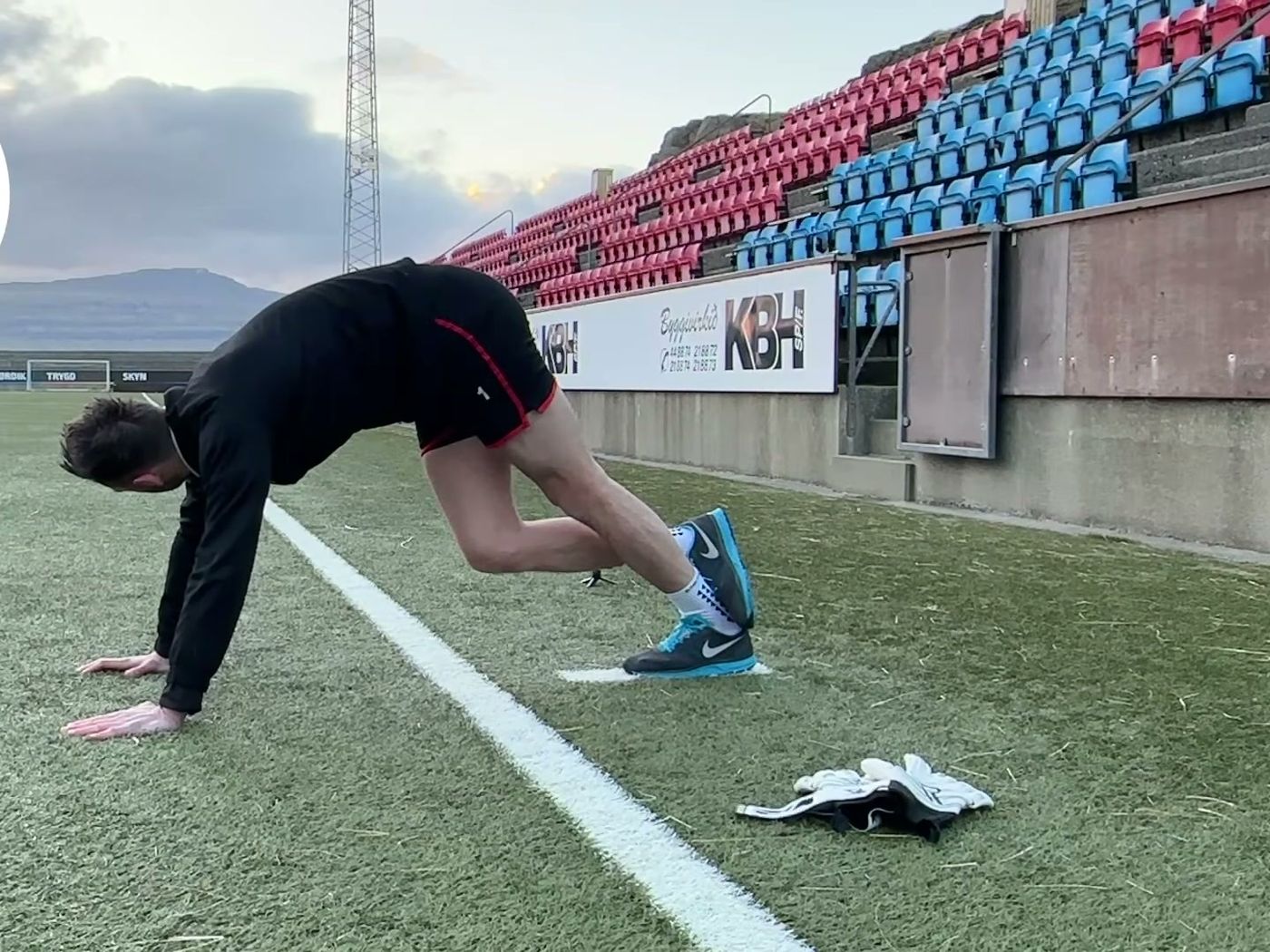
- Shoulder thread: on all fours, thread one arm under, lie onto that shoulder, swap
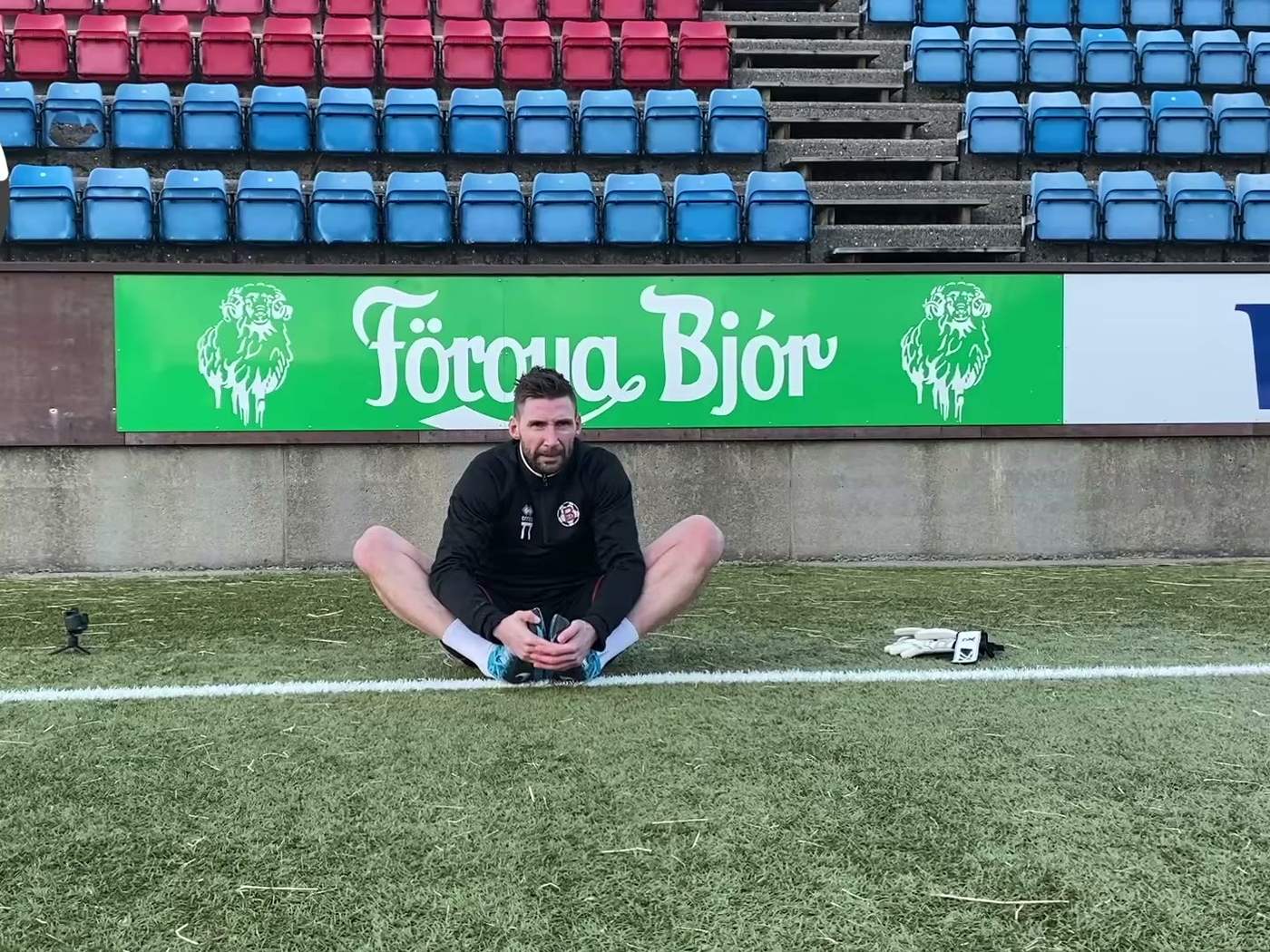
The pigeon is hard at the start and one of the best mobility stretches there is; it opens up the glute and outer thigh and it is the one that changes fastest with practice. The seated twist is one of my absolute favourites for the hips and the lower back together.

Sixteen stretches, some with two sides, at 20 to 25 seconds each is about twelve minutes.
When should you do it?
Four windows, and any of them works.
After training or a match. The best one, while the muscles are warm. It fits straight after the first ten minutes of recovery.
Before bed. The one I use most. It also settles you down.
In the morning. Especially before an early kick-off, to loosen what stiffened overnight. If mornings are your window, I also filmed the ten-minute morning mobility routine I do myself. It is more lunges and moving stretches than long holds, so it suits that time of day. The rest of my morning, from the alarm to breakfast, is in the goalkeeper morning routine.
Not as a warm-up on its own. Long holds before a session make you loose, not ready. Before a match you want movement, which is what the warm-up is built from. Do this routine after.
What if you are young and already flexible?
Do it anyway.
Mobility is easy to keep and hard to get back. Every goalkeeper I know who is still playing past 35 has some version of this routine, and every one who stopped early had a hip or a back that went first.
Start the habit while it costs you nothing, and it is still there when you need it.
What to do this week
Pick one window and do the routine four times this week.
- Before bed is easiest, because nothing else competes for that twelve minutes.
- Do not chase depth. Hold, breathe, count to twenty, move on.
- By the fourth night the pigeon will feel different. That is the hips opening.
Twelve boring minutes a day is how a goalkeeping career gets to 40.
The routine sits with the warm-up and recovery work in the drills library, and the strength that mobility protects comes from the leg workout.
Loose enough to train. Training the right thing?
Stretching keeps you available. It does not, on its own, make you better. That takes the right training in the right order, week after week.
The Ultimate Self-Training Course is that order: 120+ drills, recovery and mobility included, laid out so you never have to guess. $27 a month.
Have a look at the program 30-day money-back guarantee if it is not helping.
I have played more than 500 competitive games, represented my national team, and played in Champions League and Europa League qualifiers. I have coached more than 1,000 goalkeepers. At 40 I still play, and twelve minutes of stretching most days is the least glamorous reason why.
Enjoyed this article?
Find more great content here: